
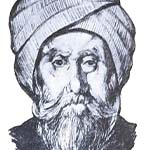
AL-GHAZALI
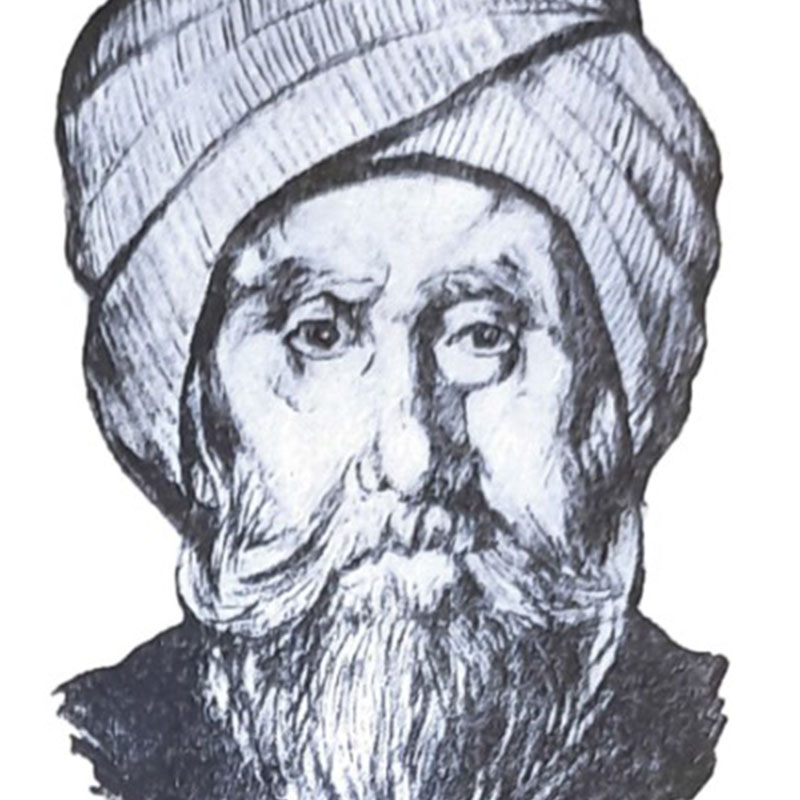
(Unknown. Al-Ghazali Sketch. Illustration. 1961. Wikimedia Commons. https://commons.wikimedia.org/wiki/File:Al-Ghaz%C4%81l%C4%AB,_Sayr_mulhimah_min_al-Sharq_wa-al-Gharb.png.)

Born: 1058 CE, Ṭūs, Khorasan (Seljuk Empire)
Died: December 19, 1111 CE, Ṭūs
Notable
- Critique of Causality: Occasionalism—only God is true cause; refuted Avicenna’s necessary emanation.
- Spiritual Autobiography: Al-Munqidh as model of intellectual and mystical conversion.
- Sufi Legitimation: Elevated experiential knowledge (dhawq) within orthodoxy.
1000–1100 AD works
Biography
Al-Ghazālī (Abū Ḥāmid Muḥammad ibn Muḥammad al-Ghazālī, 1058–1111 CE) was a Persian polymath, theologian, jurist, philosopher, and Sufi mystic whose works reconciled Islamic orthodoxy with rational inquiry and spiritual practice. Born in Ṭūs (near Mashhad, Iran), he studied Shāfiʿī jurisprudence and Ashʿarī theology under al-Juwaynī at Nishapur, rising to Baghdad’s prestigious Niẓāmiyya madrasa in 1091. A profound spiritual crisis in 1095 led him to abandon public life for eleven years of ascetic wandering, teaching, and writing in Damascus, Jerusalem, Mecca, and Ṭūs. His magnum opus, Iḥyāʾ ʿulūm al-dīn (“Revival of the Religious Sciences”), integrated law, theology, ethics, and mysticism into a comprehensive guide for Muslim life.
Modern scholars interpret al-Ghazālī as the “Proof of Islam” (Ḥujjat al-Islām) who refuted philosophy’s metaphysical excesses while preserving logic, dismantled Ismāʿīlī esotericism, and elevated Sufism within Sunnism. His critique of causality and occasionalism shaped later Islamic thought, though his role in “closing the gate of ijtihād” is now seen as overstated. His legacy dominates madrasa curricula and Sufi orders worldwide.
Influences & Notable For
Author of Iḥyāʾ ʿulūm al-dīn: Encyclopedic synthesis of Islamic sciences; “second Qurʾān” in popular piety.
Critique of Causality: Occasionalism—only God is true cause; refuted Avicenna’s necessary emanation.
Spiritual Autobiography: Al-Munqidh as model of intellectual and mystical conversion.
Sufi Legitimation: Elevated experiential knowledge (dhawq) within orthodoxy.
Famous quotes
“The aim of the moral life is to become like unto God as far as possible.”
– Iḥyāʾ, Book 35 (Fons Vitae trans.)
“Know that a lie is not wrong in itself. If a lie is the only way to achieve a good result, it is permissible.”
– Iḥyāʾ, on white lies (controversial but contextual)
“I saw that Sufism consists in experiences, not in definitions.”
– Al-Munqidh min al-ḍalāl
Legacy & Modern Significance
Historical Dominance: Standardized Sunnī curriculum; Iḥyāʾ in every madrasa.
Philosophical Impact: Ibn Rushd’s Tahāfut al-Tahāfut (Incoherence of the Incoherence) as direct response.
Sufi Orders: Naqshbandī, Qādirī, Shādhilī cite Iḥyāʾ as core text.
Modern Reappraisal: Reformed Islam (ʿAbduh), Islamic psychology, ethics of intention.
Sources:
Moosa, Ebrahim. Ghazali and the Poetics of Imagination (UNC Press, 2005)
Modern Moments & Impact on the 21st Century
1998–Present: Fons Vitae Iḥyāʾ translation project (40 vols., ongoing) – https://fonsvitae.com
2007: UNESCO declared 900th anniversary of al-Ghazālī’s death; global conferences (Iran, Malaysia).
Ongoing (2000s–Present): Full Arabic texts digitized on Shamela, Al-Mostafa, Noor Library.
Ongoing (2010s–Present): Core in Islamic studies, philosophy, and Sufism curricula (SOAS, Georgetown, IIUM).
Ongoing (2000s–Present): Stanford/IEP maintain peer-reviewed entries.
2021: Oxford University Press published Al-Ghazali’s Moderation in Belief (new trans. of Al-Iqtiṣād fī al-Iʿtiqād).
Ongoing (2020s): Cited in Islamic ethics, mindfulness studies, AI morality (Georgetown Berkley Center).
Influences & Intellectual Context
Ashʿarī Theology: Al-Juwaynī; defended divine attributes and occasionalism.
Avicennian Philosophy: Mastered then refuted in Tahāfut.
Sufism: Al-Ḥārith al-Muḥāsibī, al-Qushayrī; experiential path.
Shāfiʿī Jurisprudence: Legal formalism balanced with spiritual intent.
Sources:
Stanford Encyclopedia of Philosophy: Al-Ghazali – https://plato.stanford.edu/entries/al-ghazali/
Garden, Kenneth. The First Islamic Reviver (Oxford, 2014)
Suggested Reading & Resources
Secondary Literature (Scholarship)
Griffel, Frank. Al-Ghazālī’s Philosophical Theology. Oxford University Press, 2009 – https://global.oup.com/academic/product/al-ghazalis-philosophical-theology-9780195331622
Garden, Kenneth. The First Islamic Reviver: Abū Ḥāmid al-Ghazālī. Oxford University Press, 2014.
Marmura, Michael (trans.). The Incoherence of the Philosophers. Brigham Young University Press, 1997.
Moosa, Ebrahim. Ghazālī and the Poetics of Imagination. UNC Press, 2005.
Al-Ghazali, The Alchemy of Happiness (trans. Claud Field, rev. Elton L. Daniel). Routledge, 2015.
Archival or Online Sources
Fons Vitae: Revival of the Religious Sciences (English) – https://fonsvitae.com
Al-Maktaba al-Shamela: Full Arabic works – https://shamela.ws
Ghazali.org: Translations & studies – https://www.ghazali.org
Internet Encyclopedia of Philosophy: Al-Ghazali – https://iep.utm.edu/al-ghazali/
Stanford Encyclopedia of Philosophy: Al-Ghazali – https://plato.stanford.edu/entries/al-ghazali/
PHILOSOPHER OF THE HEART AND SOUL
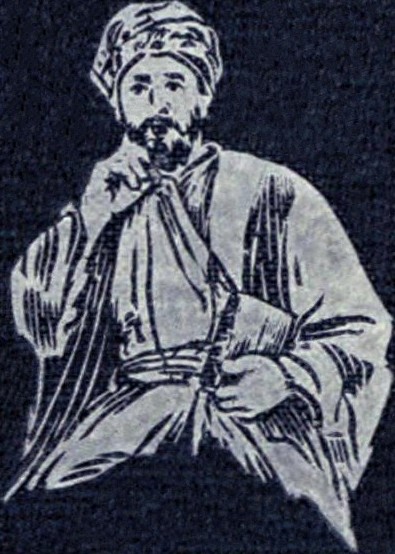
(Unknown. Al-Ghazali. Engraving. 19th century. Wikimedia Commons. https://commons.wikimedia.org/wiki/File:Al-Ghazali.png.)

A historical engraving of Abu Hamid al-Ghazali, the influential Persian theologian and Sufi mystic, shown in traditional attire with a turban, reflecting his pivotal role in Islamic philosophy and revival of Sufism.
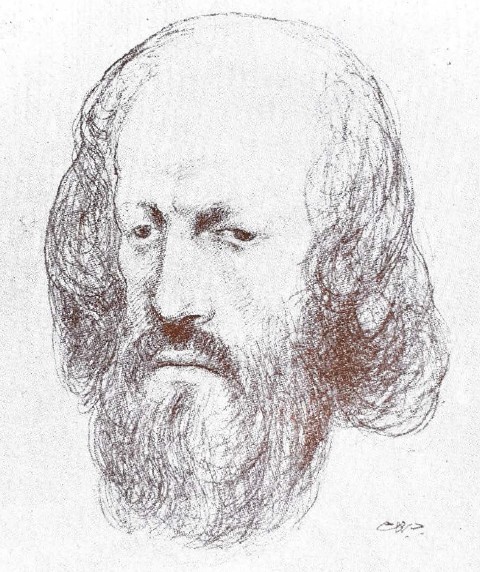
(Gibran, Khalil. Al-Ghazali. Drawing. Early 20th century. Wikimedia Commons. https://commons.wikimedia.org/wiki/File:Al-Ghazali_by_Khalil_Gibran.png.)

A poetic portrait of Al-Ghazali by Khalil Gibran, capturing the scholar's contemplative gaze and bearded visage in flowing robes, inspired by his works like The Revival of the Religious Sciences.
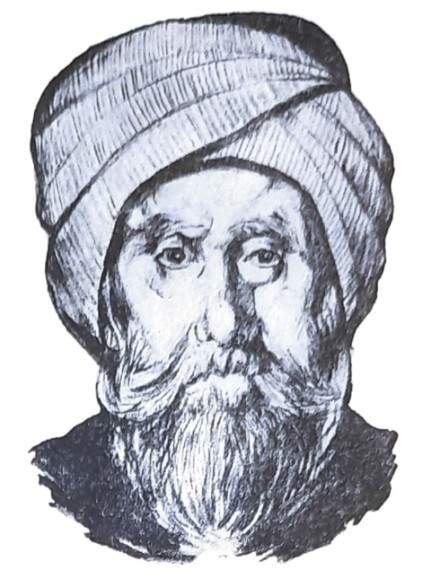
(Unknown. Al-Ghazali Sketch. Illustration. 1961. Wikimedia Commons. https://commons.wikimedia.org/wiki/File:Al-Ghaz%C4%81l%C4%AB,_Sayr_mulhimah_min_al-Sharq_wa-al-Gharb.png.)
A sketch of Imam Al-Ghazali from the 1961 book Sayr mulhimah min al-Sharq wa-al-Gharb, portraying the philosopher in profile with turban, highlighting his journey from jurisprudence to mysticism.