
Ambrose
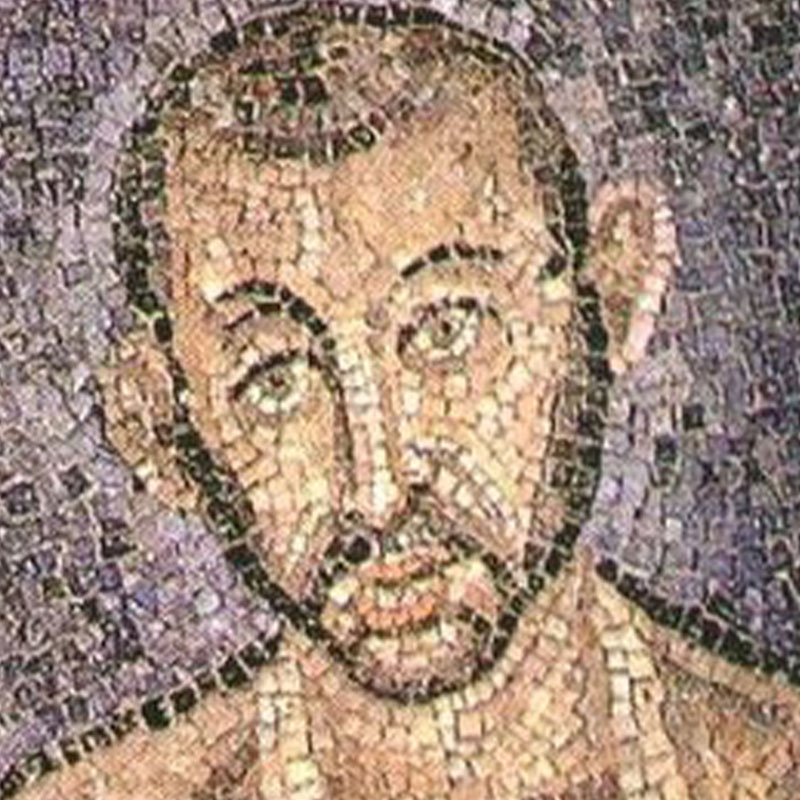
(Unknown mosaicist. "Mosaic of Saint Ambrose." Mosaic. 4th–5th century CE. Basilica of Sant'Ambrogio, Milan. Wikimedia Commons. https://commons.wikimedia.org/wiki/File:AmbroseOfMilan.jpg.)

Your content goes here. Edit or remove this text inline or in the module Content settings. You can also style every aspect of this content in the module Design settings and even apply custom CSS to this text in the module Advanced settings.
Your content goes here. Edit or remove this text inline or in the module Content settings. You can also style every aspect of this content in the module Design settings and even apply custom CSS to this text in the module Advanced settings.
Your content goes here. Edit or remove this text inline or in the module Content settings. You can also style every aspect of this content in the module Design settings and even apply custom CSS to this text in the module Advanced settings.
Your content goes here. Edit or remove this text inline or in the module Content settings. You can also style every aspect of this content in the module Design settings and even apply custom CSS to this text in the module Advanced settings.
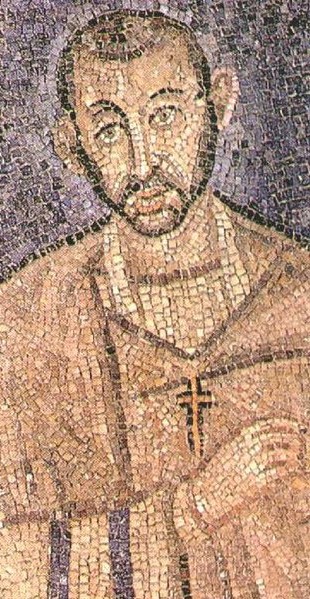
(Unknown mosaicist. "Mosaic of Saint Ambrose." Mosaic. 4th–5th century CE. Basilica of Sant'Ambrogio, Milan. Wikimedia Commons. https://commons.wikimedia.org/wiki/File:AmbroseOfMilan.jpg.)
A late antique mosaic portrait of Saint Ambrose in the Basilica of Sant'Ambrogio, Milan, possibly a contemporary likeness showing him in episcopal attire with a commanding presence.
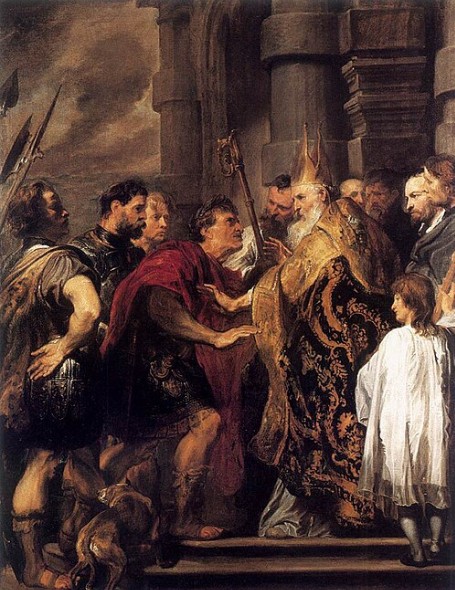
(Van Dyck, Anthony. "Emperor Theodosius Forbidden by Saint Ambrose to Enter Milan Cathedral." Oil on canvas. Circa 1619–1620. National Gallery, London. Wikimedia Commons.)
A Baroque painting by Anthony van Dyck illustrating Saint Ambrose barring Emperor Theodosius from Milan Cathedral, dramatizing the bishop's moral authority.
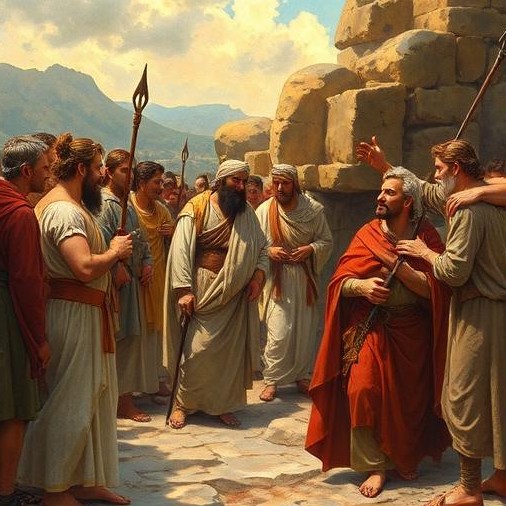
(Ambrose, AI generated)
A classical-style painting depicting Ambrose of Milan, the influential 4th-century bishop and Church Father, addressing a gathering of early Christians. Surrounded by followers and clergy, Ambrose stands confidently in a red cloak, symbolizing his authority and courage in defending the faith. His raised hand and calm expression convey wisdom and conviction, reflecting his role as a teacher, orator, and defender of orthodoxy against heresy. The setting, with ancient stone walls and a radiant sky, evokes the strength and moral clarity that defined Ambrose’s leadership in shaping early Christian doctrine and guiding figures such as Saint Augustine.