
ANSELM
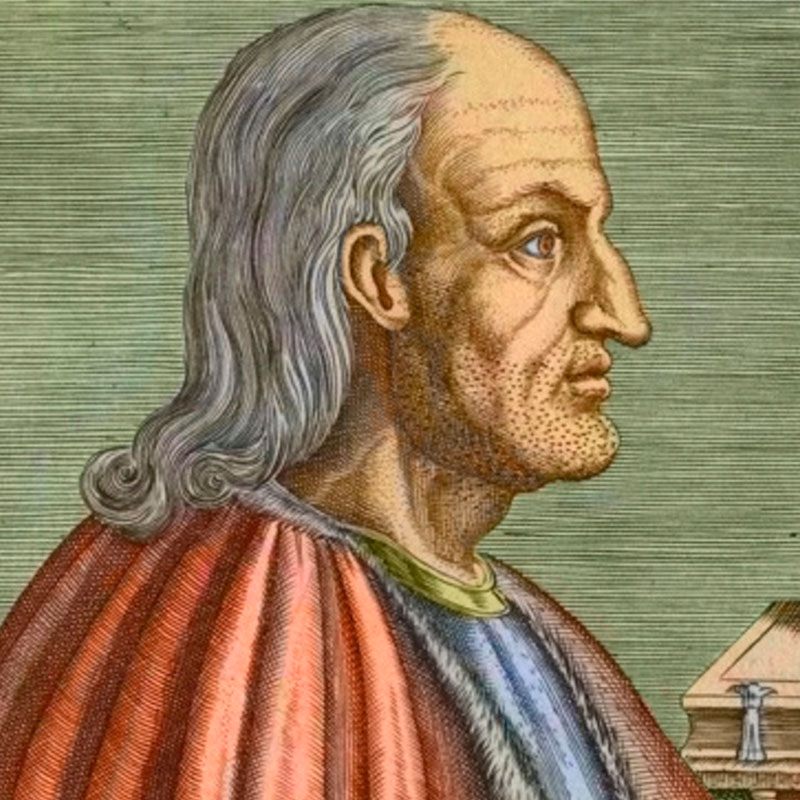
(Citation: Unknown. Anselm of Canterbury. Engraving. 19th century. Wikimedia Commons. https://commons.wikimedia.org/wiki/File:Anselm_of_Canterbury.jpg.)

Born: circa 1033 CE, Aosta, Lombardy (modern-day Italy)
Died: circa 1109 CE, Canterbury, England
Notable
- Founder of Scholastic Theology: Pioneered the systematic use of reason to illuminate faith, establishing scholasticism as the dominant intellectual method of the Middle Ages.
- Ontological Argument (Proslogion): Formulated the groundbreaking proof for God’s existence from the concept of a being “than which nothing greater can be conceived,” reshaping philosophical theology.
- Faith Seeking Understanding (Fides Quaerens Intellectum): Emphasized rational inquiry as a complement to revelation, providing a framework for harmonizing theology and philosophy.
Biography
Anselm of Canterbury (c. 1033 – 1109 CE) was a medieval philosopher, theologian, and archbishop, widely regarded as the father of Scholasticism. Born in Aosta (in present-day Italy), Anselm joined the Benedictine monastery of Bec in Normandy, where he eventually became prior and then abbot. His intellectual brilliance and spiritual discipline soon earned him renown across Europe.
In 1093, Anselm was appointed Archbishop of Canterbury, a position that placed him at the heart of both ecclesiastical and political tensions between the Church and the English Crown. Despite repeated exiles and conflicts with Kings William II and Henry I, Anselm remained steadfast in defending the Church’s independence from secular authority.
Philosophically, Anselm is best known for formulating the ontological argument for the existence of God and for his work Cur Deus Homo, which offers a rational explanation for the Incarnation and Atonement. His legacy is marked by a deep commitment to “faith seeking understanding” (fides quaerens intellectum), a phrase that defines the Scholastic method he helped pioneer.
Influences & Notable For
Creating the ontological argument, a philosophical proof for God’s existence based purely on reason.
Advancing the theological doctrine of the Atonement through logical analysis in Cur Deus Homo.
Establishing the principle of “faith seeking understanding” as a method for theological inquiry.
Defending the autonomy of the Church against royal interference during his tenure as Archbishop.
Influencing the development of Scholasticism, the dominant method of medieval philosophical theology.
Famous quotes
- “I do not seek to understand in order that I may believe, but I believe in order to understand.” — Proslogion, Preface
- “God is that than which nothing greater can be conceived.” — Proslogion, ch. 2
- “For it is not fitting that God should lose His honor, and it is not fitting that He should remit the punishment of sin without compensation.” — Cur Deus Homo, Book I
Legacy & Modern Significance
Anselm’s ontological argument remains a central topic in philosophy of religion, debated by thinkers from Descartes to Plantinga.
His satisfaction theory of atonement significantly shaped Western Christian soteriology, especially in Catholic and Protestant traditions.
The phrase “faith seeking understanding” continues to define the approach of many theological institutions.
Recognized as a Doctor of the Church and canonized as a saint, his influence spans theology, metaphysics, and church history.
Modern Moments & Impact on 21st Century
Philosophy: Anselm’s arguments are regularly discussed in philosophy of religion courses and publications.
Theology: His method of logical inquiry remains a model for integrating reason with faith in seminaries and universities.
Digital Access: His works are widely available online in translation, and he is featured in various public philosophy projects.
Cultural Legacy: Referenced in debates over faith, reason, and metaphysics—especially concerning the existence and nature of God.
Suggested Reading and Resources
Secondary Literature
Southern, R.W. Saint Anselm: A Portrait in a Landscape. Cambridge University Press, 1990.
Evans, G.R. Anselm. Continuum, 2000.
Davies, Brian & Evans, G.R. (eds.). Anselm of Canterbury: The Major Works. Oxford World’s Classics, 1998.
Archival and Online Resources
Stanford Encyclopedia of Philosophy:
https://plato.stanford.edu/entries/anselm/
Internet Encyclopedia of Philosophy:
https://iep.utm.edu/anselm/
Project Gutenberg (public domain translations):
https://www.gutenberg.org/ebooks/author/1374
Christian Classics Ethereal Library (CCEL):
https://www.ccel.org/a/anselm/
THE ONTOLOGICAL ARCHITECT
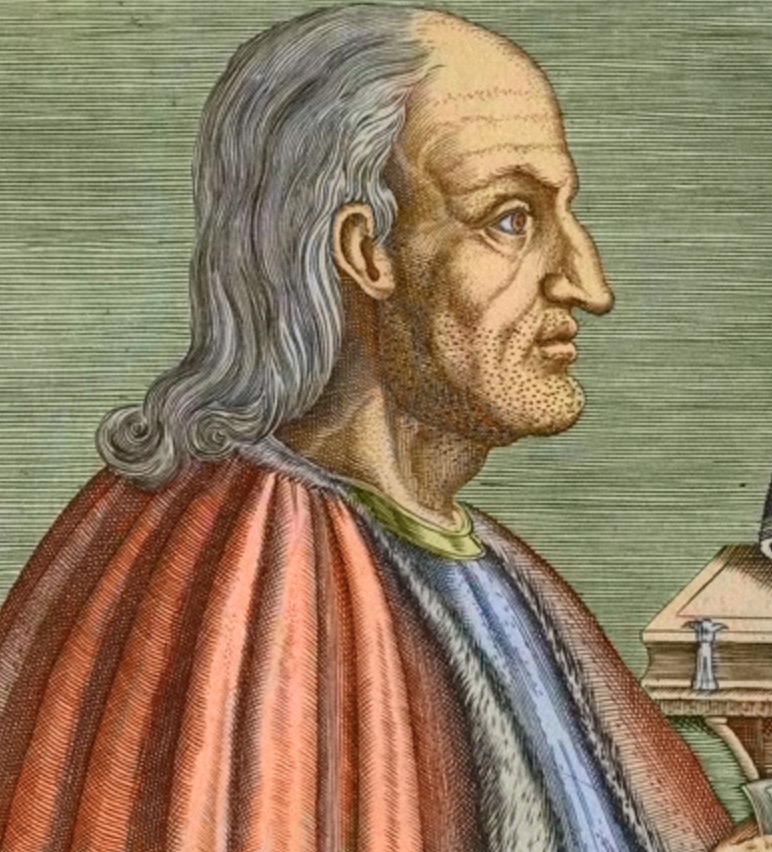
(Citation: Unknown. Anselm of Canterbury. Engraving. 19th century. Wikimedia Commons. https://commons.wikimedia.org/wiki/File:Anselm_of_Canterbury.jpg.)
A classic portrait engraving of Anselm of Canterbury, the Italian-born Archbishop and Doctor of the Church, depicted in profile with a mitre and crosier, symbolizing his ecclesiastical and intellectual legacy.

(Citation: AI-generated)
Anselm’s ontological argument in Proslogion (1078) was the first formal proof of God’s existence from the mere concept of a perfect being, shaping philosophy and theology for centuries.
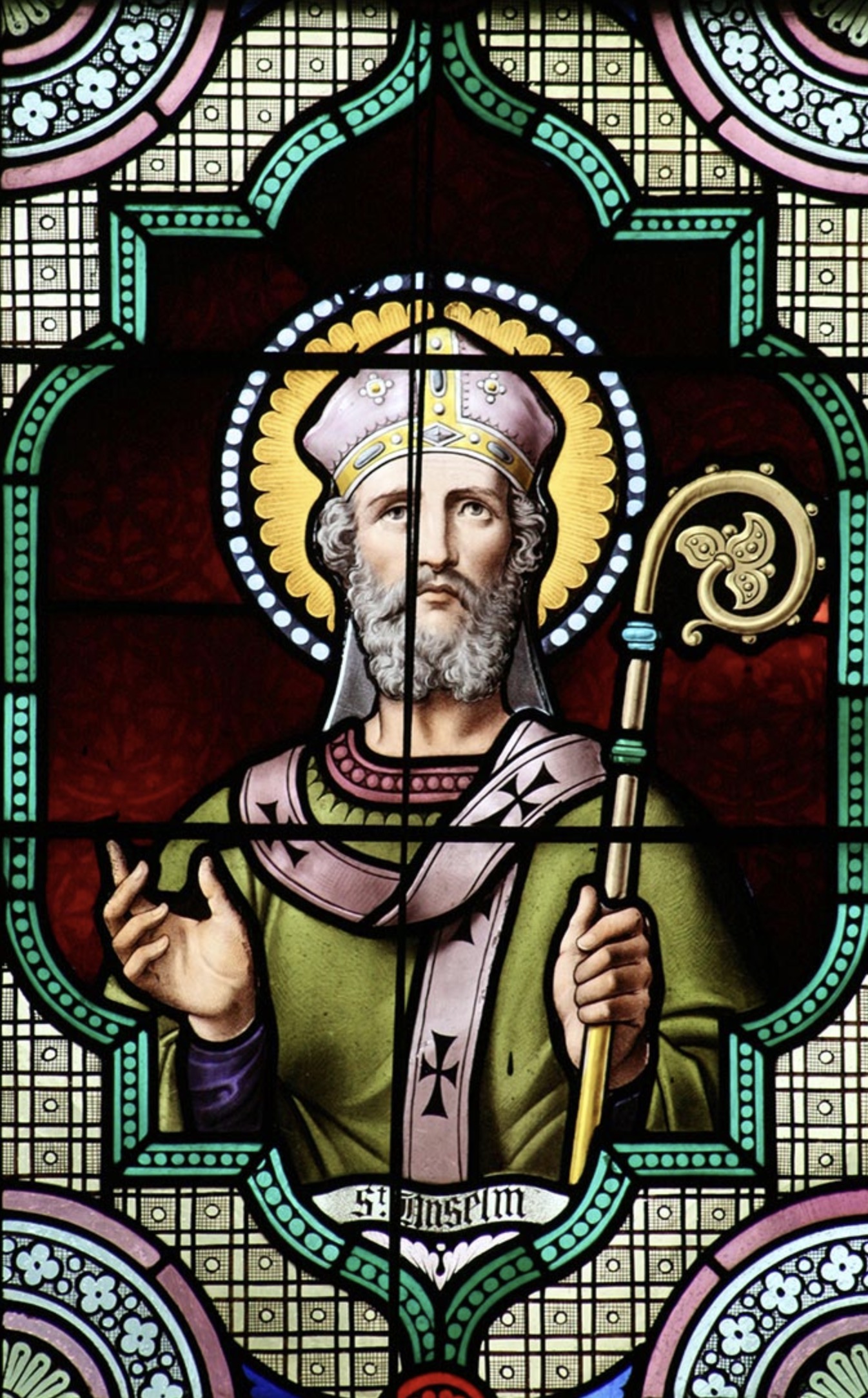
(Citation: Unknown. Anselm of Canterbury. Stained glass. 19th century. Wikimedia Commons. https://commons.wikimedia.org/wiki/File:Anselm-CanterburyVit.jpg.)

A 19th-century stained glass window depiction of Saint Anselm in the Victoria and Albert Museum style, showing him haloed with a book and staff, illustrating his monastic life and contributions to scholasticism.