
AVERROES
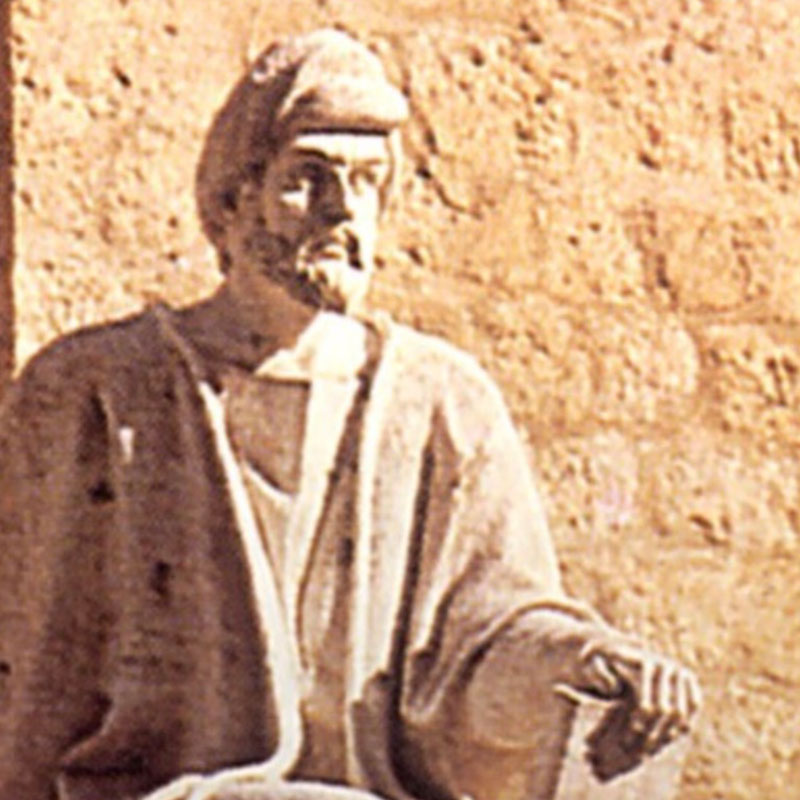
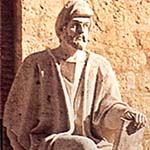
(Unknown. Statue of Averroes in Córdoba. Photograph. 2012. Wikimedia Commons. https://commons.wikimedia.org/wiki/File:Statue_of_Averroes_(C%C3%B3rdoba)_-_BAE09705.jpg.)
_-_BAE09705.jpg)
Born: circa 1126 CE, Córdoba, Al-Andalus (modern-day Spain)
Died: circa 1198 CE, Marrakesh, Morocco
Notable
- Founder of Latin Averroism: Established a major philosophical school that interpreted Aristotle rationally, profoundly influencing medieval European scholasticism and the Renaissance.
- Doctrine of the Unity of the Intellect: Argued for a single, shared active intellect for all humanity, challenging personal immortality theories while reconciling philosophy with religion.
- Practical Commentator on Aristotle: Produced comprehensive commentaries (tafsīr) on nearly all of Aristotle’s works, earning the title “The Commentator” in the Latin West.
1100–1200 AD works
Biography
Averroes, also known as Ibn Rushd, was a prominent Muslim philosopher and jurist in the medieval period. Born in Cordoba, Spain, in 1126, Averroes came from a distinguished family of jurists—both his grandfather and father served as a qadi (chief judge) in Seville and Cordoba. He was known for his expertise in various fields such as law, philosophy, theology, astronomy, mathematics, medicine, and theology. Averroes is primarily remembered for his commentaries on the works of Aristotle, which played a significant role in shaping Western thought during the Middle Ages. Averroes' ideas were controversial in his time, as they challenged traditional Islamic theology, and some religious authorities thought his ideas went against their religion. His unity of the intellect thesis, proposing that all humans possess the same intellect, became one of the best-known and most controversial doctrines in the West and was condemned by the Catholic Church. Despite facing criticism and persecution, Averroes continued to pursue his studies and promote a rationalist approach to philosophy. He died in Marrakesh, Morocco, in 1198, leaving behind a legacy of intellectual inquiry and critical thinking that continues to influence scholars to this day.
Influences & Notable For
Notable For
Averroes is best known for his commentaries on the works of Aristotle and his defense of philosophy against the attacks of Al-Ghazali. He is most famous for promoting the compatibility of reason and faith, advocating that philosophy and religion can coexist. He is widely recognized for his role in interpreting Aristotle's writings and transmitting Aristotelian philosophy to the Western world, profoundly influencing the development of Western thought during the Middle Ages. Averroes was also a prominent jurist and physician, known for his expertise in Islamic law and medicine. He is best known for his theory of the unity of the intellect and the idea of the "double truth" (though debated), suggesting philosophy and theology may reach truths through different paths.
Influences
Averroes was influenced by many philosophical and theological traditions, such as Greek philosophy, Islamic theology, and the works of earlier Muslim philosophers. His engagement with the writings of Aristotle and Plato, in particular, had a profound impact on his own philosophical ideas and writings. Averroes' commentaries on Aristotle's works not only helped to popularize Aristotelian philosophy in the Islamic world but also played a significant role in bringing Greek ideas to the Latin West during the Middle Ages. Besides Aristotle, Averroes was influenced by the works of Al-Farabi, Al-Kindi, and Avicenna, among others. His engagement with the intellectual traditions of his time and his willingness to challenge popular beliefs show his intellectual curiosity and how deeply he valued logical reasoning to understand the world, religion, and the nature of truth. Averroes' intellectual contribution was the theory of the unity of truth, arguing that philosophy and religion seek the same truth through different paths. His most controversial doctrine was the unity of the intellect, which proposed that all humans share one universal intellect. Averroes' presence influenced Jewish philosophers like Maimonides and Christian thinkers such as Thomas Aquinas. His main legacy was showcasing that careful reasoning could coexist with religious faith, influencing centuries of debates about reason and faith in Judaism, Christianity, and Islam.
Famous quotes
- “The Law teaches that the universe was invented and created by God, and that it did not come into being by chance or by itself.” – The Decisive Treatise by Averroes
- “If teleological study of the world is philosophy, and if the Law commands such a study, then the Law commands philosophy.” – The Decisive Treatise by Averroes
- “Philosophy and religion are two paths to the same truth.” – The Decisive Treatise by Averroes
- “The ability of women is not known because they are merely used for procreation, being reared for childbearing and the rearing of children.” – Averroes’ Commentary on Plato’s Republic
- “Ignorance leads to fear, fear leads to hate, and hate leads to violence. This is the equation.” – Averroes
Legacy & Modern Significance
Averroes' legacy continues to shape the fields of philosophy, theology, and law. His defense of philosophy against religious attacks and his advocacy for the compatibility of reason and faith have had a lasting impact on the development of Western thought. Averroes' commentaries on Aristotle's works played a crucial role in transmitting Greek philosophy to the Latin West and shaping the intellectual landscape of the Middle Ages. In the modern world, Averroes' ideas on the importance of reason, knowledge, and inquiry continue to be studied and debated by scholars in various disciplines. His commitment to intellectual freedom and his willingness to challenge traditional religious authorities have inspired generations of thinkers to engage critically with philosophical ideas and to seek truth through rational inquiry.
Modern Moments & Impact on 21st Century
In 2016, the International Averroes Foundation was established to promote intercultural dialogue and understanding in the spirit of Averroes' commitment to intellectual inquiry and rational discourse. In 2017, UNESCO included Averroes in their "Memory of the World" program and recognized his manuscripts as important historical documents that bridge Eastern and Western philosophical traditions. Averroes' works continue to be translated into various languages, making his ideas more accessible to a global audience and expanding his influence beyond the academic sphere. Academic conferences and symposia on Averroes' philosophy and legacy are held regularly, bringing together scholars from diverse fields to discuss his ideas and their relevance to contemporary issues. Digital resources such as online archives and scholarly editions of Averroes' writings have made it easier for researchers and students to access and study his works, contributing to a renewed interest in his intellectual contributions. The 900th anniversary of Averroes' birth in 2026 is expected to be commemorated with special events, exhibitions, and publications highlighting his enduring legacy and impact on Western thought.
Suggested Reading and Resources
Leaman, Oliver. Averroes and His Philosophy. Clarendon Press, 1988.
Taylor, Richard C. Averroes: His Life, Works, and Influence. Stanford University Press, 2012.
Davidson, Herbert A. Averroes: Ibn Rushd. Oneworld Publications, 2006.
Al-Rawi, Ahmed. Averroes: A Biography. Routledge, 2019.
Hourani, George F. Ibn Rushd (Averroes) on Religion and Philosophy. Cambridge University Press, 1993.
Averroes. Faith and Reason in Islam: Averroes' Exposition of Religious Arguments. Iran: Oneworld Publications, 2014.
Fakhry, Majid. Averroes: His Life, Work, and Influence. Iran: Oneworld Publications, 2014.
THE COMMENTATOR ON ARISTOTLE
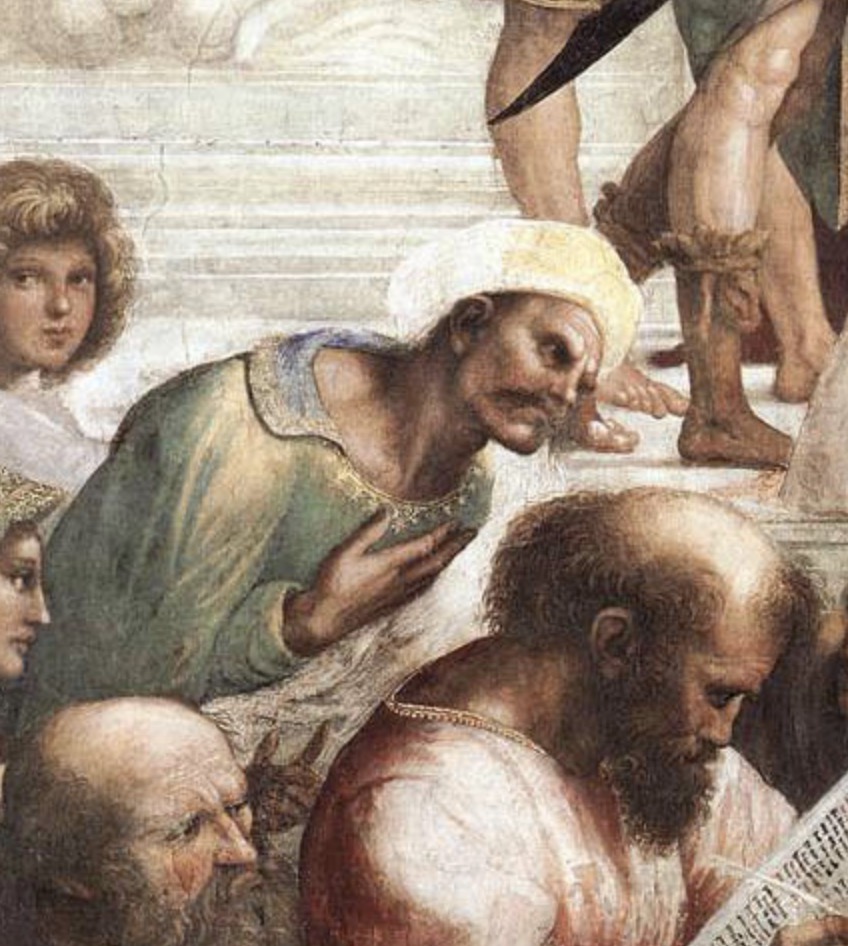
(Bonaiuto, Andrea. Averroes Closeup from The Triumph of Saint Thomas Aquinas. Fresco detail. 14th century. Wikimedia Commons. https://commons.wikimedia.org/wiki/File:Averroes_closeup.jpg.)

A close-up from Andrea Bonaiuto's 14th-century fresco The Triumph of Saint Thomas Aquinas in Santa Maria Novella, Florence, depicting Averroes (Ibn Rushd) as a commentator on Aristotle, surrounded by other scholars.
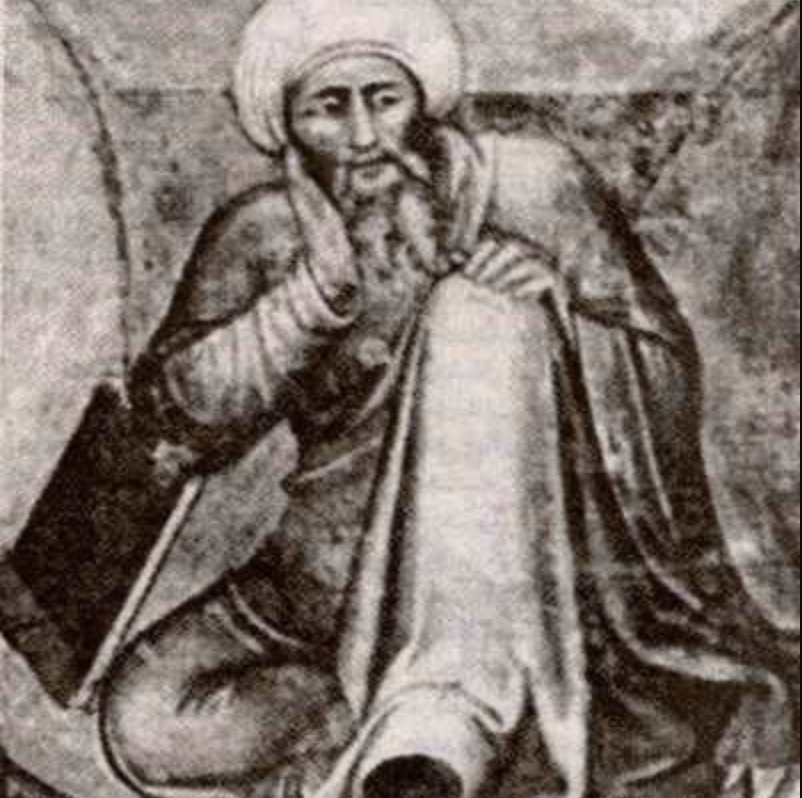
(Unknown. Averroes. Engraving. 16th century. Wikimedia Commons. https://commons.wikimedia.org/wiki/File:Averroes.jpg.)

A Renaissance-era portrait of Averroes, the Andalusian polymath and Aristotelian commentator, shown in scholarly robes with a turban, emphasizing his influence on medieval Islamic and Christian philosophy.
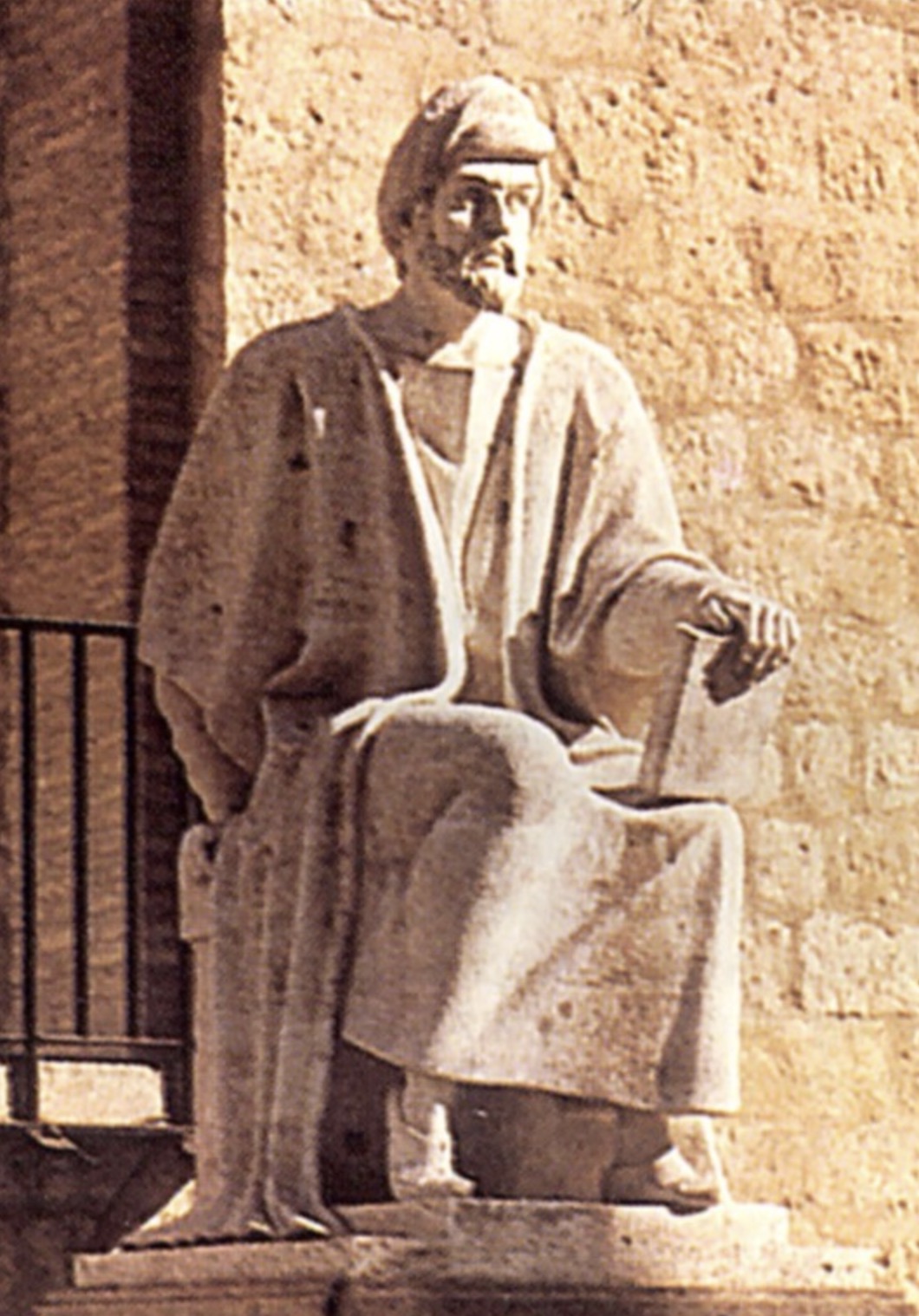
(Unknown. Statue of Averroes in Córdoba. Photograph. 2012. Wikimedia Commons. https://commons.wikimedia.org/wiki/File:Statue_of_Averroes_(C%C3%B3rdoba)_-_BAE09705.jpg.)
A photograph of the bronze statue of Averroes in Córdoba, Spain, erected in 1997, portraying the philosopher seated with a book, commemorating his birthplace and contributions to medicine, law, and astronomy.