Beowulf

BEOWULF

Beowulf
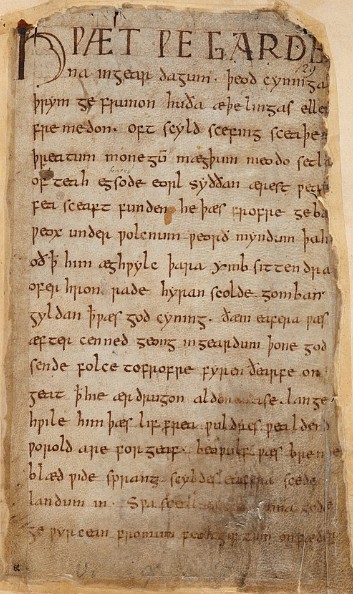
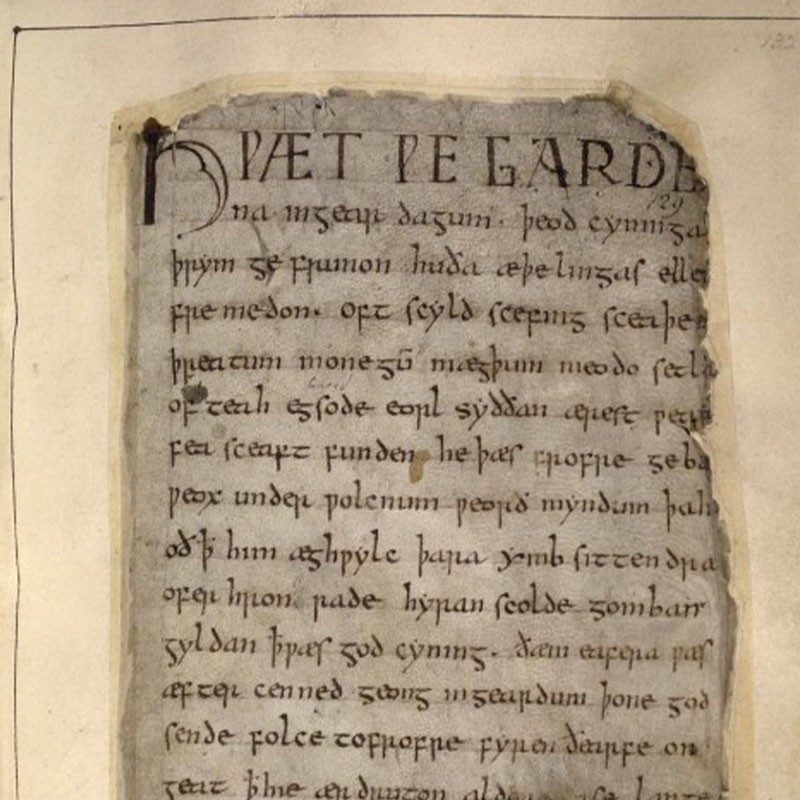
(“https://ebeowulf.uky.edu/ebeo4.0/CD/o/129r/129r.jpg”)

Composed: c. 700–1000 CE (generally considered to be from the late 10th to early 11th century)

Manuscript: c. 975–1025 CE

Notable

  • Early Epic: Oldest known epic poem in the English literary tradition.

  • Literary Foundation: Shaped early English language and poetic form.

  • Core Themes: Explores heroism, loyalty, fate, and good versus evil.

  • Lasting Influence: Inspired modern fantasy, including J. R. R. Tolkien.

700-1025 CE

Biography

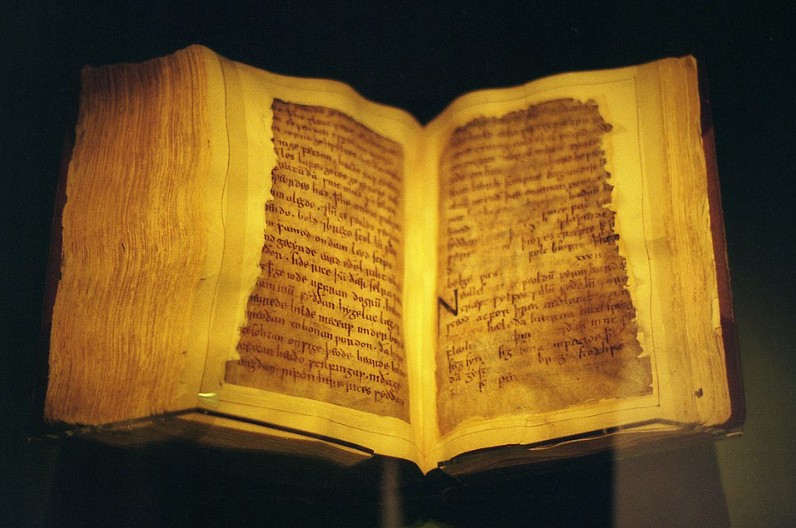
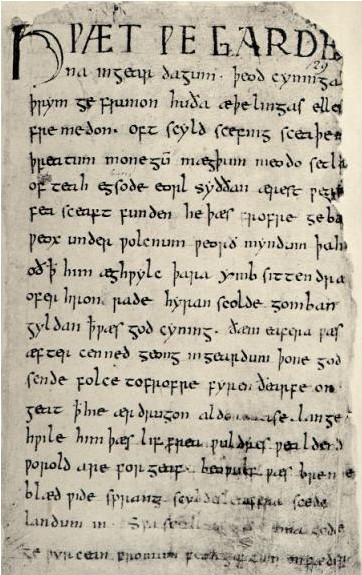
Beowulf is not an individual historical author but rather the title character of the oldest known epic poem in the English language and the presumed hero of the Geats, a North-Germanic tribe. The epic poem, composed in Old English between the 8th and early 11th centuries, is set in pagan Scandinavia, specifically among the Danes and Geats. It recounts Beowulf’s heroic deeds, including battles with the monster Grendel, Grendel’s mother, and a dragon. The only surviving manuscript—often called the Nowell Codex—is dated around 975–1025 CE. The poem’s author is unknown. It was likely composed by a Christian poet drawing on earlier oral traditions and pagan legends, merging pre-Christian heroic culture with Christian values.

    Bibliography & Major Works

    Original Edition:

    Beowulf, Nowell Codex (British Library, MS Cotton Vitellius A XV), c. 975–1025 CE

    Key Manuscript & Archaeological Sources:

    British Library, MS Cotton Vitellius A XV (the only extant manuscript of Beowulf, known as part of the “Nowell Codex”);
    https://blogs.bl.uk/digitisedmanuscripts/2013/04/whats-in-the-beowulf-manuscript.html

    Digitized facsimile: British Library Beowulf Manuscript

    Influences & Notable For

    Earliest known epic poem in the English literary tradition

    Foundational work in the development of the English language and literary forms

    Dramatic themes: heroism, loyalty, fate, and the conflict between good and evil

    Enduring influence on modern fantasy literature and pop culture, notably on authors such as J.R.R. Tolkien

    Famous quotes
    • “It is always better to avenge dear ones than to indulge in mourning. For every one of us, living in this world means waiting for our end.” – Beowulf, quoted in various translations; see Goodreads

    • “Each of us must accept the end of life here in this world—so we must work while we can to earn fame before death.” – Beowulf, cited widely; SparkNotes Character Quotes

    • “Do not grieve, wise warrior! It is better for each man that he avenge his friend than to mourn him much.” – Beowulf, translation citation at SparkNotes Character Quotes

    Major Works

    Part I: Beowulf travels to Denmark to help King Hrothgar by defeating the monster Grendel

    Part II: Beowulf slays Grendel’s vengeful mother in her underwater lair

    Part III: Many years later, as king of the Geats, Beowulf dies heroically battling a dragon. The poem closes with his funeral and the mourning of his people

    Legacy & Modern Significance

    Considered the foundational text of English literature and frequently listed as essential reading in English literature curricula worldwide

    Provided profound inspiration to writers, most notably J.R.R. Tolkien, who drew extensively from Beowulf for the creation of Middle-earth, as detailed in his essays and fiction

    The poem’s exploration of universal themes—heroism, mortality, leadership, the nature of evil—continues to inform scholarship in literature, philosophy, and cultural studies

    Ongoing debates focus on its meanings regarding heroism, gender, and the blending of Christian and pre-Christian themes


    Modern Moments & Impact on the 21st Century

    2019: British Library’s digitized Beowulf manuscript makes the entire poem accessible to scholars and the public

    2007–Present: Multiple film, television, and graphic novel adaptations of Beowulf released

    Ongoing: English departments at universities worldwide include Beowulf as core curriculum, with syllabi publicly accessible online (see Oxford Great Writers Inspire)

    2014: A new translation by J.R.R. Tolkien, edited by his son Christopher Tolkien, published by HarperCollins

    2021: Beowulf’s influence on contemporary literature highlighted in university conferences and scholarship (see Cambridge Scholars Publishing)


    Influences & Intellectual Context

    Oral Germanic heroic traditions and Norse myths

    Pagan legends of Scandinavia merged with Christian morality and themes

    Influence of classical epics such as Homer’s Odyssey and Virgil’s Aeneid—structural, thematic, and literary parallels have been debated by scholars

    The work’s cultural milieu was Anglo-Saxon England, informed by both Germanic and Latin literary traditions

    Suggested Reading & Resources

    Secondary Literature (Scholarship)

    Tolkien, J.R.R., ed. and trans. Beowulf: A Translation and Commentary. HarperCollins, 2014

    Chickering, Howell D. Beowulf: A Dual-Language Edition. Anchor Books, 1977/2006

    Liuzza, R.M. Beowulf: A New Translation. Broadview, 2013

    Shippey, Tom. J.R.R. Tolkien: Author of the Century. Houghton Mifflin, 2001

    Owen-Crocker, Gale. The Four Funerals in Beowulf and the Structure of the Poem. Manchester University Press, 2000

    Archival or Online Sources

    “Beowulf Manuscript”—British Library, Digitized Public Domain
    https://www.bl.uk/collection-items/beowulf-manuscript

    “Beowulf: Summary and Analysis,” Britannica
    https://www.britannica.com/topic/Beowulf

    “Introduction to Beowulf,” Oxford—Great Writers Inspire
    https://writersinspire.org/content/introduction-beowulf

    “Beowulf: Poem Full Summary,” SparkNotes
    https://www.sparknotes.com/lit/beowulf/summary/

    “Beowulf and Middle-earth: Tolkien’s Influences,” Wikipedia
    https://en.wikipedia.org/wiki/Beowulf_and_Middle-earth

    “What’s in the Beowulf Manuscript?” The British Library Manuscripts Blog
    https://blogs.bl.uk/digitisedmanuscripts/2013/04/whats-in-the-beowulf-manuscript.html