
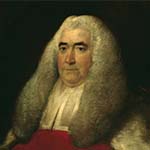
BLACKSTONE
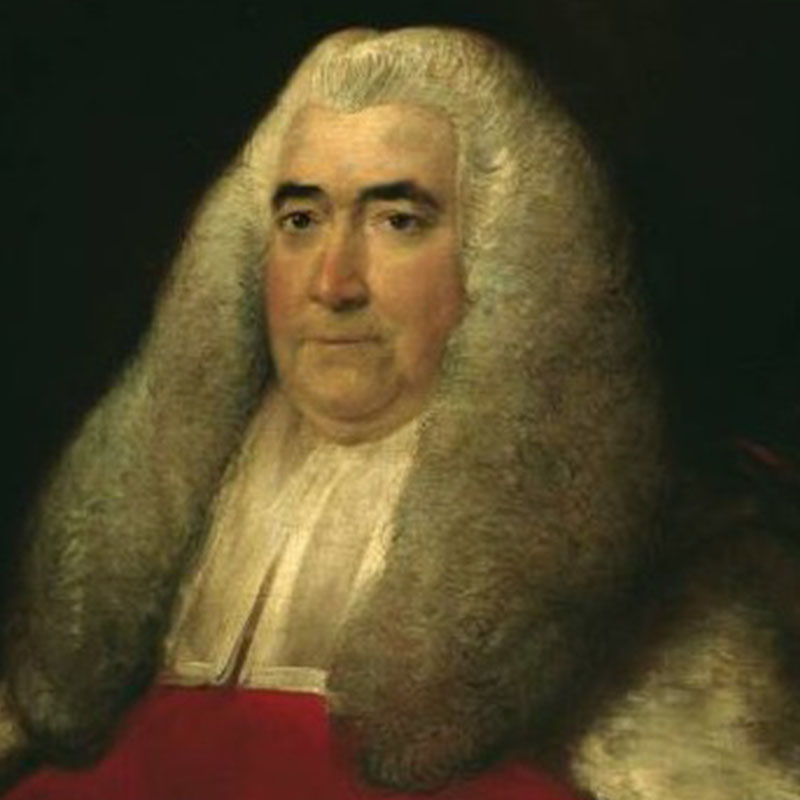
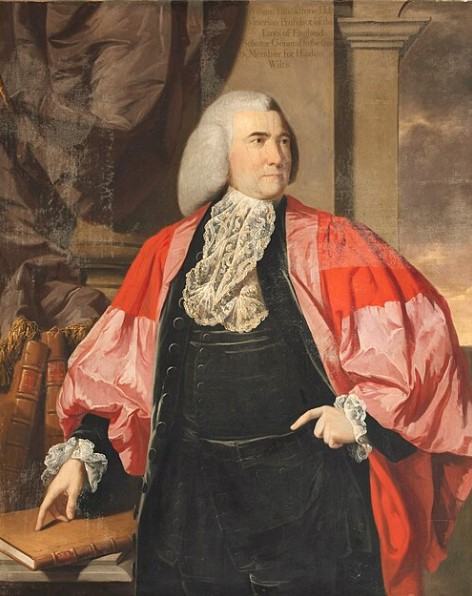
(Unknown. Sir William Blackstone. Oil on canvas; ca. 1770. Wikimedia Commons. https://commons.wikimedia.org/wiki/File:SirWilliamBlackstone.jpg.)

Born: 10 July 1723, in a middle-class family in London
Died: 14 February 1780 (at the age of 56) in Wallingford, Berkshire, England
Notable
-
Legal Authority: Author of Commentaries on the Laws of England, the most influential common-law text.
-
Accessible Law: Explained English common law for educated non-lawyers.
-
Systematic Framework: Organized law into four books, presenting it as a coherent system.
1700–1800 AD works
Biography
William Blackstone was an English jurist, judge, and legal scholar of the 18th century. He is widely known as the author of the “Commentaries on the Laws of England,” the most influential legal text in the English-speaking world, and is traditionally credited with making English common law accessible to ordinary citizens. His life represents a dramatic transformation from struggling lawyer to becoming a famous law professor and judge. The Commentaries provide a comprehensive account of English law, covering constitutional law, property rights, private wrongs, and criminal law. Even though some experts argue about parts of his work, he wrote it between 1765 and 1769 as the basis of his pioneering Oxford lectures. The work is written in clear, elegant English and is considered the foundation of legal education in both England and America due to its systematic organization and clarity.
The Commentaries on the Laws of England have four parts, known as the "Four Books of Blackstone," which emphasize different aspects of English law. The work also contains his famous formulation that "it is better that ten guilty persons escape than that one innocent suffer," which became a key principle in criminal justice. The Commentaries were widely read and studied by lawyers throughout the British Empire and had a significant impact on American legal development and practice throughout history. Blackstone's journey from unsuccessful lawyer to the first professor of English law at Oxford shows how one person can change an entire profession. He proved that law could be taught as a clear subject instead of a confusing mystery that only experts understood.
Influences & Notable For
William Blackstone is best known for his authorship of the Commentaries on the Laws of England, which is the most influential legal text in the English-speaking world.
His Commentaries, written specifically for a general educated audience, are well known for their comprehensive account of English common law, as well as their emphasis on making complex legal principles understandable to non-lawyers.
The Commentaries are particularly notable for their systematic organization of law into four books and their portrayal of English law as a rational, coherent system.
Blackstone's transformation from failed London barrister to the first Vinerian Professor of English Law at Oxford shows one of the most influential academic appointments in legal history, showing how legal education could move from apprenticeship to university study.
Blackstone is famous for articulating the principle that "it is better that ten guilty persons escape than that one innocent suffer," which became a cornerstone of criminal justice.
Blackstone is recognized for profoundly influencing American law, with his Commentaries serving as the primary legal textbook for American lawyers, including the Founding Fathers.
Famous quotes
"It is better that ten guilty persons escape than that one innocent suffer." – Commentaries on the Laws of England, William Blackstone
"Man was formed for society." – Commentaries on the Laws of England, William Blackstone
"That the king can do no wrong is a necessary and fundamental principle of the English constitution." – Commentaries on the Laws of England, William Blackstone
"The absolute rights of man... are usually summed up in one general appellation and denominated the natural liberty of mankind." – Commentaries on the Laws of England, William Blackstone
"Property is that sole and despotic dominion which one man claims over the external things of the world." – Law Tracts, William Blackstone
Legacy & Modern Significance
William Blackstone's transformation from being a failed lawyer to being the most influential legal educator left a lasting legacy that continues to shape legal systems, education, and constitutional democracy throughout history. Blackstone's Commentaries show law as systematic and rational, which has shaped Western beliefs about the nature of legal authority, the importance of precedent, and the significance of individual rights. The Commentaries’ emphasis on accessible legal education, like making complex law understandable, has inspired democratic societies to seek transparency, accountability, and equal justice under law. The principle "better ten guilty escape than one innocent suffer," found in Blackstone, is applied daily by courts worldwide.
In terms of modern significance, the Commentaries continue to be studied and interpreted by judges, legal scholars, and lawmakers around the world. Blackstone's themes of property rights, constitutional limits, and the balance between liberty and order remain relevant to current debates about digital privacy, government surveillance, and economic regulation. The work's message of law as protector of natural rights continues to inspire individuals and movements to challenge unjust laws through legal means. Courts today use his definitions of fundamental concepts like property and crime to address new technologies and social changes.
Modern Moments & Impact on the 21st Century
The U.S. Supreme Court regularly cites Blackstone in major decisions—for example, in District of Columbia v. Heller (2008) about gun rights.
Law schools still teach Blackstone as part of legal history courses.
His "ten guilty escape" principle is genuinely cited in criminal justice debates.
Courts reference Blackstone when interpreting common law concepts.
Blackstone continues to be cited in court decisions, and his work still influences the structure of legal education.
His principles appear in contemporary legal debates.
New editions of the Commentaries are periodically published.
Influences & Intellectual Context
The Commentaries on the Laws of England are influenced by a variety of legal, philosophical, and historical sources, including ancient Roman law, medieval English legal texts, and Enlightenment philosophy. Blackstone often quotes and refers to earlier legal authorities, especially Sir Edward Coke and Sir Matthew Hale, in order to showcase the continuity of English common law. The Commentaries also draw on the natural law theories of John Locke and Samuel Pufendorf, a philosophical tradition that argued law should reflect universal moral principles discovered through reason.
In terms of intellectual context, the Commentaries reflect the diverse intellectual and cultural milieu of 18th-century Enlightenment Britain. Blackstone addresses contemporary concerns and controversies, such as the balance between liberty and order, the rights of property, and the nature of constitutional government. The work emphasizes the rational and systematic nature of English law while also showing its historical development and organic growth through centuries of judicial decisions and parliamentary statutes.
Suggested Reading & Resources
Prest, Wilfrid. William Blackstone: Law and Letters in the Eighteenth Century. United Kingdom: OUP Oxford, 2012.
Blackstone, William. The Commentaries of Sir William Blackstone, Knight, on the Laws and Constitution of England. United States: ABA, 2009.
Reed, John. Pennsylvania Blackstone: Being a Modification of the Commentaries of Sir William Blackstone, with Numerous Alterations and Additions, Designed to Present an Elementary Exposition of the Entire Laws of Pennsylvania. United States: Lawbook Exchange, 2006.
Lockmiller, David Alexander. Sir William Blackstone. United States: University of North Carolina Press, 1938.
Stacey, Robert D. Sir William Blackstone and the Common Law: Blackstone's Legacy to America. United States: ACW Press, 2003.
SCHOLAR OF JUSTICE AND LEGAL ORDER
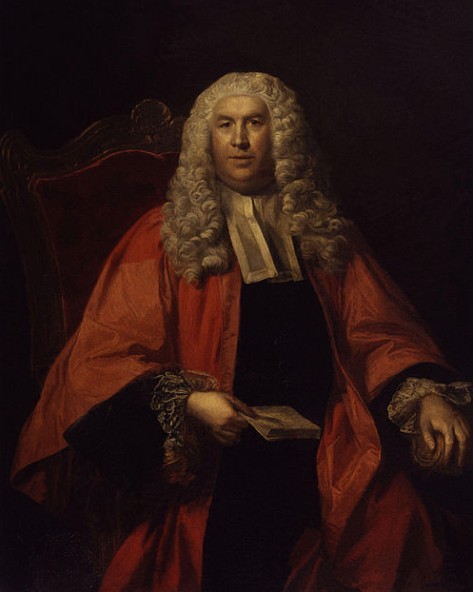
(Unknown. Sir William Blackstone. Oil on canvas; 200 × 150 cm. ca. 1774. National Portrait Gallery, London. Wikimedia Commons. https://commons.wikimedia.org/wiki/File:Sir_William_Blackstone_from_NPG.jpg.)

An anonymous 18th-century portrait from the National Portrait Gallery depicts Sir William Blackstone in judicial robes with a wig, holding a book, symbolizing his Commentaries on the Laws of England, as honored in the Goodrich Seminar Room for codifying legal liberty and common law principles.
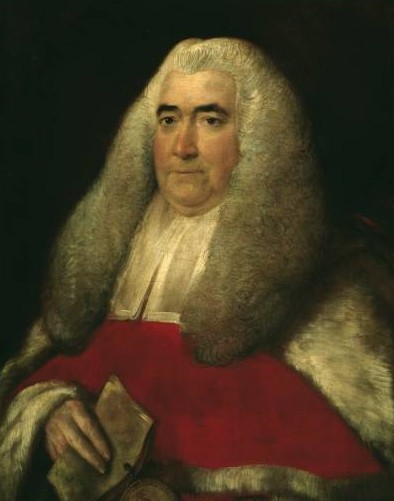
(Unknown. Sir William Blackstone. Oil on canvas; 100 × 80 cm. ca. 1770. Wikimedia Commons. https://commons.wikimedia.org/wiki/File:SirWilliamBlackstone.jpg.)
An anonymous 18th-century painting of Sir William Blackstone in red robes with a white wig, seated with a book, emphasizes his role as Vinerian Professor and systematic expositor of English law, influencing constitutional protections.
(Unknown. William Blackstone. Oil on canvas; 90 × 70 cm. ca. 1765. Wikimedia Commons. https://commons.wikimedia.org/wiki/File:William_Blackstone.jpg.)

An anonymous 18th-century portrait of William Blackstone in black robes with a wig, against a classical background, symbolizing his commentaries that clarified rights to property and due process, foundational to modern legal freedom.