
BUDDHA
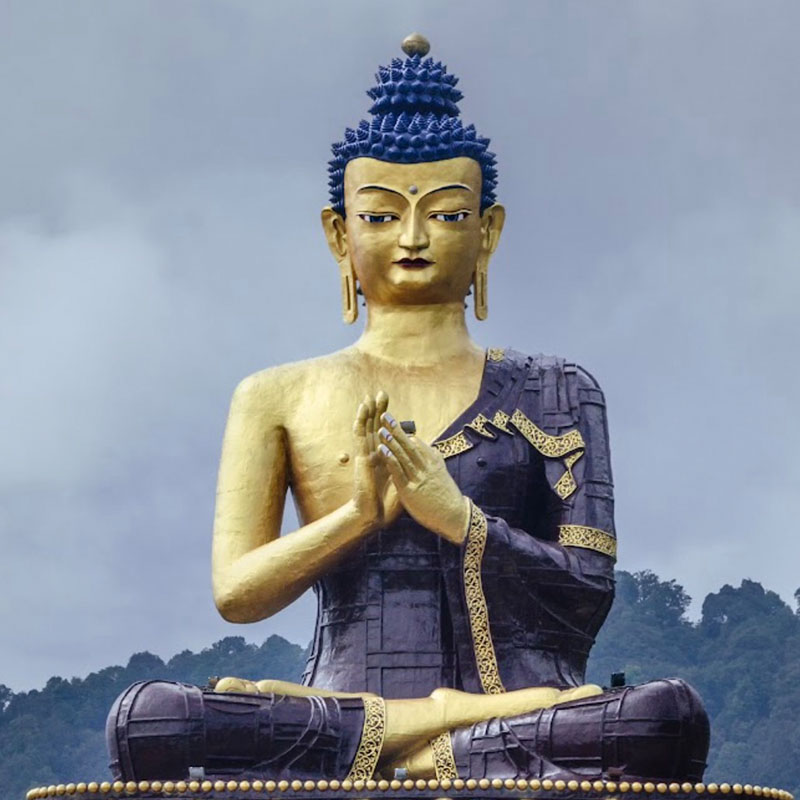
(Subhrajyoti07. "Large Gautama Buddha Statue in Buddha Park of Ravangla, Sikkim." Photograph, 2018. Wikimedia Commons. https://commons.wikimedia.org/wiki/File:Large_Gautama_Buddha_statue_in_Buddha_Park_of_Ravangla,_Sikkim.jpg (accessed October 4, 2025).)
Why would a prince give up everything to understand suffering?
Traditionally sixth century B.C. · India
The person known generally as the Buddha is credited with beginning a spiritual movement that shaped the institutional and intellectual development of Asia. Born into the ruling family of the Sakyas, he lived in comfort and ease, then turned to severe austerity, before finding a path of his own.
His own path
From palace to starvation to awakening
- Name: Siddhartha Gautama, of the Gautama clan
- Born: Into the ruling family of the kingdom of the Sakyas, traditionally in the mid-sixth century B.C.
- At twenty-nine: Realized that all people grow old, become sick and die, and left his wife and newborn child to seek the Truth
- In Magadha: Studied meditation with two teachers, then joined the ascetics
- At thirty-five: Became the supreme Buddha, the “Awakened One”
If life inevitably involves suffering, what is it for?
Hover or tap each step to follow Gautama’s search
- Old Age, Sickness, DeathIt is said that Gautama lived a life of comfort and ease until he was twenty-nine, when he fully realized that all people are fated to grow old, become sick and die.
- The SearchFaced with the reality that life inevitably involves suffering, he asked what its purpose was, and set off in search of the great Truth of existence, leaving behind his wife and newborn child.
- MeditationTraveling south to the kingdom of Magadha, he found two teachers who guided him through the mysteries of deep meditation. He soon grew dissatisfied with these practices alone.
- AusterityHe was drawn to the ascetics, who denied the obvious realities of material existence and lived lives of severe austerity, until he fainted from near starvation.
- His Own PathGautama decided to find his own path to the truth, combining elements of both mysticism and asceticism. Humans come to know ultimate reality through meditation, and the closer they come to the supreme Truth, the less they require of this world to sustain them.
The Buddha is credited with beginning a spiritual movement that shaped the institutional and intellectual development of Asia.
At thirty-five, Gautama became the supreme Buddha. The following he gathered grew into one of the major religions of the world, built on the conviction that suffering can be understood, and that through meditation people can come to know ultimate reality.
Where to read more about the Buddha and his teaching.
- 1959What the Buddha TaughtRahula, Walpola · Gordon Fraser (later Grove Press)
- 1972The Life of the Buddha: According to the Pali CanonÑāṇamoli, Bhikkhu · Buddhist Publication Society
- 1973The DhammapadaMascaró, Juan, trans. · Penguin Classics
- 1991Old Path White Clouds: Walking in the Footsteps of the BuddhaNhat Hanh, Thich · Parallax Press
- 1998The Heart of the Buddha’s TeachingNhat Hanh, Thich · Parallax Press (Broadway Books, 1999)
- 2001BuddhaArmstrong, Karen · Viking / Penguin Lives
- 2009Buddhist Philosophy: Essential ReadingsEdelglass, William, and Jay L. Garfield, eds. · Oxford University Press
- The DhammapadaF. Max Müller’s translation of the early collection of the Buddha’s sayings, free from Project Gutenberg.gutenberg.org
- Access to InsightFree translations of more than a thousand suttas from the Pali canon.accesstoinsight.org
- Stanford Encyclopedia of Philosophy: BuddhaA scholarly entry by Mark Siderits on the Buddha’s philosophical teachings.plato.stanford.edu
- Britannica: BuddhaA biography and overview of his teachings and influence.britannica.com
- United Nations: Vesak DayThe UN’s international observance of the Buddha’s birth, enlightenment and passing.un.org
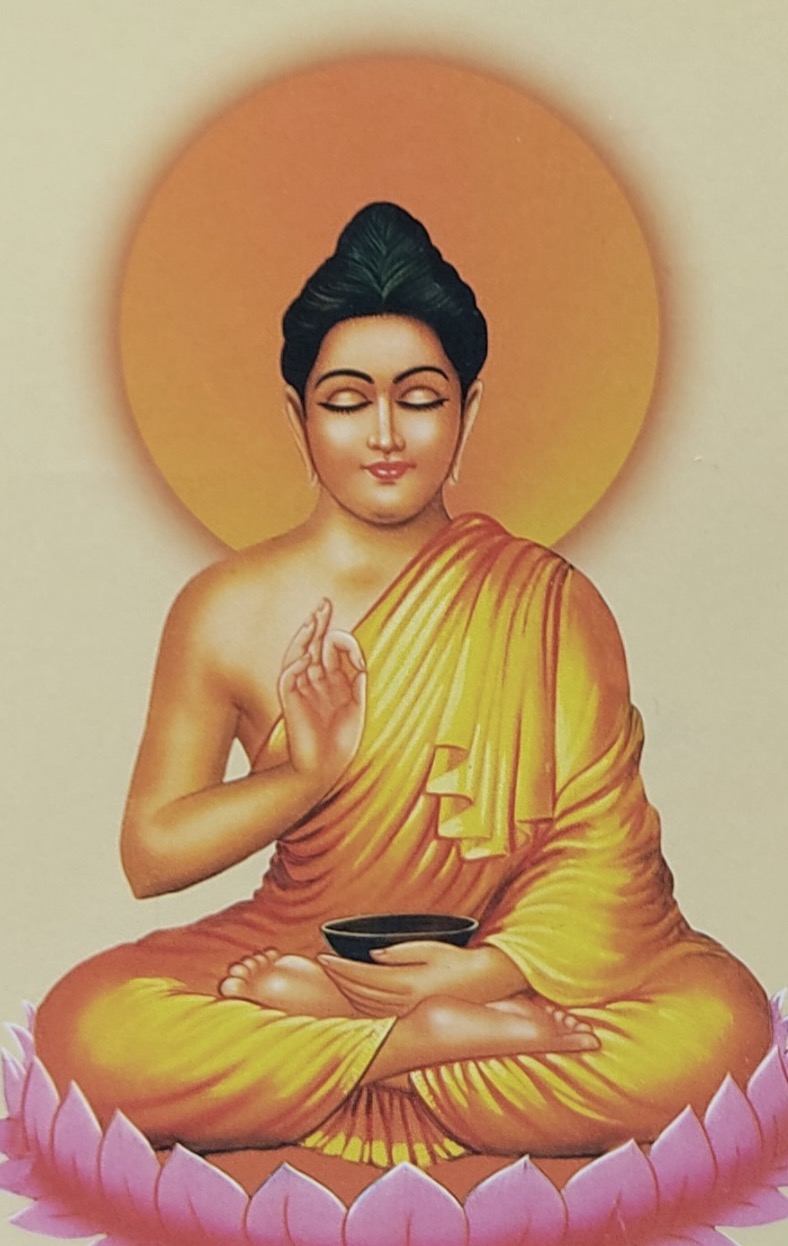
(Katz, Josh. "Gautama Buddha." Digital art, 2022. Wikimedia Commons. https://commons.wikimedia.org/wiki/File:Gautama_Buddha_11.jpg)
An artistic illustration of Gautama Buddha seated in lotus position on a pink lotus flower, wearing a yellow robe, with eyes closed in meditation.
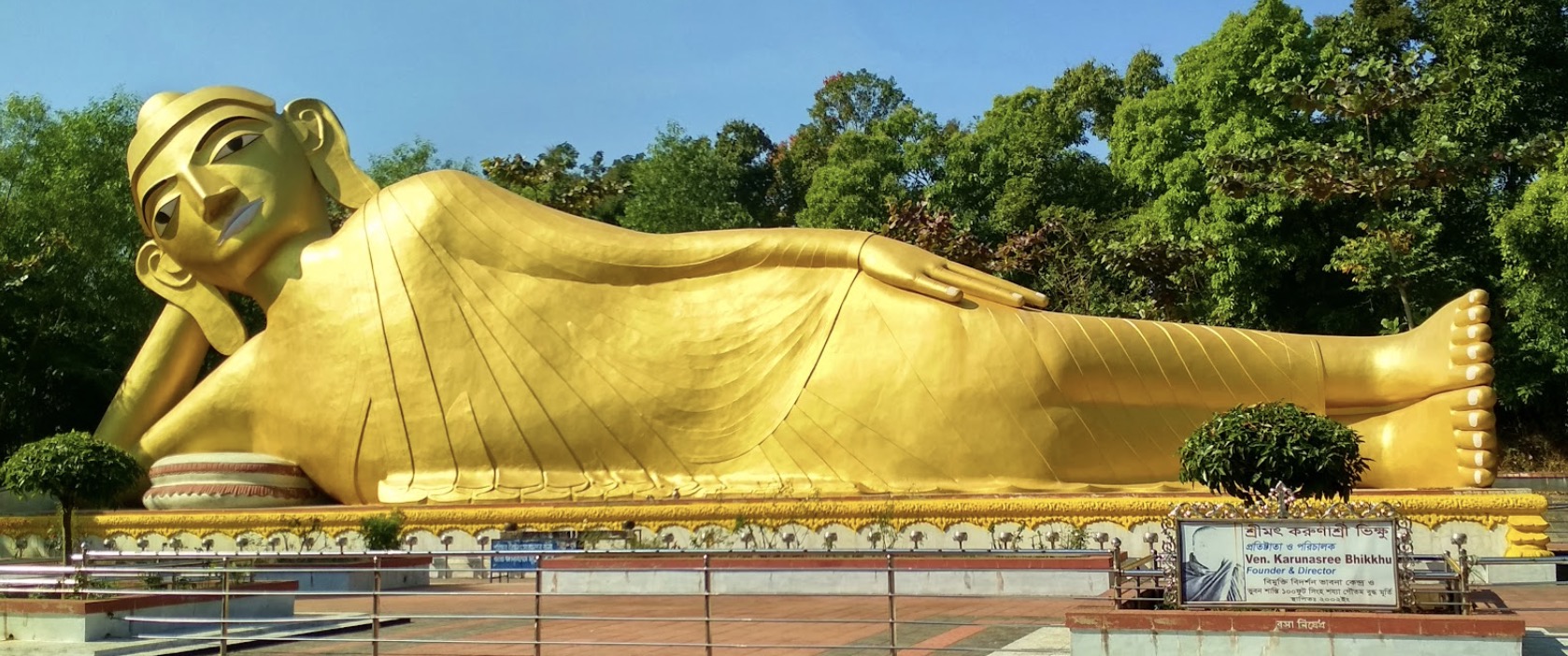
(https://commons.wikimedia.org/wiki/File:Bhuvan_shanti_100_feet_lion_bed_statue_of_Gautama_Buddha.jpg)
Rocky, Masum-al-Hasan. "Bhuvan Shanti 100 Feet Lion Bed Statue of Gautama Buddha.
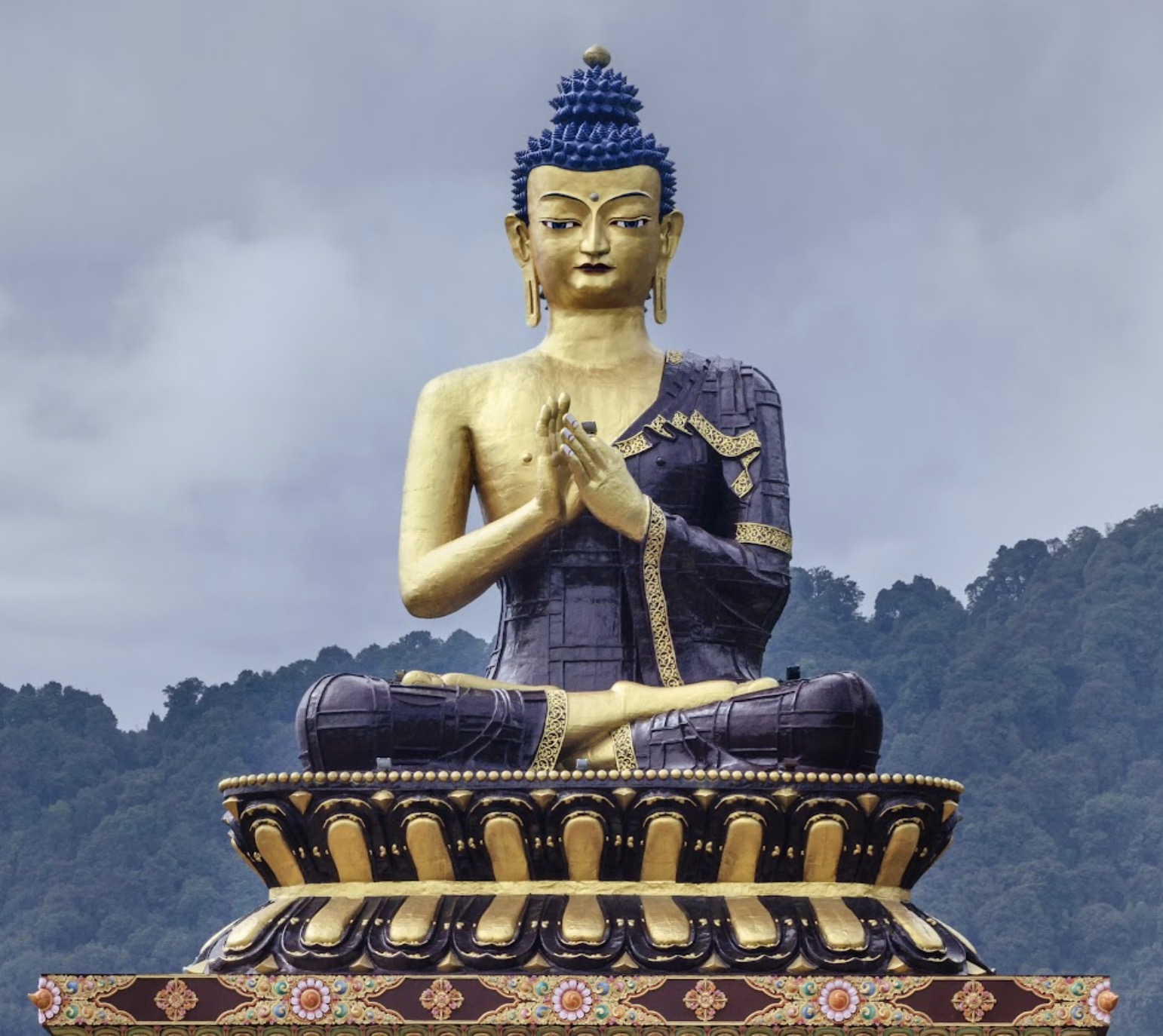
(Subhrajyoti07. "Large Gautama Buddha Statue in Buddha Park of Ravangla, Sikkim." Photograph, 2018. Wikimedia Commons. https://commons.wikimedia.org/wiki/File:Large_Gautama_Buddha_statue_in_Buddha_Park_of_Ravangla,_Sikkim.jpg (accessed October 4, 2025).)
A massive golden statue of Gautama Buddha seated in lotus position with hands in prayer mudra, atop a colorful ornate pedestal with mythical motifs and a small shrine at the base.