
CICERO
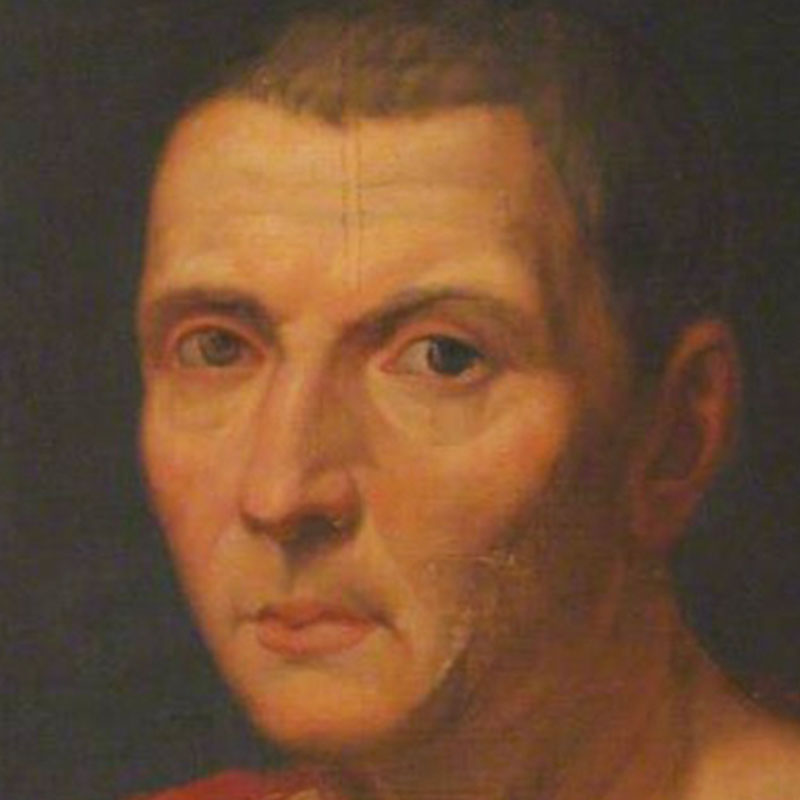
(Unknown artist. Marcus Tullius Cicero (106–43 BC). Illumination in manuscript. Bodleian Libraries, University of Oxford. https://artuk.org/discover/artworks/marcus-tullius-cicero-10643-bc-228725.)
Can a man’s words outlast the republic he died defending?
106–43 B.C. · The Roman Republic
Marcus Tullius Cicero was a statesman and lawyer known for his involvement in Roman politics toward the end of the Republic. He is also remembered as a scholar and writer whose mastery of Latin influenced subsequent generations. Born in Arpinum in 106 B.C., he was executed in 43 B.C. for his defense of the Republic.
Most of his surviving works were written during his years away from politics
- Born: 106 B.C., in Arpinum
- Consul: 63 B.C., when he opposed Catiline’s attempt to overthrow the government
- Refused: Caesar’s invitation to join the First Triumvirate (60 B.C.), as unconstitutional
- Opposed: Caesar, and later Mark Antony, as each tried to consolidate power
- Executed: December 7, 43 B.C., near Caieta, by Octavian’s forces
What is a republic worth, and who will defend it?
Hover or tap each idea to look closer
- Defending the RepublicAs one of the consuls of Rome in 63 B.C., Cicero opposed Catiline’s effort to overthrow the government and personally oversaw the conspirators’ execution. It cost him considerable political popularity.
- Against DictatorshipCicero spent the latter part of his life fighting the rise of dictatorship. He rebuffed Caesar’s invitation to join the First Triumvirate as unconstitutional, and he opposed Caesar and later Mark Antony when both tried to consolidate their power.
- A Fatal MiscalculationAfter Caesar’s murder, Cicero tried to use Octavian to counter the power of Antony, but he greatly underestimated Octavian, whose forces executed him.
- The Ciceronian StyleCicero’s skill as a rhetorician and poet influenced Latin, and the later languages descended from it, more than any other single source. His technical perfection of the hexameter helped make the later achievements of Virgil possible.
- Philosophy for RomeBy his own admission Cicero was an unoriginal philosopher, but his skill as a communicator brought several generations of Greek philosophy to Rome and later civilizations.
Despite his failure to preserve the Republic, Cicero’s legacy as a defender of liberty inspired later generations.
It is Cicero’s skill as a rhetorician and poet that accounts for his lasting influence on philosophy and literature. His views on the importance of philosophy have been of enduring importance, and his exhortation to study philosophy is said to have profoundly influenced Saint Augustine’s conversion.
Where to read more about Cicero.
- 1741The History of the Life of Marcus Tullius CiceroMiddleton, Conyers · reprinted by Creative Media Partners, 2018
- The Republic of CiceroGeorge William Featherstonhaugh’s English translation, also available in modern reprints (CreateSpace, 2017; Creative Media Partners, 2016).Project Gutenberg
- The Works of CiceroFree and scholarly editions of his speeches, letters, and philosophical works.Project GutenbergInternet Classics ArchiveLoeb Classical Library (subscription)
- Stanford Encyclopedia of Philosophy: CiceroBy Raphael Woolf.plato.stanford.edu
- Encyclopaedia Britannica: Cicerobritannica.com
- World History Encyclopedia: Ciceroworldhistory.org
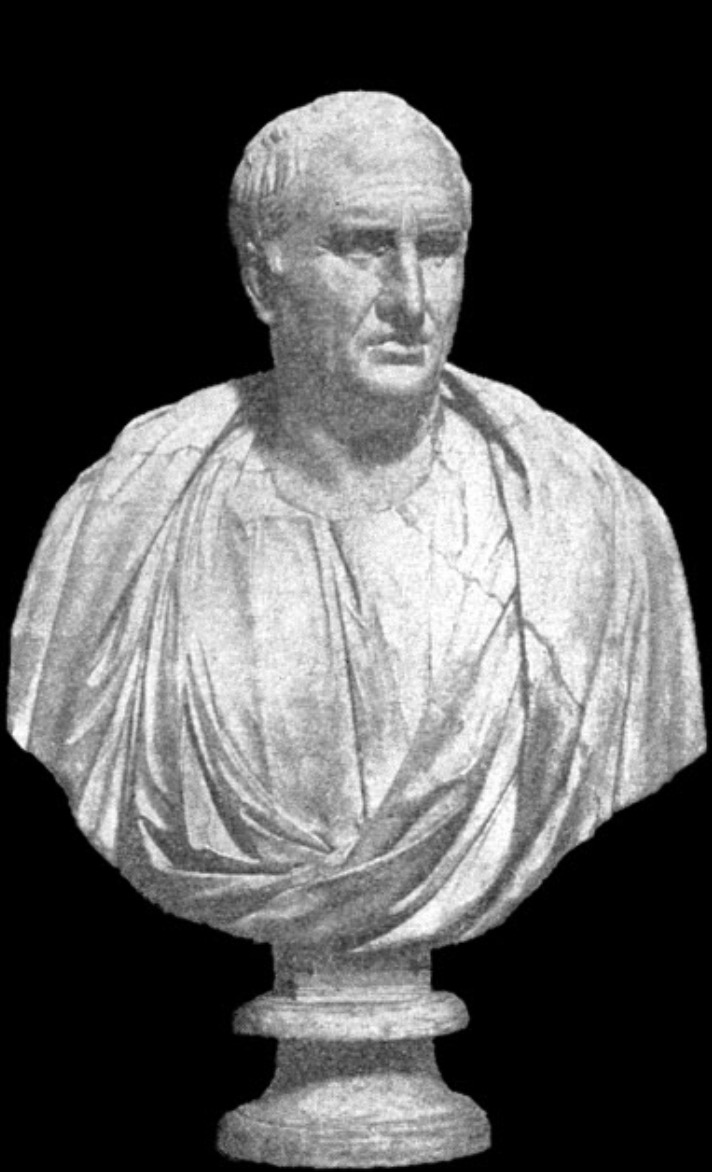
(Unknown. Bust of Marcus Tullius Cicero. Marble. 1st century BC. National Archaeological Museum, Naples. Wikimedia Commons. https://commons.wikimedia.org/wiki/File:Marcus_Tullius_Cicero.jpg.)

A Roman marble bust of Marcus Tullius Cicero, a 1st-century BC orator and statesman, discovered in the Villa of the Papyri at Herculaneum, with realistic features and intense expression, reflecting his eloquence and philosophical writings, now in the National Archaeological Museum, Naples.
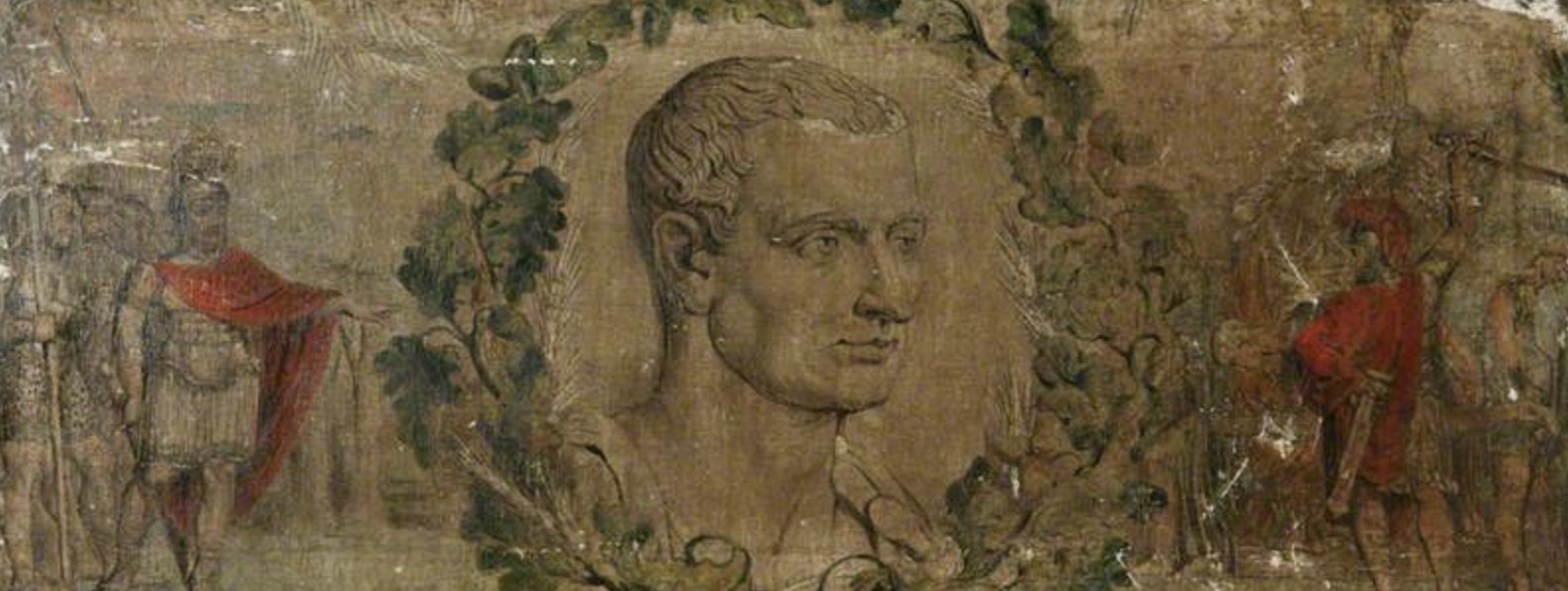
(William Blake. Marcus Tullius Cicero (106–43 BC). ca. 1800. Tempera on canvas. Manchester Art Gallery, UK. https://artuk.org/discover/artworks/marcus-tullius-cicero-106-bc43-bc-204466.)
Visionary artist William Blake's ca. 1800 tempera portrays the severed head of Cicero, alluding to his brutal execution by Mark Antony's orders in 43 BC. Surrounded by a wreath and flanked by soldiers at the beheading, the work hauntingly contrasts the philosopher-orator's noble profile with the violence of his end, housed in Manchester Art Gallery.
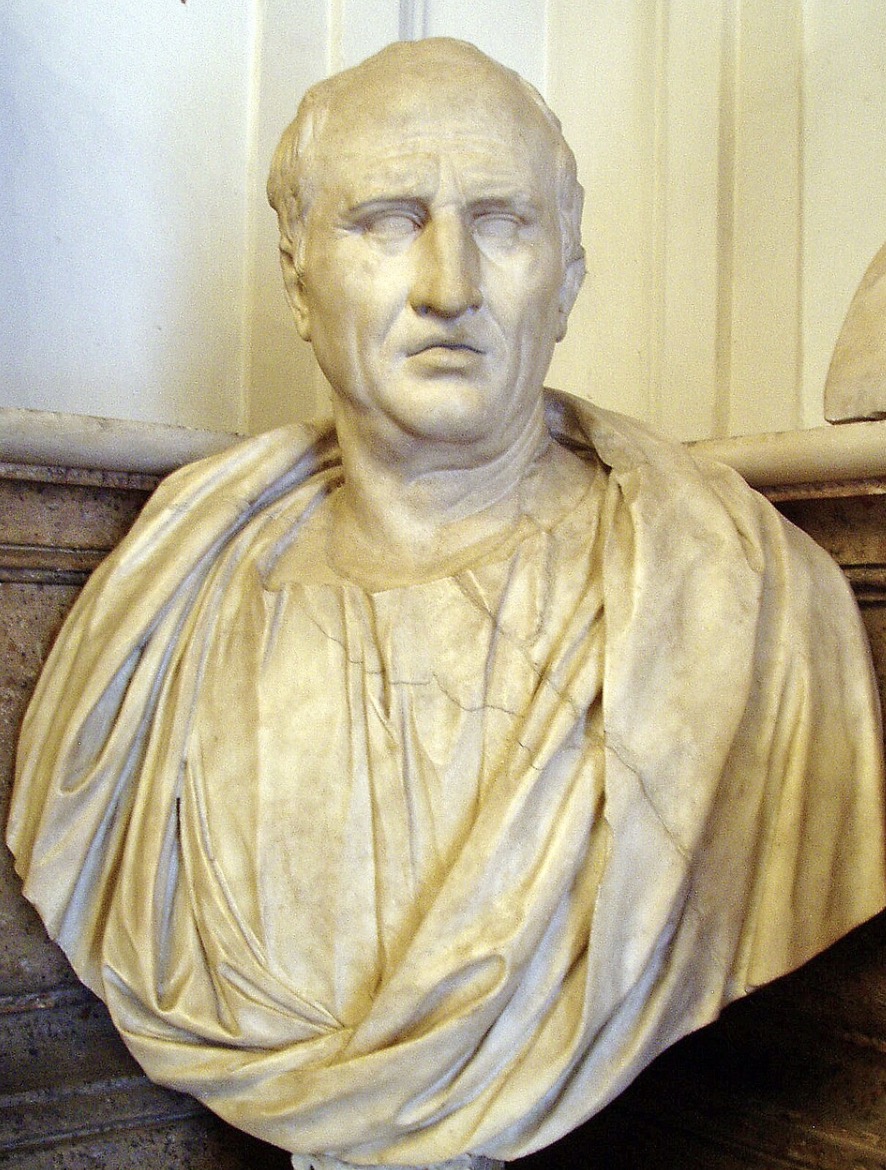
(Unknown artist (Roman, 1st century AD). Portrait Bust of Cicero. Marble. Capitoline Museums, Rome. https://commons.wikimedia.org/wiki/File:Cicero_-_Musei_Capitolini.JPG.)

This Roman marble bust from the 1st century AD, housed in Rome’s Capitoline Museums, captures Cicero in characteristic veristic detail—deeply lined face, prominent cheekbones, and intense expression that convey the orator’s intellectual vigor and moral resolve. Widely reproduced and recognized, it stands as a canonical ancient likeness of the statesman who defined Roman eloquence.