
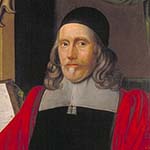
COKE
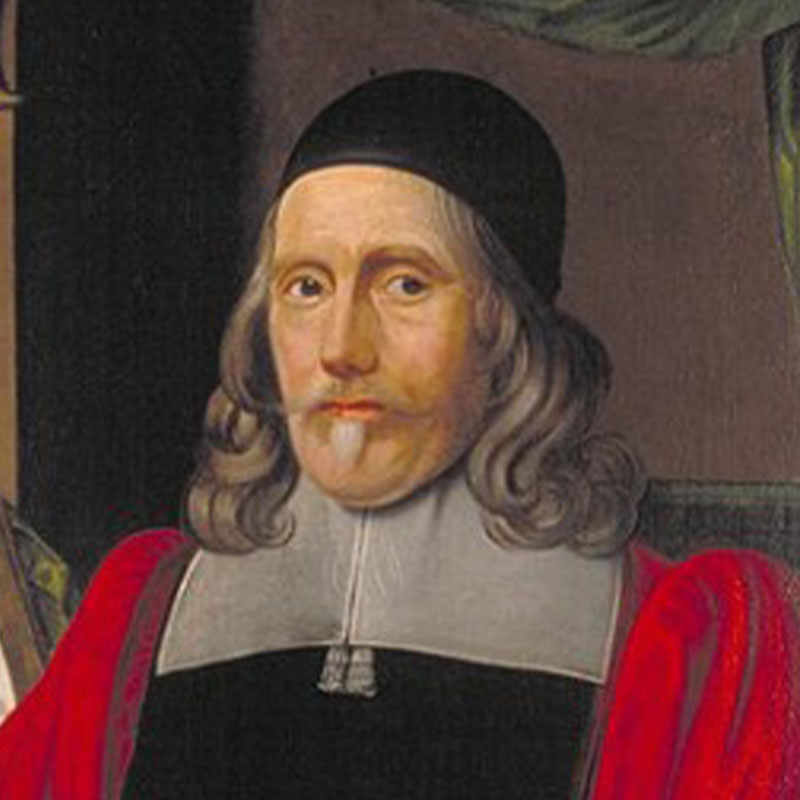
(Unknown. Sir Edward Coke. Oil on canvas. ca. 1600. Wikimedia Commons. https://commons.wikimedia.org/wiki/File:Edward_Coke.jpg.)

Born: February 1, 1552 – Mileham, Norfolk, England
Died: September 3, 1634 – Stoke Poges, Buckinghamshire, England
Notable
-
Rule of Law: Asserted that even monarchs are subject to the law.
-
Legal Foundations: Helped shape constitutional and common law traditions.
-
Institutes: Authored The Institutes, a cornerstone of legal education.
-
Enduring Rights: Advanced trial by jury, habeas corpus, and property rights.
1500–1600 AD works
Biography
Sir Edward Coke (1552–1634) was a powerhouse in English legal history—a jurist, judge, and politician who helped shape the idea of the rule of law. Born in Mileham, Norfolk, Coke studied at Trinity College, Cambridge, then trained at Middle Temple to become a barrister.
He climbed the legal ladder quickly, serving as Solicitor General, Attorney General, and eventually as Chief Justice of both the Common Pleas and the King’s Bench. Coke didn’t just interpret the law—he fought to protect it from being bent by monarchs, especially under Elizabeth I and James I.
Coke's legacy? Standing up for common law, individual rights, and the idea that no one—not even a king—is above the law. His work helped build the legal foundations in both England and America.
Influences & Notable For
Taking a strong stance against royal overreach and pushing the idea that even monarchs must obey the law.
Laying the groundwork for modern constitutional and common law traditions.
Writing The Institutes, a must-read for generations of lawyers and legal scholars.
Promoting trial by jury, habeas corpus, and strong property rights.
Shaping key ideas that would later appear in the English Bill of Rights and U.S. Constitution.
Famous quotes
"A man's house is his castle." — Semayne’s Case (1604)
"The King is under the law." — Case of Proclamations (1611)
"Reason is the life of the law."
Legacy & Modern Significance
Coke helped invent the playbook for common law as we know it. His impact lives on in modern legal systems across the English-speaking world.
He’s often cited as one of the “founding minds” behind constitutional law.
His ideas helped shape the U.S. Constitution and continue to be relevant in courtrooms today.
Law students still study his work for insight into the origins of due process and judicial independence.
Modern Moments & Impact on the 21st Century
His work laid the groundwork for today’s legal protections like due process and privacy rights.
Coke’s famous “castle” quote is still referenced in modern legal battles over property and privacy.
Legal thinkers today still turn to his ideas when debating the limits of government power.
Seen as a forerunner in advocating for an independent judiciary.
Influences & Intellectual Context
Coke came up in a time when power struggles between the Crown and Parliament were heating up. He drew heavily on medieval English legal traditions but brought a Renaissance-era emphasis on reason, individual rights, and the importance of legal precedent.
He was working during a key moment in history—when the rule of law was fighting to establish itself over royal dominance. Coke helped tilt the balance toward constitutional government.
Suggested Reading & Resources
- Secondary Literature
Wilfrid Prest – The Rise of the Barristers: A Social History of the English Bar 1590–1640
John Hostettler – Sir Edward Coke: A Force for Freedom
J.H. Baker – An Introduction to English Legal History
A.W.B. Simpson – A History of the Common Law of Contract - Online & Archival Resources
Online Library of Liberty – Coke’s Institutes
British History Online
Stanford Encyclopedia of Philosophy
Middle Temple Library
FOUNDATION OF THE RULE OF LAW
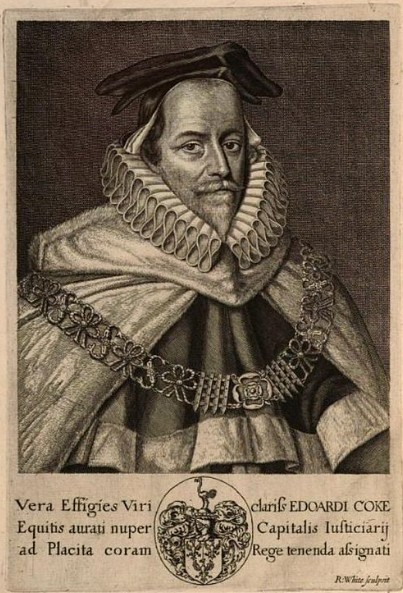
(White, Robert. Portrait of Edward Coke. Engraving. 1669. Wikimedia Commons. https://commons.wikimedia.org/wiki/File:Portrait_of_Edward_Coke_(1669)_by_R_White.jpg.)
_by_R_White.jpg)
Robert White's 1669 engraving portrays Sir Edward Coke in ornate judicial robes with a chain of office, standing in profile with a Latin inscription praising his legal acumen, highlighting his defense of parliamentary rights against James I.
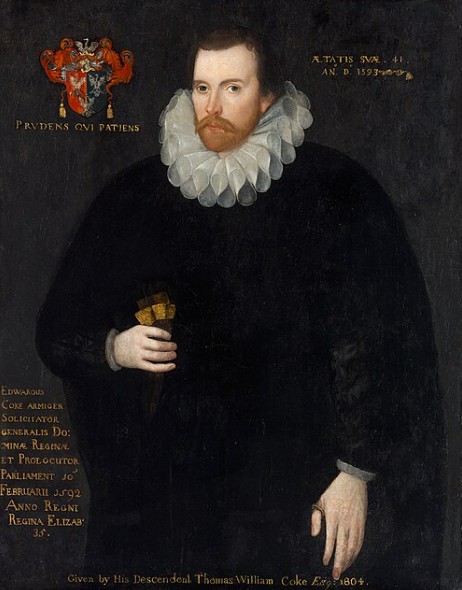
(Unknown. Sir Edward Coke. Oil on canvas. ca. 1593. Wikimedia Commons. https://commons.wikimedia.org/wiki/File:Edward_coke.jpg.)

A 17th-century oil portrait of Sir Edward Coke, attributed to an unknown artist, shows him seated with a book and mace, his serious expression reflecting his authorship of the Institutes and role in shaping English common law.
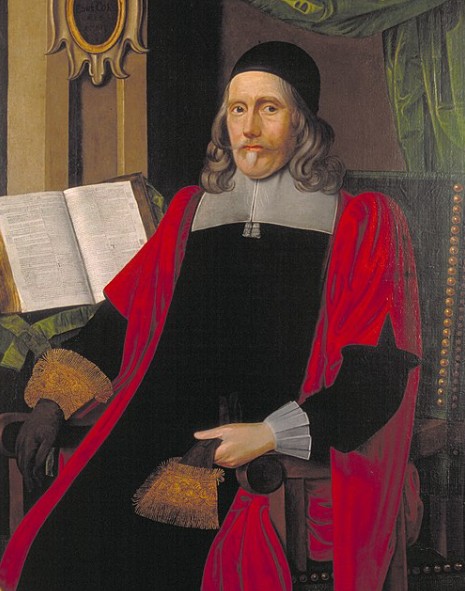
(Unknown. Sir Edward Coke. Oil on canvas. ca. 1600. Wikimedia Commons. https://commons.wikimedia.org/wiki/File:Edward_Coke.jpg.)
A historical portrait of Sir Edward Coke from Wikipedia, depicting him in black robes with a white ruff and chain, symbolizing his tenure as Lord Chief Justice and champion of habeas corpus rights.