GALEN
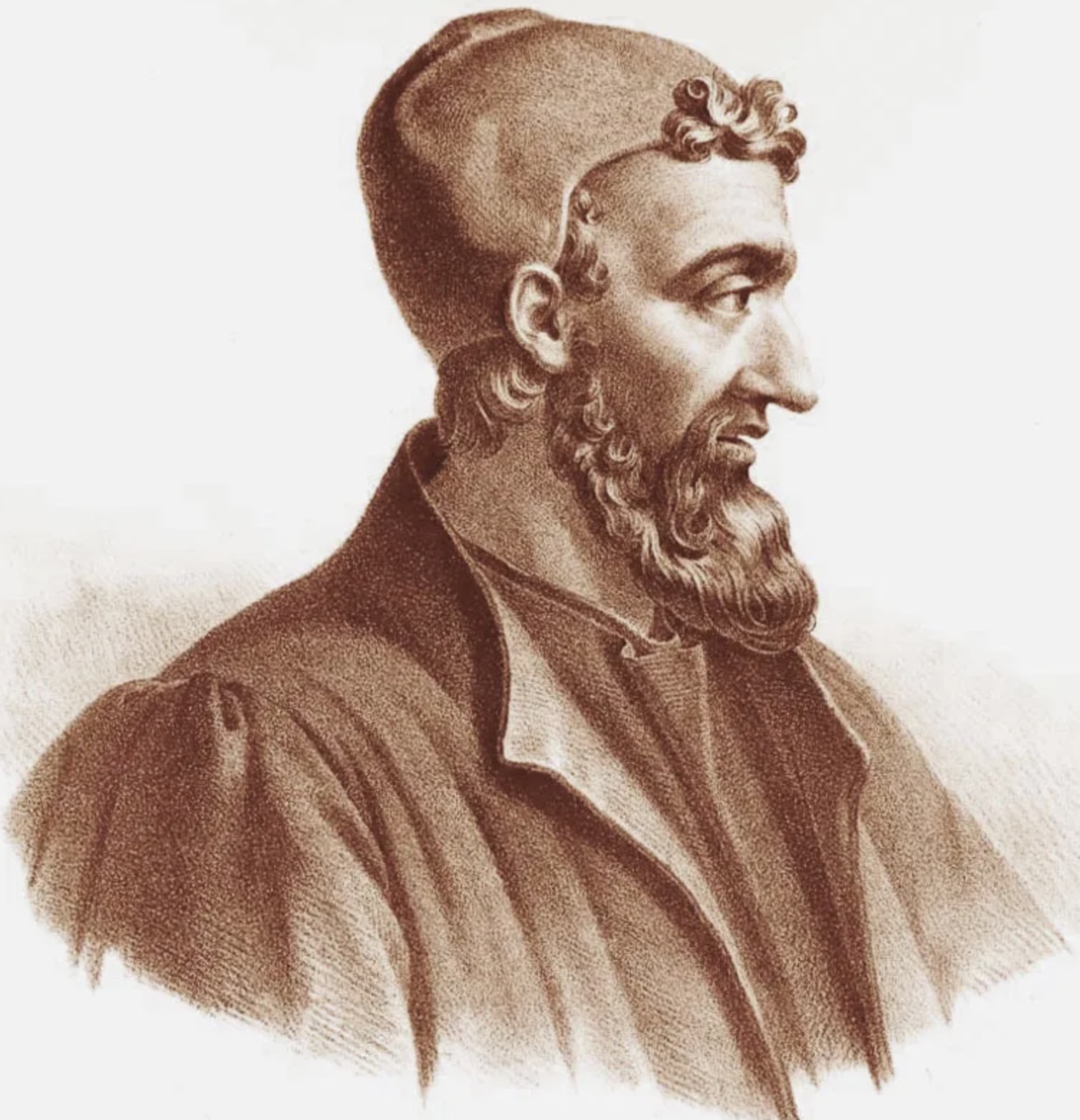
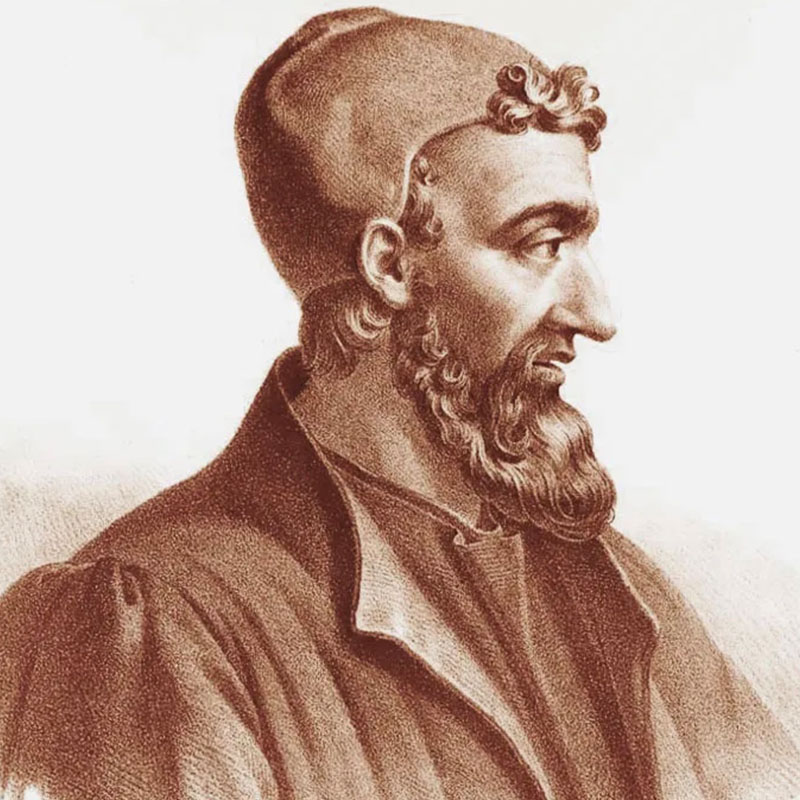
(Galen of Pergamum. Undated lithograph. Encyclopædia Britannica. Courtesy of the National Library of Medicine (Image ID: 192922). https://www.britannica.com/biography/Galen#/media/1/223895/136663.)
Born: circa 129 CE, Pergamum, Asia Minor (modern-day Turkey)
Died: circa 216 CE, Rome
Notable
- Founder of Experimental Physiology: Established systematic dissection and vivisection, pioneering the understanding of anatomy, nerves, and the circulatory system.
- Theory of Humoral Pathology: Refined Hippocratic medicine by systematizing the four humors (blood, phlegm, yellow bile, black bile), dominating medical theory for over a millennium.
- Clinical Observation and Diagnosis: Emphasized empirical examination, pulse diagnosis, and prognosis, laying foundational practices for Western clinical medicine.
129-216 CE
Biography
Aelius Galen or Claudius Galen, also known as Galen of Pergamon, was a prominent Greek physician, surgeon, and philosopher in the 2nd century CE. He was born in Pergamon, a city in Asia Minor (modern-day Turkey), in 129 AD during the Roman Empire. Galen’s father, Aelius Nicon, was a wealthy architect, providing Galen with the means to pursue his education in medicine. Galen traveled extensively throughout the Mediterranean, studying under various medical practitioners and gaining practical experience in treating patients. He eventually settled in Rome, where he became the personal physician to several emperors, including Marcus Aurelius.
Galen was considered to be one of the most accomplished medical researchers of antiquity, who later influenced the development of various scientific principles like anatomy, physiology, pharmacology, and neurology. During his lifetime, he wrote over 600 medical texts. As human dissection was forbidden during ancient times, Galen dissected animals and applied his findings to humans, making some errors but vastly advancing anatomy and physiology. He proved that arteries carry blood and showed how nerves control muscles. His comprehensive writings on anatomy, disease, pharmacology, and medical philosophy became the main source in both Islamic and European medicine until the Renaissance, transforming medicine from a craft into a scientific discipline through logical reasoning, observation, and detailed information.
Bibliography & Major Works
Galen’s major works include:
On the Natural Faculties: Galen’s On the Natural Faculties explains how the body’s organs and systems work together, where he argues that nature has designed each part with a specific purpose and function.
Method of Medicine: Galen’s Method of Medicine lays out his systematic approach to diagnosing illnesses and choosing treatments, emphasizing reasoning and observation over guesswork.
On the Temperaments: Galen’s On the Temperaments explores how the balance of the four humors—blood, phlegm, yellow bile, and black bile—shapes a person’s physical health and personality.
On Anatomical Procedures: Galen’s On Anatomical Procedures details his methods for dissecting animals and studying anatomy, where he aims to reveal the structure and function of the body’s parts.
On the Therapeutic Method: Galen’s On the Therapeutic Method outlines his philosophy and strategies for treating disease, focusing on tailoring remedies to the individual patient’s condition and temperament.
On the Usefulness of the Parts of the Body: Galen’s On the Usefulness of the Parts of the Body explains how every part of the human body has a specific purpose that helps keep us alive and healthy.
Nutton, Vivian. “Galen” in Encyclopedia Britannica. https://www.britannica.com/biography/Galen-Greek-physician
Galen. On the Natural Faculties. Translated by Arthur John Brock, Harvard University Press, 1916.
Walzer, Richard. “Galen” in Stanford Encyclopedia of Philosophy. https://plato.stanford.edu/entries/galen/
Influences & Notable For
Notable For
Galen is best known for his vast contributions to the field of medicine, particularly in the areas of anatomy, physiology, pharmacology, and pathology. He is most renowned for his extensive anatomical studies, primarily through dissection of animals, which provided detailed insights into the human body’s structure and function. He is best known for the treatment of specific diseases and advancing the theory of the four humors—blood, phlegm, black bile, and yellow bile—which dominated medical thought for centuries. His writings on physiology, particularly the circulatory, nervous, and muscular systems, became authoritative texts in Europe and the Islamic world throughout the Middle Ages and Renaissance. Galen’s emphasis on observation, experimentation, and integrating philosophy with medicine had a lasting influence on the development of modern scientific and medical practices, shaping medical education and treatment methods in both the Western and Eastern worlds.
Influences
Galen was heavily influenced by earlier Greek physicians such as Hippocrates and Dioscorides. He also drew from the works of Aristotle and other ancient philosophers in developing his theories on the human body and health. Galen’s medical knowledge was deeply rooted in the humoral theory, which posited that health was maintained by a balance of the four bodily fluids (blood, phlegm, yellow bile, and black bile). His writings reflect a combination of empirical observation and theoretical reasoning, blending practical medical advice with philosophical reflections on the nature of health and illness.
Famous quotes
- “Those who are enslaved to their sects are not merely devoid of all sound knowledge, but they will not even stop to learn!” – On the Natural Faculties, Book 1, Section 13
- “That which is, grows, while that which is not, becomes.” – Natural Faculties, Book 2, Section 3
- “The best physician is also a philosopher.” – Title essay by Galen
- “Those who are enslaved to their sects are not merely devoid of all sound knowledge, but they will not even stop to learn!” – Natural Faculties by Galen
Legacy & Modern Significance
Galen’s legacy in the history of medicine is significant, as his works shaped medical practice for centuries after his death in Europe and the Islamic world. His emphasis on empirical observation, systematic inquiry, and rational analysis laid the foundation for modern medical science. His way of thinking became the basis for how we practice medicine today. Even though some of Galen’s theories have been proven wrong by advances in medical knowledge, his contributions to anatomy, physiology, and pharmacology remain influential in the field of medicine. Scholars continue to study Galen’s writings to gain insights into the development of medical theory and practice in the ancient world.
Modern Moments & Impact on 21st Century
In 2016, a new translation of Galen’s On the Natural Faculties was published, shedding light on his views on physiology and the human body.
In 2018, Cambridge University Press released the first complete English translation of Galen’s Method of Medicine, making this fundamental therapy text very accessible to modern researchers and revealing his systematic approach to clinical reasoning.
The International Society of Galen Studies holds annual conferences to discuss the latest research on Galen’s works and their relevance to contemporary medicine.
In 2022, researchers at Johns Hopkins published findings showing how Galen’s concepts of “pneuma” prefigured modern understanding of oxygen transport, despite his incomplete knowledge of circulation.
Digital archives and online resources dedicated to Galen’s writings have made his texts more accessible to a global audience, facilitating further study and analysis of his contributions to medical science.
Suggested Reading and Resources
Gill, Christopher. Galen and the World of Knowledge. Cambridge University Press, 2009.
Hankinson, R. J. Galen. Cornell University Press, 1998.
King, Helen. Galen and the Rhetoric of Healing. Johns Hopkins University Press, 2008.
Galen: On Diseases and Symptoms. N.p.: Cambridge University Press, 2006.
Payne, Joseph Frank. Harvey and Galen. United Kingdom: Frowde, 1897.
Mattern, Susan P. Galen and the Rhetoric of Healing. United States: Johns Hopkins University Press, 2008.
HEALER-PHILOSOPHER OF ROME
(Galen of Pergamum. Undated lithograph. Encyclopædia Britannica. Courtesy of the National Library of Medicine (Image ID: 192922). https://www.britannica.com/biography/Galen#/media/1/223895/136663.)
Galen’s writings dominated Western and Islamic medical education for over 1,400 years, shaping clinical practice until the Renaissance.
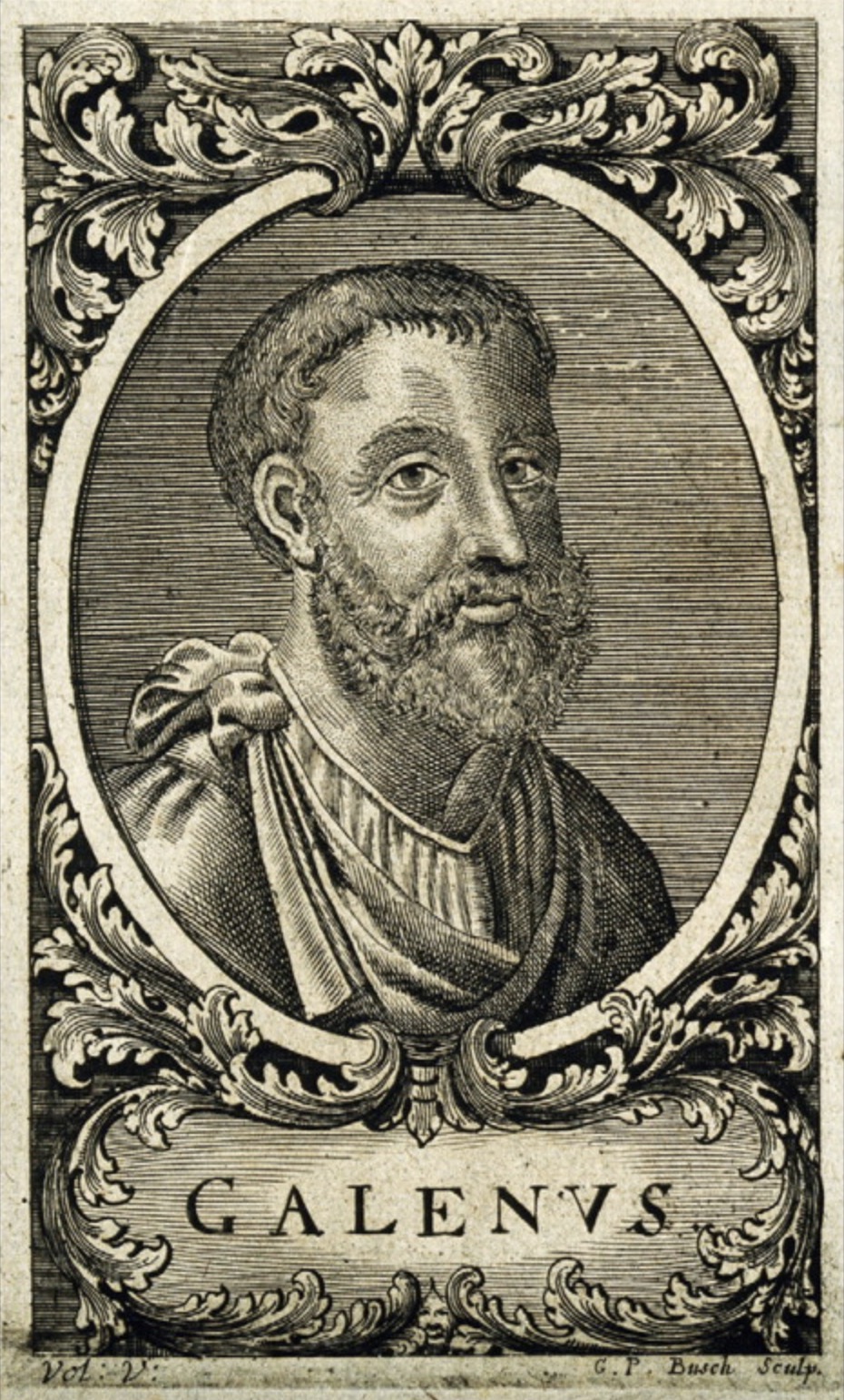
(Unknown. Portrait of Galen. Engraving. 16th century. Wikimedia Commons. https://commons.wikimedia.org/wiki/File:Galenus.jpg.)
A 16th-century engraving of Galen, the ancient Greek physician, from Andreas Vesalius’s anatomical works, depicting him with a short beard and scholarly robes, underscoring his advancements in medicine.
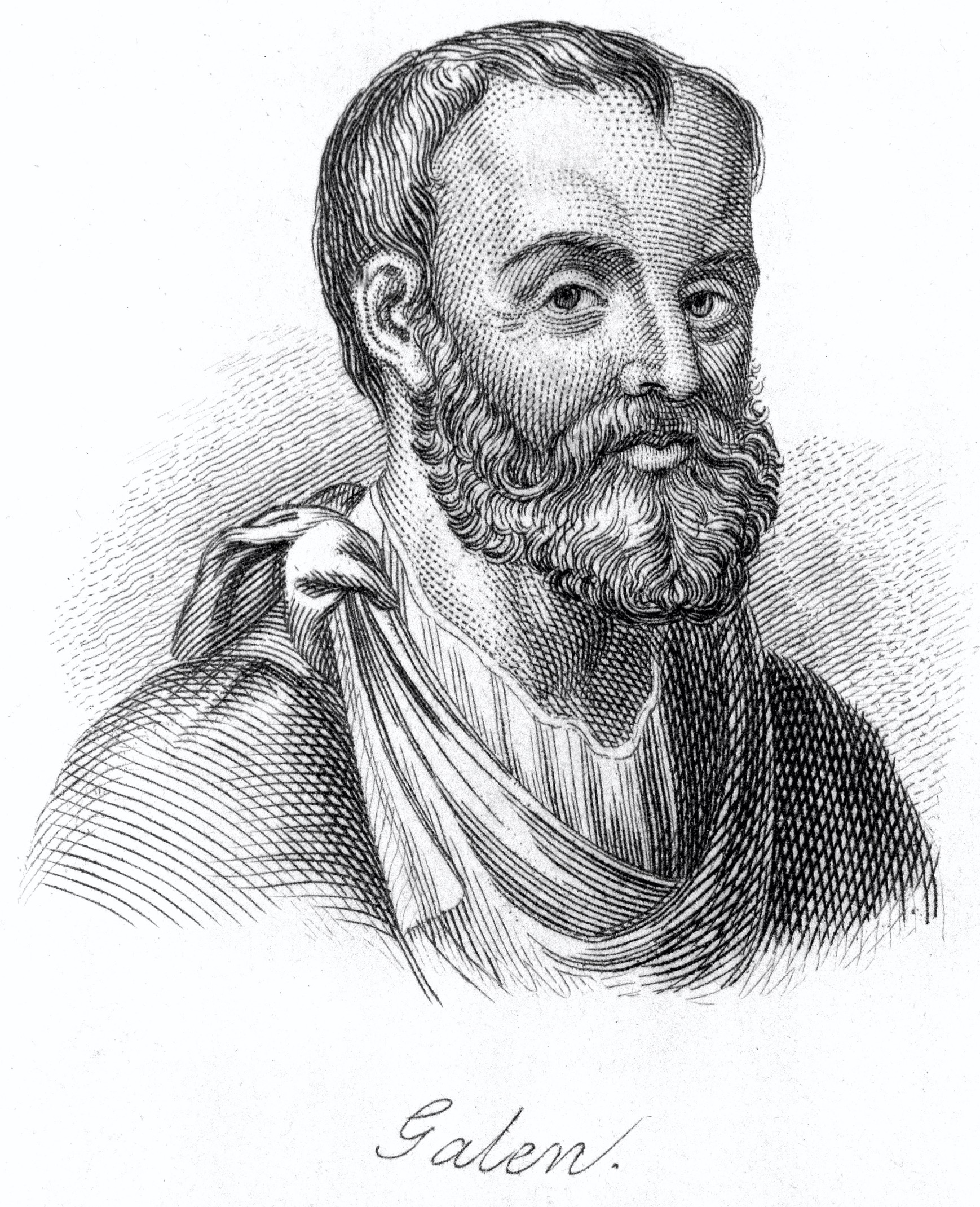
(Unknown. Galen. Line engraving. 18th century. Wellcome Collection. Wikimedia Commons. https://commons.wikimedia.org/wiki/File:Galen._Line_engraving._Wellcome_L0012587.jpg.)
An 18th-century line engraving of Galen from the Wellcome Collection, based on a classical bust, portraying the physician in profile with detailed shading to capture his thoughtful expression.