
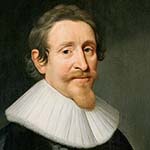
GROTIUS
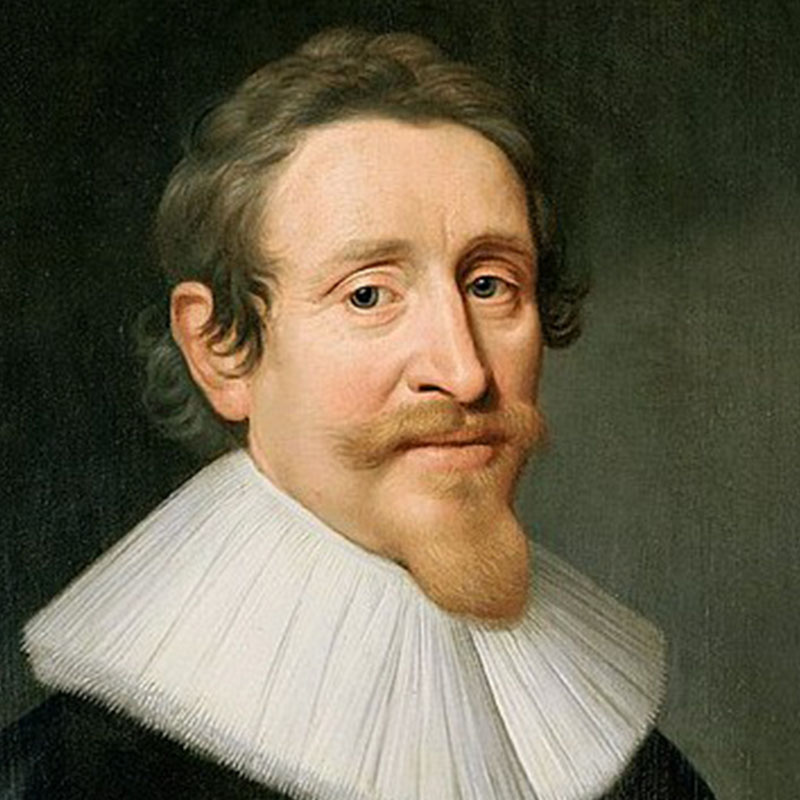
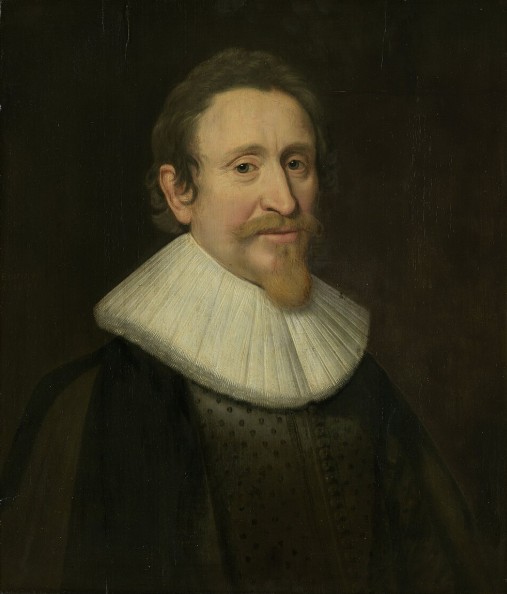
(Van Mierevelt, Michiel Jansz. Hugo Grotius. Oil on panel. 1608. Wikimedia Commons.)
Born: April 10, 1583 – Delft, County of Holland, Dutch Republic
Died: August 28, 1645 – Rostock, Holy Roman Empire
Notable
-
International Law: Helped found modern international law.
-
Natural Law: Argued for universal moral principles.
-
Freedom of the Seas: Defended open and free navigation.
-
Just War & Sovereignty: Shaped ideas of just war and state rights.
Overview
Biography
Hugo Grotius (1583–1645) was a Dutch legal genius, philosopher, theologian, and diplomat who helped lay the groundwork for modern international law. Born in Delft, Netherlands, he was a child prodigy—fluent in Latin and Greek by age 8 and publishing scholarly work at just 11.
A key player during the Dutch Golden Age, Grotius made major contributions to law, politics, and theology. His most famous work, De Jure Belli ac Pacis (On the Law of War and Peace, 1625), set out ideas about natural law and the legal rules that should govern war and peace between nations.
His influence stretched far beyond his lifetime, shaping how the world thinks about war, sovereignty, diplomacy, and international cooperation.
Influences & Notable For
Kicking off modern international law as we know it.
Championing natural law—the idea that certain moral principles apply to all people and all nations.
Defending the right to free and open seas.
Laying the intellectual groundwork for just war theory and the rights of sovereign states.
Blending legal logic with ethical and religious insights.
Famous quotes
“Law is not a mere act of will but is rather a rule of reason.” — De Jure Belli ac Pacis
“What we have here is a body of law that stands above nations.”
“Peace is the natural condition of mankind.”
Major Works
De Jure Belli ac Pacis (1625)
Grotius’s most important book tackles questions like: When is war justified? What rules should apply during conflict? What rights do states and people have under natural law?
He laid out ideas on sovereignty, treaties, civilian protection, and more—ideas still central to international law today.
Mare Liberum (1609)
In this bold legal argument, Grotius said no single nation could claim control over the seas. The oceans, he said, should be free for all to use—an idea that continues to shape global maritime law.
Legacy & Modern Significance
Grotius is remembered as the father of international law. His writings still shape modern legal thinking on sovereignty and state equality, human rights and humanitarian protections, rules of war and diplomacy, and global cooperation and international justice.
His ideas helped inspire later thinkers like Kant, Vattel, and the architects of the United Nations.
Modern Moments & Impact on the 21st Century
Grotius’s legal theories echo through institutions like the UN, the International Court of Justice, and the Geneva Conventions.
His views on the freedom of the seas remain central in debates over ocean rights and naval conflict.
He's quoted in discussions about just war, peacekeeping, and international accountability.
Legal scholars, diplomats, and ethicists still turn to his work for guidance in tackling modern global challenges.
He is celebrated in academic conferences and legal institutions for his lasting impact.
Influences & Intellectual Context
Grotius was shaped by a mix of Roman law (especially thinkers like Cicero and legal codes like Justinian’s), Christian moral teachings (like those of Augustine and Aquinas), and the humanist thinking of the Renaissance.
He lived through intense political and religious conflict, including the Dutch Revolt and the Thirty Years’ War—events that made him focus on how law could bring order and peace to a chaotic world.
Suggested Reading & Resources
Secondary Literature
Richard Tuck – The Rights of War and Peace: Political Thought and the International Order from Grotius to Kant
Martti Koskenniemi – The Gentle Civilizer of Nations
Anne Orford – Reading Humanitarian Intervention: Human Rights and the Use of Force in International Law
Archival and Online Resources
Stanford Encyclopedia of Philosophy – Grotius
Internet Archive – De Jure Belli ac Pacis
Peace Palace Library – Grotius Collection
Hague Academy of International Law
FOUNDATION OF INTERNATIONAL LAW
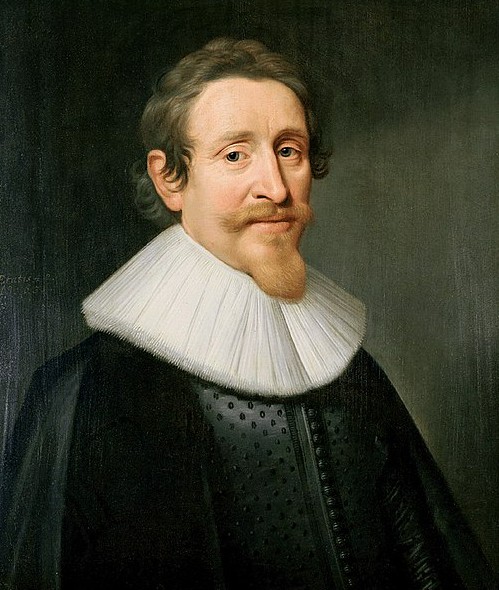
(Van Mierevelt, Michiel Jansz. Hugo Grotius. Oil on panel. 1608. Wikimedia Commons. https://commons.wikimedia.org/wiki/File:Michiel_Jansz_van_Mierevelt_-_Hugo_Grotius.jpg.)

Michiel Jansz van Mierevelt's 1608 oil portrait of Hugo Grotius depicts the Dutch jurist in black robes with a white ruff, holding a book, symbolizing his De Jure Belli ac Pacis and contributions to international law, as featured in the Goodrich Seminar Room for promoting peace and human rights.
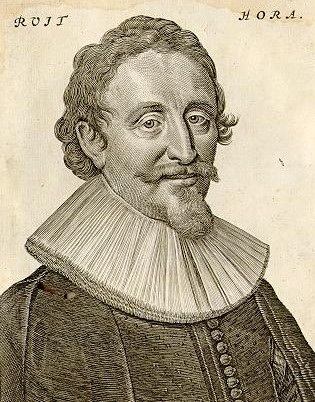
(Unknown. Hugo Grotius. Engraving. ca. 1750. Wikimedia Commons. https://commons.wikimedia.org/wiki/File:Hugo-Grotius.jpg.)

An 18th-century engraving of Hugo Grotius in profile, with curly hair and robes, based on Renaissance originals, honors his role in natural rights theory and bridging classical and modern legal thought, as etched in the Goodrich Seminar Room.
(Unknown. Portrait of Hugo de Groot. Oil on canvas. ca. 1640. Wikimedia Commons. https://commons.wikimedia.org/wiki/File:Portret_van_Hugo_de_Groot_(1583-1645)_Rijksmuseum_SK-A-581.jpeg.)
_Rijksmuseum_SK-A-581.jpeg)
A 19th-century photograph of a Rijksmuseum portrait of Hugo Grotius shows him in scholarly attire, commemorating his foundational work on the law of nations and human rights, as featured in the Goodrich Seminar Room’s chronology of liberty.