
HIPPOCRATES
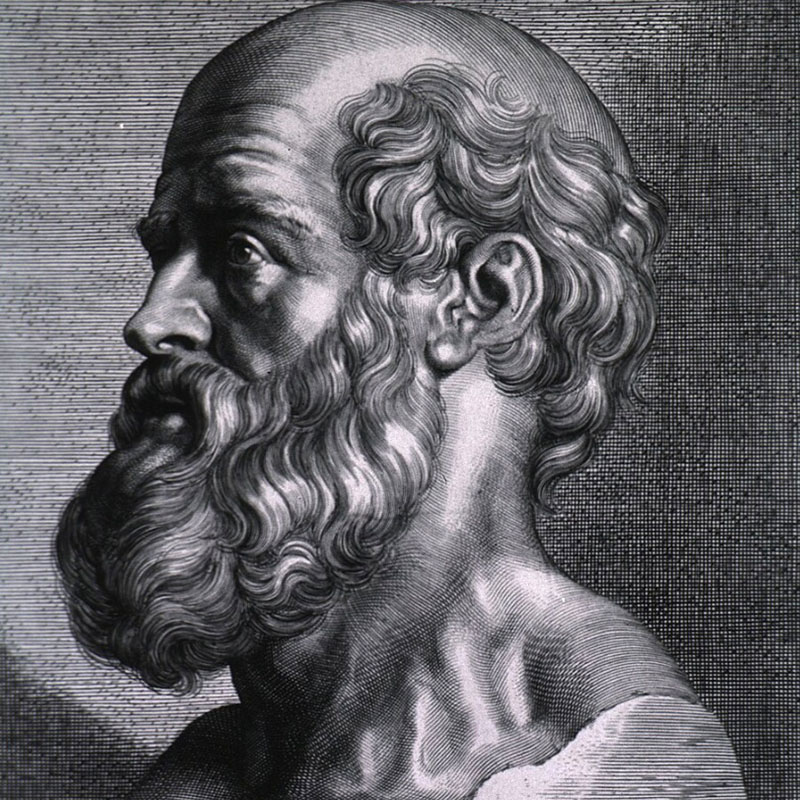
(Rubens, Peter Paul. "Hippocrates." Engraving. 1638. Etching and engraving on paper. Wikimedia Commons. https://commons.wikimedia.org/wiki/File:Hippocrates_rubens.jpg.)
What if illness had nothing to do with the gods?
Traditionally 460–377 B.C. · Greece
Hippocrates is traditionally regarded as the father of medicine. His main contribution to medicine and Western philosophy was to discard supernatural explanations for sickness and suffering, and to apply human reason to medical problems instead.
The turn that made medicine a science
- Known as: The father of medicine
- Family: An Asclepiad, a member of a family of noted physicians, as Plato called him
- Writings: About seventy works on diagnosis and treatment were attributed to him; sixty survive as the “Hippocratic Collection”
- The Oath: The famous Hippocratic Oath was apparently written by later admirers, not by Hippocrates himself
- Sources: Little personal information survives, some of it from contemporary writers, especially Plato’s Protagoras
How do you heal a body you do not understand as a whole?
Hover or tap each idea to follow Hippocrates’ method
- Natural CausesHippocrates discarded supernatural explanations for sickness, even for epilepsy, the so-called “sacred disease.”“It is thus with regard to the disease called Sacred: it appears to me no more sacred than other diseases, but has natural causes from which it originates like other affections.” (On the Sacred Disease, trans. Francis Adams)
- The Whole BodyHe was among the first to regard the entire body as an organism. Plato described him as believing it impossible to understand any single organ or part without understanding the whole body.
- Function FirstHis method of diagnosis first considered the proper function of the afflicted area, and from that derived clues to the nature of the affliction.
- Digestion and DietBecause digestion was central to the functioning of everything else, he saw it as the most important source of debility. Poor diet, he argued, produced harmful vapors that spread to other organs and caused disease.
- EnvironmentCentral to his method was the recognition that a person’s environment affects their health.
His belief that the body should be observed and studied “philosophically” forms the basis of modern scientific medicine.
By looking for natural causes, treating the body as a whole, and recognizing the influence of diet and environment, Hippocrates turned medicine from a matter of purification and incantation into a discipline of observation and reason. Physicians still take an oath in his name.
Where to read more about Hippocrates and ancient medicine.
- 1978Hippocratic WritingsLloyd, G. E. R., ed. · Penguin Classics
- 2004Ancient MedicineNutton, Vivian · Routledge
- 2008The Philosophy of Medicine Reborn: A Pellegrino ReaderPellegrino, Edmund D., ed. H. Tristram Engelhardt Jr. and Fabrice Jotterand · University of Notre Dame Press
- The Genuine Works of Hippocrates, Vol. 1Francis Adams’s classic translation, the one the Goodrich text quotes, free from Project Gutenberg.gutenberg.org
- The Internet Classics Archive: HippocratesSeventeen Hippocratic works in Adams’s translation, including On the Sacred Disease and The Oath, from MIT.classics.mit.edu
- National Library of Medicine: Greek MedicineAn exhibition on Hippocrates, the Hippocratic Corpus and the Oath, with a translation.nlm.nih.gov
- Britannica: HippocratesA biography and overview of his works.britannica.com
- Perseus Digital LibraryGreek texts and translations of Hippocratic works, from Tufts University.perseus.tufts.edu
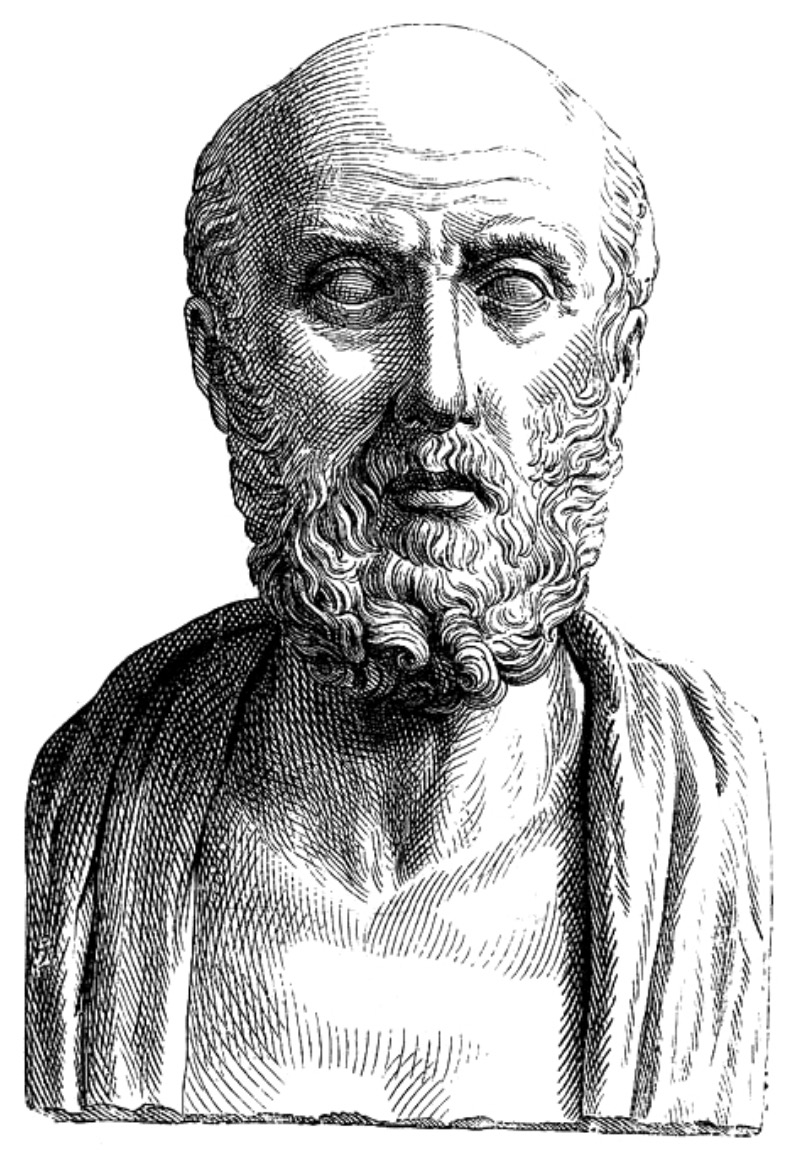
(Hippocrates." Engraving. 19th century. Line engraving on paper. Unknown artist. Wikimedia Commons. https://commons.wikimedia.org/wiki/File:Hippocrates.jpg.)
A classic portrait engraving of Hippocrates, the father of Western medicine, rendered in fine lines to emphasize his bearded face and toga, symbolizing ancient medical wisdom.
(Image of Hippocrates, AI-generated)
Hippocrates, the visionary physician, established the foundations of modern medicine through his systematic approach to diagnosis and the enduring ethical principles of the Hippocratic Oath.
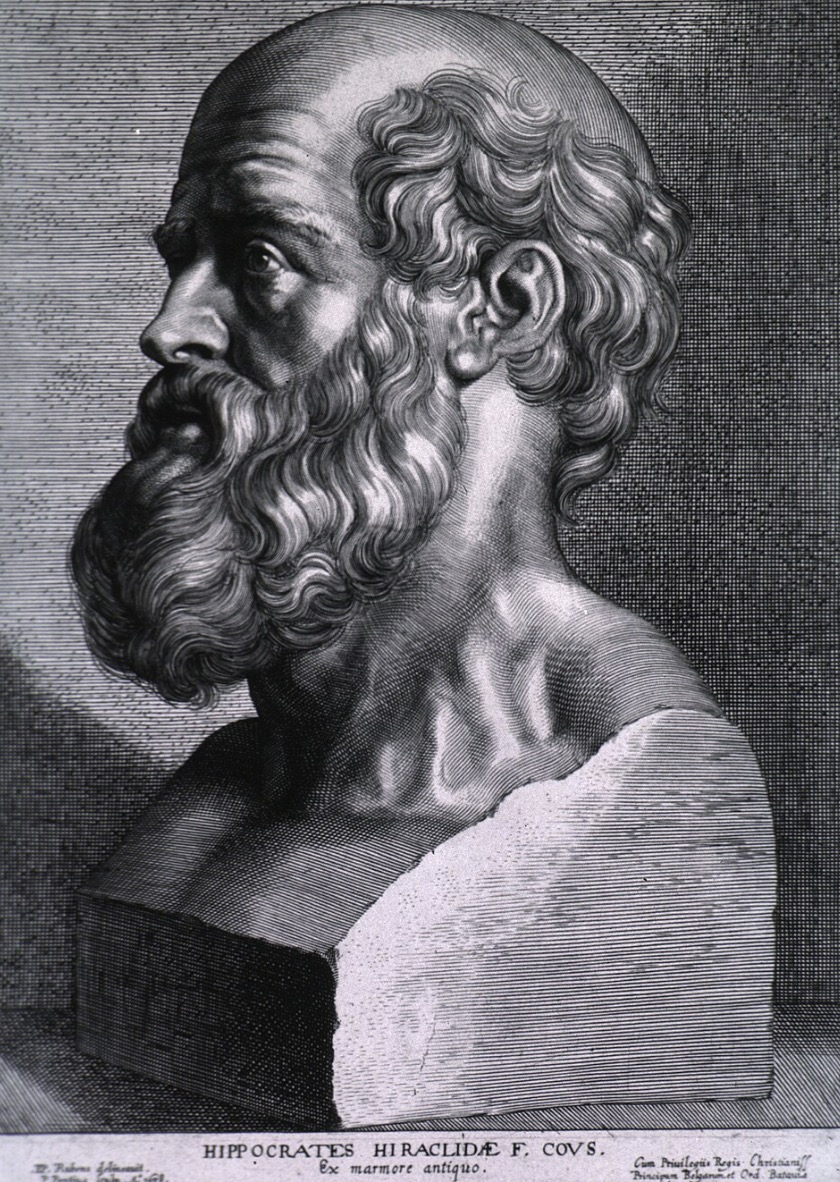
(Rubens, Peter Paul. "Hippocrates." Engraving. 1638. Etching and engraving on paper. Wikimedia Commons. https://commons.wikimedia.org/wiki/File:Hippocrates_rubens.jpg.)
An elegant 1638 engraving by Peter Paul Rubens depicting Hippocrates in a dynamic pose, with flowing robes and a focused gaze, evoking the Renaissance revival of classical figures.