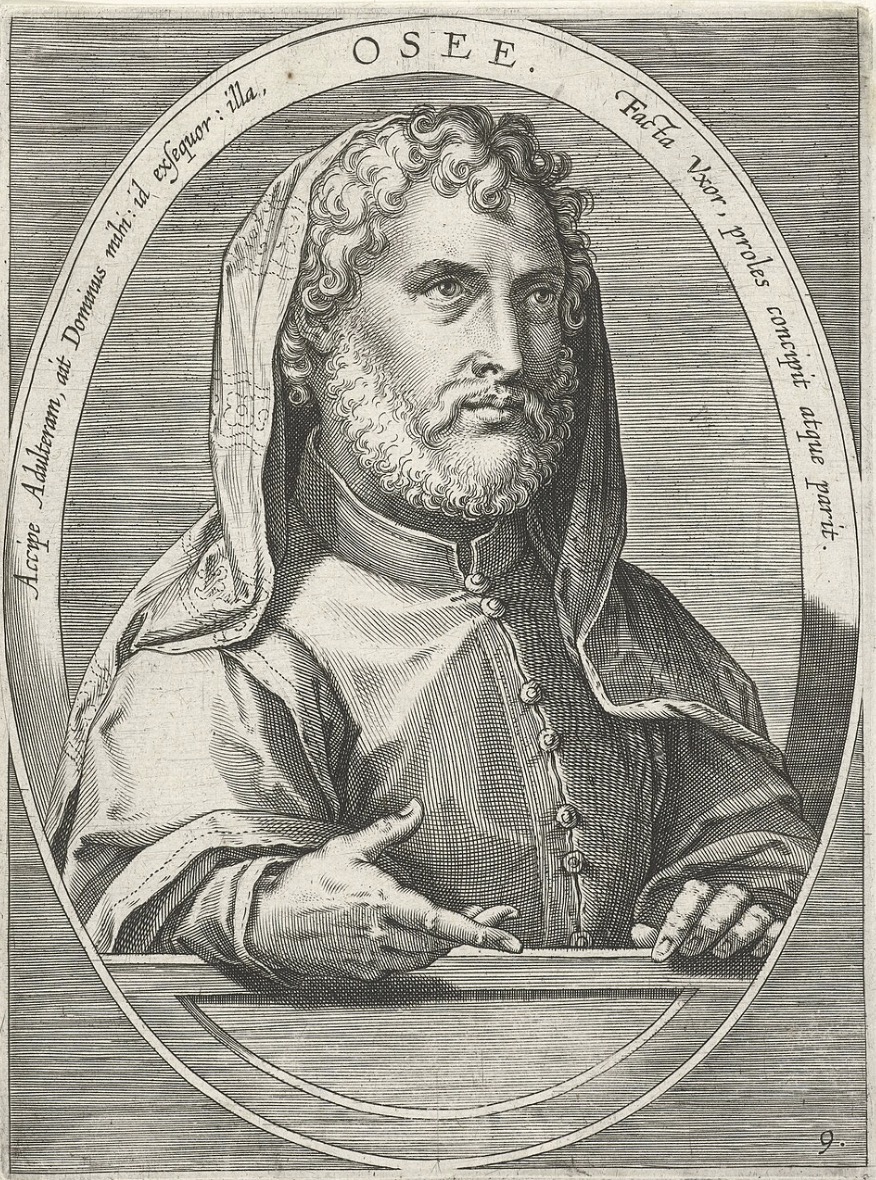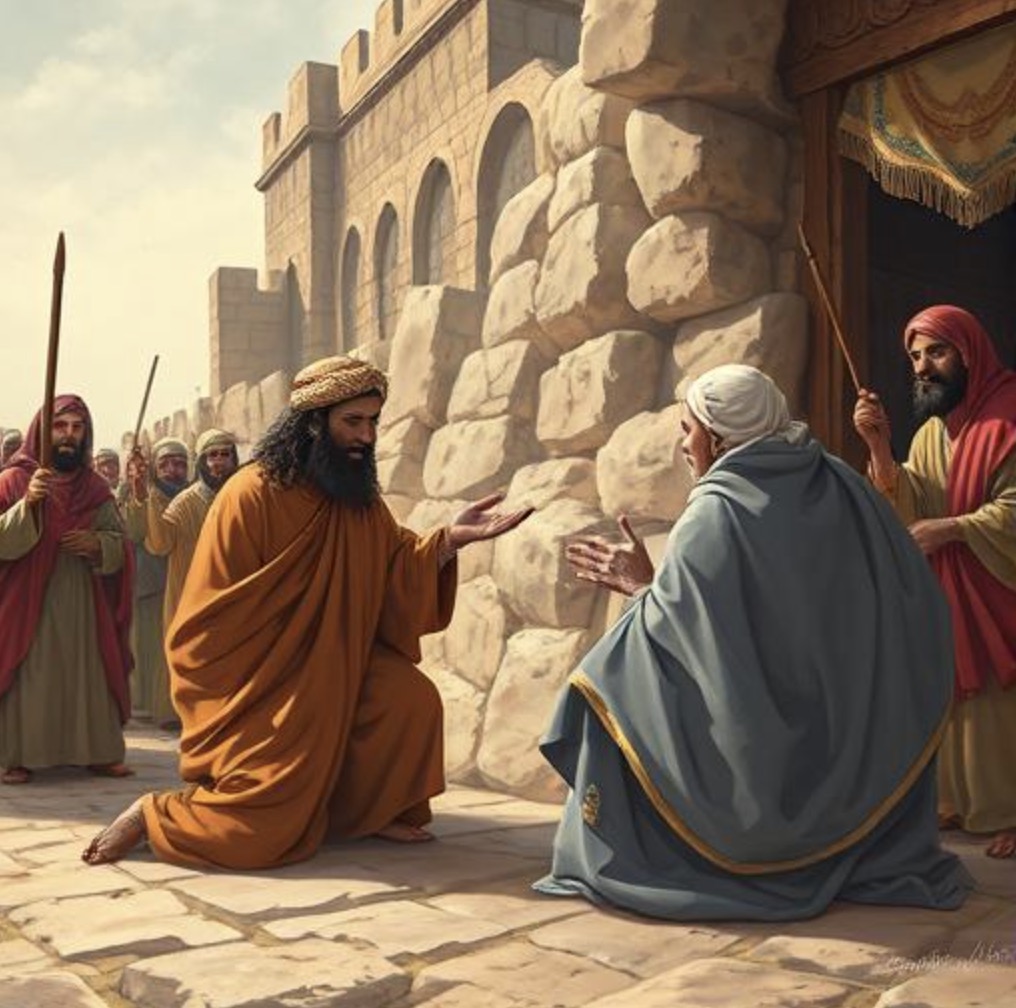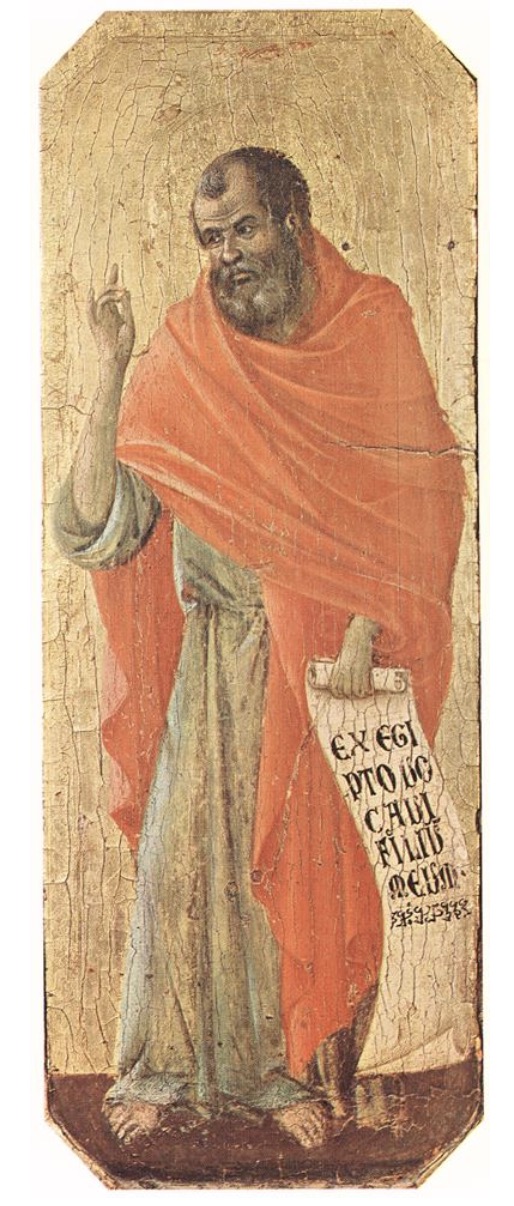

Hosea

HOSEA

Hosea
(“Prophets Hosea and Jonah.” National Gallery of Art. Accessed October 18, 2025. https://www.nga.gov/artworks/74167-prophets-hosea-and-jonah.)

Born: c. 8th century BCE, likely in the Northern Kingdom of Israel

Died: Unknown, possibly in the Northern Kingdom of Israel

Notable

  • Prophetic Voice of Covenant: Hosea is recognized as one of the Twelve Minor Prophets in the Hebrew Bible, renowned for his messages of God’s steadfast love and the call to repentance amid Israel’s unfaithfulness, using his own life as a metaphor.

  • Legacy in Spiritual Renewal: Hosea’s emphasis on divine mercy and the restoration of a broken covenant continues to inspire religious teachings and movements for spiritual reform across generations.

8th Century BCE

Biography

In Hebrew tradition, Hosea was an 8th-century BCE Israeli prophet and the nominal author of the Book of Hosea. The first of the Twelve Minor Prophets, his writings were collected into the final book of the Nevi’im during the Second Temple period. In the Christian tradition, Hosea is separated into an individual book.

The Book of Hosea is associated with prophecies of impending judgment and doom as a consequence of idolatry and injustice (lying, murder, theft, adultery, etc.). However, Hosea also prophesied restoration and hope when God is appeased. Through this, Hosea embodies the contradictory representation of fury and love at the core of Second Temple theology.

As the first of the Twelve Minor Prophets, Hosea is considered the most significant in Hebrew tradition. His ministry extended to some 60 years, and he was the only prophet of his time with written prophecy. Most scholars since the 19th and 20th centuries have agreed on the dating of Hosea and the Book of Hosea to the time of Jeroboam II in the 8th century BCE, although some studies of Hosea highlight the significantly different interpretations of the redaction process, stages, and the extent of the prophet’s original contributions.

Through the text’s familiarity with northeast geography, it is assumed that Hosea conducted his prophetic ministries in the northern Kingdom of Israel, of which he was a native. One of the early writing prophets, Hosea used his own experience as a symbolic representation of God and Israel. The Book of Hosea was a severe warning to the northern kingdom against its growing idolatry and called for dramatic repentance.

Bibliography / Primary Sources

The Book of Hosea (Biblical Text)

Title: Book of Hosea (סֵפֶר הוֹשֵׁעַ, Sēfer Hōšēaʿ)
Language: Hebrew
Date of Composition: Traditionally dated between 760 and 720 BCE
Original Context: Northern Kingdom of Israel, during the reigns of kings such as Jeroboam II and up to the Assyrian conquest (c. 786–746 BCE to 721 BCE)
Canonical Placement: First of the Twelve Minor Prophets in both Jewish and Christian traditions

Major Scholarly Editions
Biblia Hebraica Stuttgartensia (BHS)
Editors: Karl Elliger, Wilhelm Rudolph, et al.
Publisher: Deutsche Bibelgesellschaft
Year: 1977 (latest revision)
Description: The standard scholarly edition of the Hebrew Bible, including Hosea.

The Hebrew Bible: A Critical Edition (HBCE)
Editor: Ronald Hendel (general editor)
Publisher: SBL Press (Society of Biblical Literature)
Year: Ongoing (volumes published from 2016)
Description: A new critical edition of the Hebrew Bible, including Hosea.

Septuagint (LXX) Editions
Title: Septuaginta: Vetus Testamentum Graecum
Editor: Alfred Rahlfs (1935), later revised and edited by Robert Hanhart (2006)
Publisher: Deutsche Bibelgesellschaft
Description: Critical edition of the Greek Old Testament, including Hosea.

Influences & Notable For

Notable For

Use of Marriage as a Metaphor for Divine Relationship: Hosea is best known for his symbolic marriage to Gomer, which he used to illustrate God’s enduring love and covenant with Israel despite the nation’s unfaithfulness—a powerful and unique prophetic motif.

Call for Repentance and Covenant Renewal: He emphasized the need for Israel to return to faithfulness and warned of impending judgment if the people continued to abandon God.

Focus on Divine Compassion: Hosea’s message uniquely balanced judgment with the promise of restoration, highlighting God’s willingness to forgive and restore those who repent.

Influence on Later Prophetic Literature: His themes and language influenced later prophets and became foundational for understanding the relationship between God and his people in the Hebrew Bible.

Influences

Hosea’s prophetic activity occurred in the Northern Kingdom of Israel during the 8th century BCE, a period marked by political instability, social upheaval, and the expanding threat of the Neo-Assyrian Empire. The Assyrian imperial presence and its political propaganda deeply shaped the theological and literary responses of Israelite prophets, including Hosea.

Assyrian Imperialism: The growing dominance of the Neo-Assyrian Empire in the region influenced Hosea’s message, especially his warnings of judgment and calls for covenant faithfulness as a response to foreign oppression and cultural encroachment.

Israelite Religious Traditions: Hosea drew on longstanding Israelite traditions, including the covenantal theology found in earlier texts such as the Decalogue (Exodus 20) and narratives about the patriarchs, particularly Jacob, as seen in Hosea.

Shared Prophetic Traditions: Hosea’s contemporaries included other 8th-century prophets like Amos, Isaiah, and Micah, who addressed similar themes of social justice, idolatry, and the consequences of abandoning Yahweh.

Ancient Near Eastern Literary Forms: Hosea’s oracles reflect broader ancient Near Eastern prophetic and legal traditions, including the use of covenant lawsuits, marriage metaphors, and poetic denunciations of national infidelity.

Famous quotes
  • “Go, take unto thee a wife of whoredoms and children of whoredoms: for the land hath committed great whoredom, departing from the LORD.” — Hosea 1:2 (KJV)
  • “My people are destroyed for lack of knowledge: because thou hast rejected knowledge, I will also reject thee, that thou shalt be no priest to me: seeing thou hast forgotten the law of thy God, I will also forget thy children.” — Hosea 4:6 (KJV)
  • “Sow to yourselves in righteousness, reap in mercy; break up your fallow ground: for it is time to seek the LORD, till he come and rain righteousness upon you.” — Hosea 10:12 (KJV)
Legacy & Modern Significance

Interpretation and Influence Across Centuries

The Book of Hosea has been interpreted as a profound metaphor for the relationship between God and Israel, using Hosea’s marriage to Gomer as an emblem of divine faithfulness amid human infidelity. This metaphor has resonated deeply in Jewish and Christian traditions, shaping theological understandings of covenant, repentance, and forgiveness.

In Christian readings, Hosea’s themes of judgment, restoration, and steadfast love are often seen as anticipating the grace found in the New Testament, with some interpreters linking Hosea’s message to the ministry and teachings of Jesus.

Hosea’s structure—accusation, judgment, and restoration—has influenced prophetic literature and liturgy, serving as a model for how divine justice and mercy are presented in religious texts.

Modern Critique and Application

Contemporary scholarship has critically examined Hosea’s portrayal of marriage and gender, with some secular and feminist commentators questioning the ethics of using marital infidelity as a metaphor for national sin, and challenging aspects of its alignment with modern values.

Psychological and sociological analyses have explored Hosea as a reflection of human relationships and social dynamics, emphasizing its relevance to issues of trust, betrayal, and reconciliation in both personal and communal contexts.

The book’s focus on social justice and ethical behavior remains a subject of ongoing debate, with interpreters considering how Hosea’s condemnation of idolatry and injustice applies to modern religious and ethical discussions.

Ongoing Debates and Reinterpretations

Scholars and religious leaders continue to debate the balance between Hosea’s themes of judgment and hope, and how these should inform contemporary theology and practice.

There is active discussion about the historical context of Hosea’s prophecies, their original audience, and the extent to which their message should be universalized or understood within their ancient setting.

Hosea’s enduring significance is evident in its continued use in sermons, academic study, and cultural references, where its themes of faithfulness, repentance, and restoration are reinterpreted for new generations.

Modern Moments & Impact on 21st Century

Digital Editions:
Ongoing (2000–Present): Multiple digital and public-domain editions of the Book of Hosea are available on platforms such as Project Gutenberg, Bible Gateway, and the Internet Sacred Texts Archive, often as part of complete biblical collections.

Scholarly Editions:
2016–Present: The Hebrew Bible: A Critical Edition (HBCE), edited by Ronald Hendel and others, includes Hosea among its published volumes. This is an ongoing scholarly project with new volumes released in the 21st century.

Academic Inclusion:
Ongoing (2000–Present): The Book of Hosea is listed as core or recommended reading in biblical studies, theology, and religious studies courses at universities worldwide, as evidenced by publicly available syllabi on institution websites (e.g., Harvard Divinity School, University of Oxford, Yale University).

Conferences and Lectures:
Ongoing (2000–Present): Hosea is regularly featured as a topic at major biblical studies conferences such as the Society of Biblical Literature (SBL) Annual Meeting and the International Organization for the Study of the Old Testament (IOSOT) Congress, though no specific “Hosea Lecture” or “Hosea Prize” is documented.

Suggested Reading and Resources

Secondary Literature (Scholarship)

Andersen, Francis I., and David Noel Freedman. Hosea: A New Translation with Introduction and Commentary. Anchor Yale Bible (AYB) 24. New York: Doubleday, 1980. Republished by Yale University Press. (A foundational, exhaustive critical commentary.)

Stuart, Douglas. Hosea–Jonah. Word Biblical Commentary (WBC) 31. Nashville: Thomas Nelson, 1987. (A widely used, accessible, and thorough scholarly commentary.)

Dearman, J. Andrew. The Book of Hosea. New International Commentary on the Old Testament (NICOT). Grand Rapids: Eerdmans, 2010. (Balances historical, exegetical, and theological insights.)

Gruber, Mayer I. Hosea: A Textual Commentary. Atlanta: SBL Press, 2017. (A recent, detailed textual commentary with critical perspectives on key passages.)

Emmerson, Grace I. Hosea: An Israelite Prophet in Judean Perspective. Journal for the Study of the Old Testament Supplement Series 28. Sheffield: JSOT Press, 1984. (Explores the influence of Judean redaction and tradition on Hosea.)

Archival or Online Sources

Project Gutenberg: Search for the Book of Hosea within various public-domain Bible translations (e.g., King James Version).
Internet Sacred Texts Archive: Hosts multiple translations of Hosea and other biblical texts.
Bible Gateway: Offers searchable, multi-version access to Hosea and related commentaries.
Google Books and HathiTrust: Search for editions of the Anchor Yale Bible (AYB) and Word Biblical Commentary (WBC) Hosea volumes (some content may be limited or preview-only).

Scholarly Editions
Anchor Yale Bible (AYB): Hosea by Andersen and Freedman (Yale University Press). Yale University Press: Hosea (AYB).
Eerdmans: The Book of Hosea by J. Andrew Dearman (NICOT). Eerdmans: The Book of Hosea (NICOT).
SBL Press: Hosea: A Textual Commentary by Mayer I. Gruber. SBL Press: Hosea: A Textual Commentary (search for “Hosea” under SBL Press publications).

Major University Library Resources
Harvard Divinity School Library: Online catalog and digital resources for biblical studies.
Oxford Biblical Studies Online: Subscription-based, but often available through university libraries, with scholarly articles and reference entries on Hosea.