
HUSS
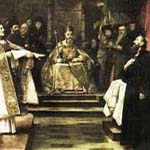
(Brožík, Václav. Jan Hus at the Council of Constance. Engraving; 20 × 15 cm. ca. 1883. Wikimedia Commons. https://commons.wikimedia.org/wiki/File:Jan_Hus-Council_of_Constance.jpg.)

Born: Around 1372 CE, in Husinec, Bohemia (present-day Czech Republic)
Died: July 6, 1415 CE, in Constance (modern-day Germany); executed by burning
Notable
-
Bohemian Reformer: Led the pre-Reformation movement in Bohemia.
-
Scriptural Authority: Promoted Scripture as the foundation of Christian life.
-
Church Critique: Challenged papal authority in De Ecclesia.
-
Enduring Impact: Martyred figure whose death intensified reform and national resistance.
Biography
Jan Hus (around 1372–1415) was a Czech preacher, thinker, and early reformer whose ideas helped shape the path toward the Protestant Reformation. He was born in the small town of Husinec (in today’s Czech Republic) and studied at the University of Prague, where he later became a professor and eventually the rector.
Hus was deeply influenced by the writings of English reformer John Wycliffe and started speaking out against corruption in the Catholic Church—especially the sale of indulgences and the bad behavior of some priests. From Bethlehem Chapel in Prague, he preached fiery sermons calling for the Church to return to the values of the Bible and the simple, honest faith of early Christianity. He believed the Bible—not the Church hierarchy—should be the highest authority in matters of faith.
His outspoken views didn’t go unnoticed. In 1415, he was summoned to the Council of Constance, where he was put on trial for heresy. Hus stood by what he believed and refused to take back his words. He was sentenced to death and burned at the stake. His execution lit the spark for the Hussite movement and a wave of religious conflict across Central Europe.
To this day, Jan Hus is remembered as a courageous voice for truth and justice—and a national hero in Czech history.
Influences & Notable For
The Rigveda is known for its ancient heritage as it is considered one of the oldest and earliest surviving texts in the Vedas, making it a foundational sacred scripture in Hinduism. The Rigveda is best known for its hymns, which are dedicated to various deities such as Agni (fire), Indra (weather), Varuna (water), and Surya (sun). These hymns are considered among the oldest religious texts in the world and provide insight into the religious beliefs and practices of ancient Indian civilization. The Rigveda is also notable for its poetic language, philosophical insights about creation and existence, and spiritual practices, which have inspired generations of poets and scholars.
Famous quotes
“Seek the truth, hear the truth, learn the truth, love the truth, speak the truth, hold the truth, and defend the truth unto death.”
“I would not, for a chapel full of gold, recede from the truth.”
“I am ready to die for the truth.”
Legacy & Modern Significance
National Symbol: Hus is honored as a Czech national hero and a symbol of the fight for religious freedom and moral courage.
Reformation Influence: Hus’s teachings inspired Martin Luther, who considered him a precursor to Protestant reform.
Moravian Roots: His followers founded the Unity of the Brethren, later known as the Moravian Church.
Spiritual Icon: Hus’s principled stand has made him a lasting symbol of faith, conscience, and resistance against spiritual tyranny.
Spearheading the pre-Reformation movement in Bohemia
Translating and promoting the ideas of John Wycliffe in the Czech context
Authoring De Ecclesia, which challenged the papal structure and advocated for Christ’s supremacy
Emphasizing Scripture as the foundation of Christian life and teaching
Becoming a martyr whose death fueled religious reform and national resistance in Bohemia
Modern Moments & Impact on the 21st Century
National Commemoration: July 6 is observed as Hus Day, a public holiday in the Czech Republic.
Ecumenical Recognition: Modern Protestant and Catholic scholars alike acknowledge Hus’s role in church reform.
Human Rights Resonance: Hus’s insistence on speaking truth to power echoes in today’s struggles for justice and freedom of conscience.
Cultural Memory: Films, memorials, and educational institutions preserve his story for modern audiences.
Institutional Legacy: Churches, schools, and civic organizations bear his name in tribute to his enduring impact.
Influences & Intellectual Context
Jan Hus was deeply shaped by John Wycliffe, whose ideas on Scripture and Church reform he expanded and contextualized for Bohemian society. At the time, the University of Prague was a dynamic center for theological debate, and Hus became one of its leading voices.
Hus’s reformist zeal took shape amid growing anger over ecclesiastical corruption, the Western Schism, and papal political entanglements. His sermons and writings connected with both academics and the Czech populace, giving rise to a popular reform movement.
Suggested Reading & Resources
Secondary Literature
Spinka, Matthew. John Hus: A Biography. Princeton University Press, 1968.
Fudge, Thomas A. Jan Hus: Religious Reform and Social Revolution in Bohemia. I.B. Tauris, 2010.
Kaminsky, Howard. A History of the Hussite Revolution. University of California Press, 1967.
Archival and Online Resources
Jan Hus Foundation – https://www.husitstvi.cz
Czech National Museum – Jan Hus Collection – https://www.nm.cz/en
LEGACY OF HUSSITE REFORMATION
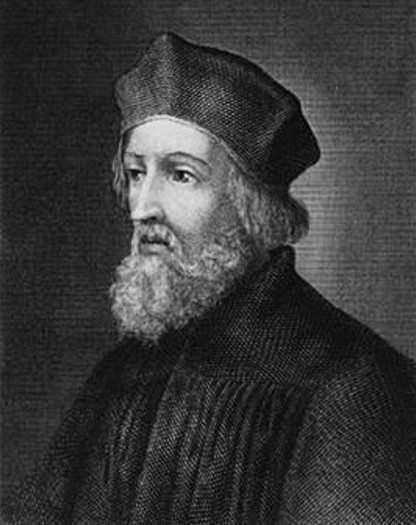
(Unknown. Portrait of Jan Hus. Engraving; dimensions unknown. ca. 1520. Wikimedia Commons. https://commons.wikimedia.org/wiki/File:Jan_hus_1.jpg.)

An anonymous 16th-century engraving depicts Jan Hus (c. 1370–1415), the Bohemian reformer, in clerical robes with a tonsure, holding a book of sermons, symbolizing his critique of indulgences and advocacy for scriptural authority, as honored in the Goodrich Seminar Room for defending religious liberty and individual conscience.
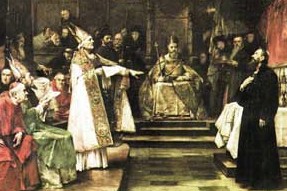
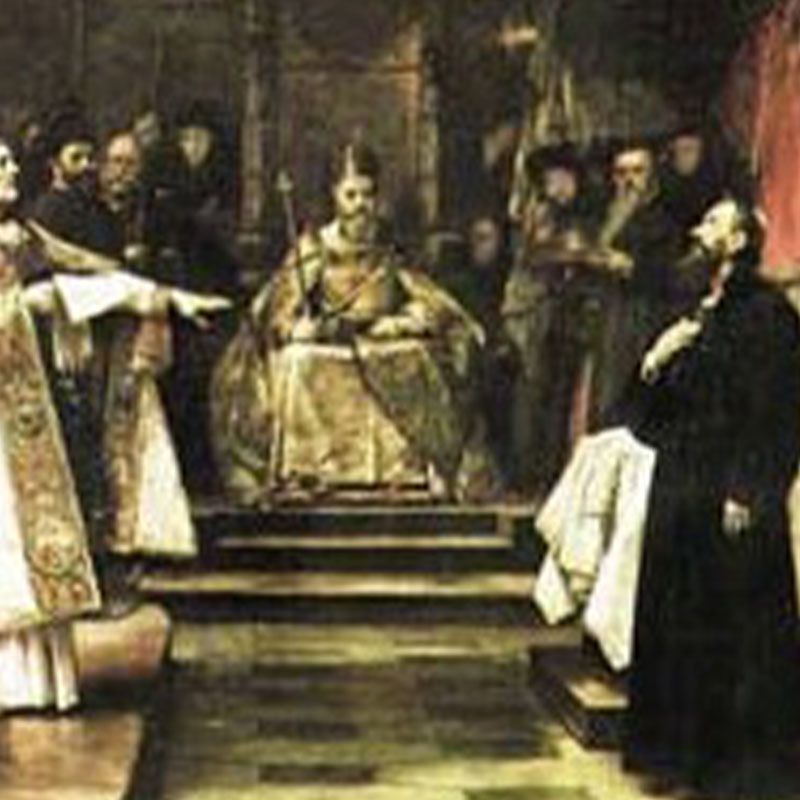
(Brožík, Václav. Jan Hus at the Council of Constance. Engraving; 20 × 15 cm. ca. 1883. Wikimedia Commons. https://commons.wikimedia.org/wiki/File:Jan_Hus-Council_of_Constance.jpg.)
A 19th-century engraving by Václav Brožík illustrates Jan Hus at the Council of Constance in 1415, standing chained before bishops and cardinals, capturing his bold defense of reform and the right to vernacular worship, resonant with the Goodrich Seminar Room's narrative of principled resistance to authority.
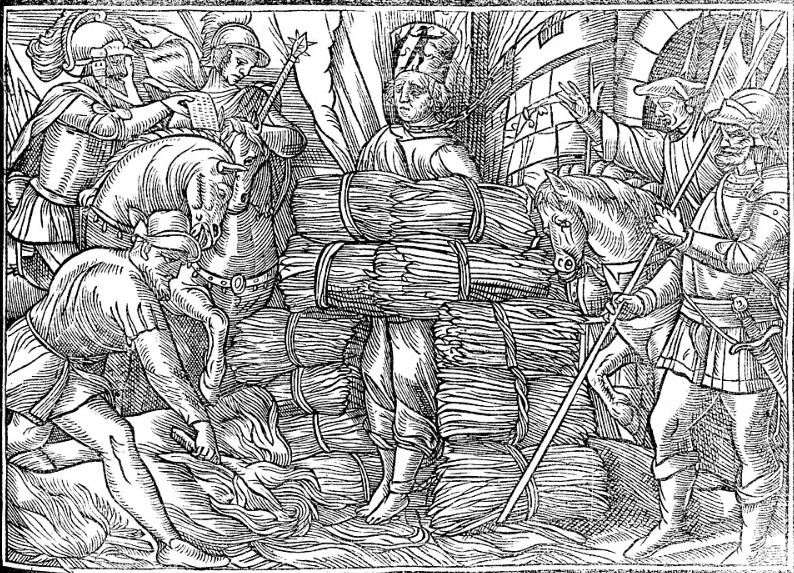
(Unknown. Execution of Jan Hus. Woodcut; dimensions unknown. ca. 1450. Wikimedia Commons. https://commons.wikimedia.org/wiki/File:Execution_of_Jan_Hus.jpg.)

An anonymous 15th-century woodcut depicts the execution of Jan Hus at the stake in Constance, showing the reformer bound and praying amid flames with onlookers, symbolizing his martyrdom for doctrinal purity and against simony, as commemorated in the Goodrich Seminar Room for inspiring the Hussite movement and religious freedom.