
JEREMIAH
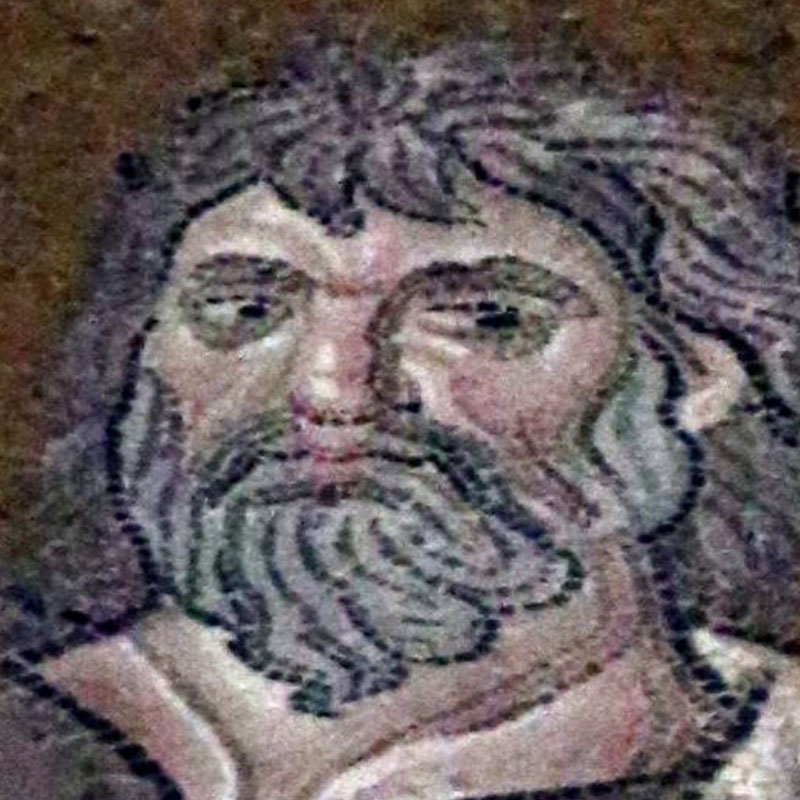
https://www.researchgate.net/figure/Church-of-Dormition-at-Daphni-Athens-late-eleventh-c-prophet-Jeremiah-photo-Olga_fig7_351519814
What if telling the truth meant siding with your nation’s enemy?
Late seventh to early sixth century B.C. · Judah
We know more about Jeremiah than about the earlier biblical prophets. Significant portions of the Book of Jeremiah refer directly to the sensitive political situation of Judah in the late seventh and early sixth centuries B.C.
A prophecy fulfilled, a prophet unheeded
- Setting: Judah in the late seventh and early sixth centuries B.C.
- Warning: Ruin for the kingdom and the destruction of the Temple of Jerusalem, unless the people changed their ways
- Opponents: The party favoring alliance with Egypt, and the party seeking independence
- Exile: Taken to Egypt by his followers to escape reprisals from his adversaries
- Death: Said to have been stoned there by his own people, around 570 B.C., for continuing to speak in favor of Babylon
Can faith survive the loss of its temple?
Hover or tap each idea to follow Jeremiah’s answer
- Against Sin and IdolatryLike the other prophets, Jeremiah abhorred the sin and idolatry of the Judah of his day, and predicted ruin for the kingdom and the Temple if the people did not change their ways.
- The Heart, Not the RiteChange would require individual commitment to and search for God, rather than reliance on attending the Temple or performing physical rites such as circumcision.
- Submit to BabylonBecause of the people’s sins, God intended the Babylonian kings to rule over Judah, and nothing but failure could come from resistance. The Jews had to relearn obedience to heaven to be restored to Yahweh’s favor.
- The Prudent PolicyHistory showed Jeremiah’s policy to be the most pragmatic and prudent. Babylon under Nebuchadnezzar consistently defeated Judah’s bids for independence and easily repelled an exhausted Egypt. All Judah gained was the deposition of its kings and stricter controls.
- A New CovenantGod would form a new covenant with his people once they accepted his will again, a covenant written on their hearts.“They shall all know me, from the least of them to the greatest, says the Lord; for I will forgive their iniquity, and I will remember their sin no more.” (Jeremiah 31:34)
hearts
Many have seen in Jeremiah the clearest early expression of “personal religion,” in which each individual must come to terms with the Almighty.
His promise of a new covenant, written not on stone but on the hearts of the people, so that all would know God “from the least of them to the greatest,” has echoed through Jewish and Christian thought ever since.
Where to read more about Jeremiah and his prophecies.
- 1965Jeremiah (Anchor Bible 21)Bright, John · Doubleday
- 1998A Commentary on Jeremiah: Exile and HomecomingBrueggemann, Walter · Eerdmans
- 1999Jeremiah 1–20, 21–36 and 37–52 (Anchor Bible, 3 vols.)Lundbom, Jack R. · Doubleday, 1999–2004
- 2011Jeremiah: Pain and PromiseO’Connor, Kathleen M. · Fortress Press
- The Book of Jeremiah and Lamentations (King James Version)Both books, free from Project Gutenberg.JeremiahLamentations
- Sefaria: JeremiahThe Hebrew text with English translation and classic Jewish commentaries.sefaria.org
- Britannica: JeremiahA short biography of the prophet and overview of his book.britannica.com
- Jewish Encyclopedia: JeremiahA detailed older survey of Jeremiah’s life and the traditions about him.jewishencyclopedia.com
- BibleProject: JeremiahA short animated overview of the book’s themes.bibleproject.com
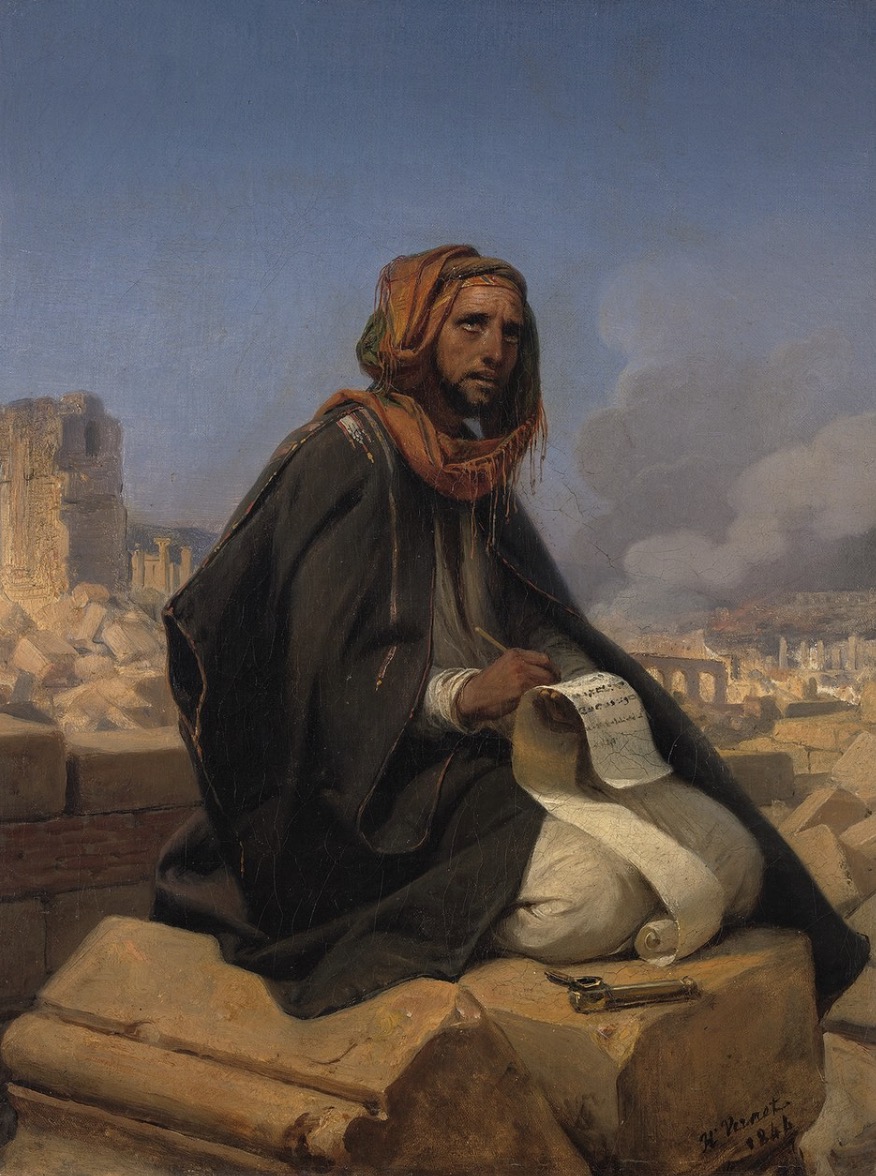
(Vernet, Horace. "Jeremia op de puinhopen van Jeruzalem." Wikimedia Commons. 1844. Accessed October 5, 2025. https://commons.wikimedia.org/wiki/File:SA_160-Jeremia_op_de_puinhopen_van_Jeruzalem.jpg.)
Romantic painting by Horace Vernet showing Jeremiah lamenting amid the ruins of Jerusalem, symbolizing exile and sorrow.
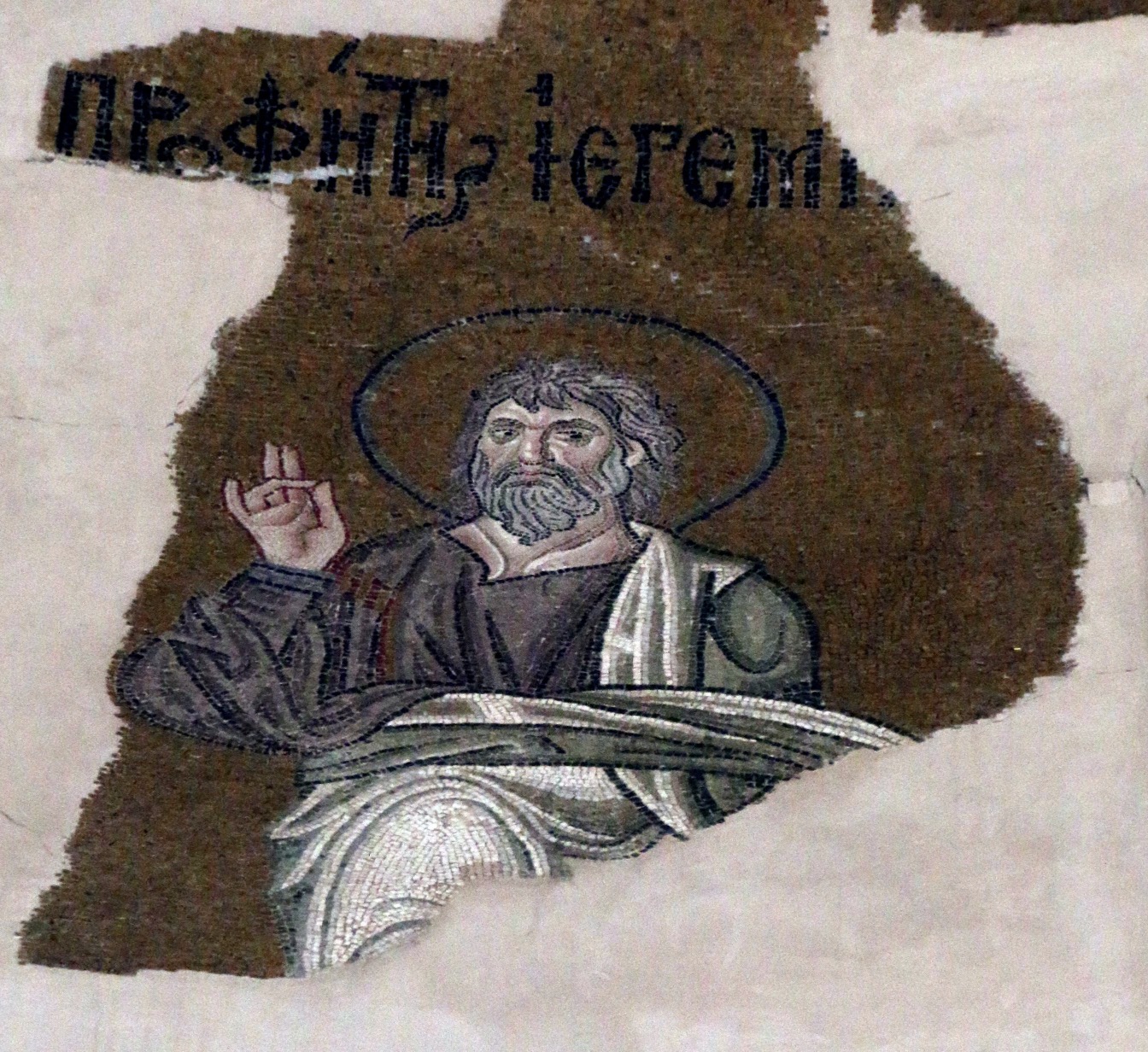
("Mosaic of Prophet Jeremiah, Monastery of Daphni." Wikimedia Commons. 11th century. Accessed October 5, 2025. https://commons.wikimedia.org/wiki/File:3039_-_Mosaic_of_prophet_Jeremiah,_in_the_church_of_the_Monastery_of_Daphni_(Athens)_-_Photo_by_Giovanni_Dall%27Orto_-_April_5_2025.jpg.)
11th-century Byzantine mosaic in the Monastery of Daphni, depicting Jeremiah in golden robes with a prophetic scroll.
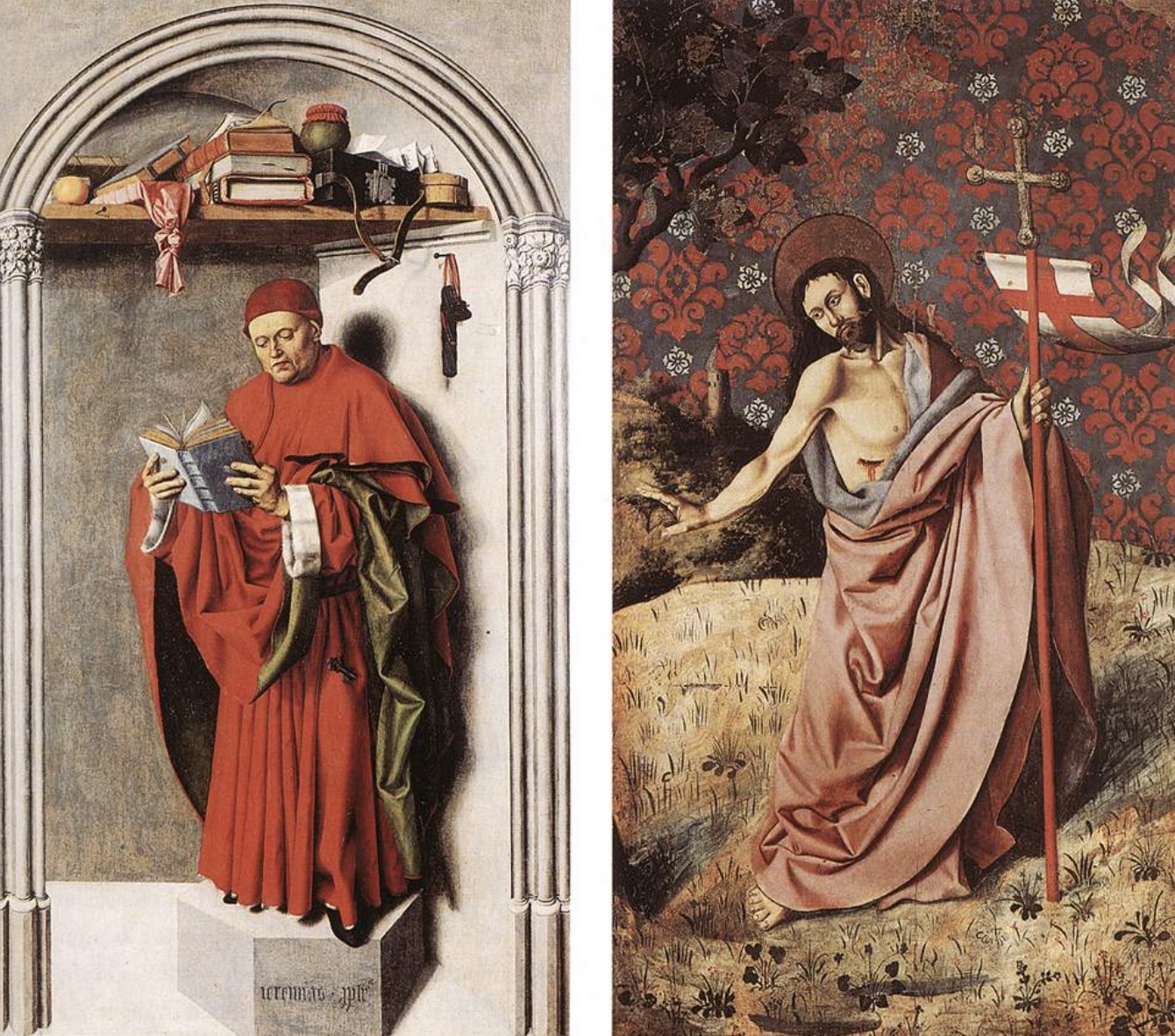
(Master of the Aix Annunciation. "Prophet Jeremiah and Christ." Wikimedia Commons. Ca. 1443. Accessed October 5, 2025. https://commons.wikimedia.org/wiki/File:Master_Of_The_Aix_Annunciation_-_Prophet_Jeremiah_and_Christ_-_WGA14508.jpg.)
15th-century French painting by the Master of the Aix Annunciation, pairing Jeremiah with Christ in a typological scene.