KALIDASA
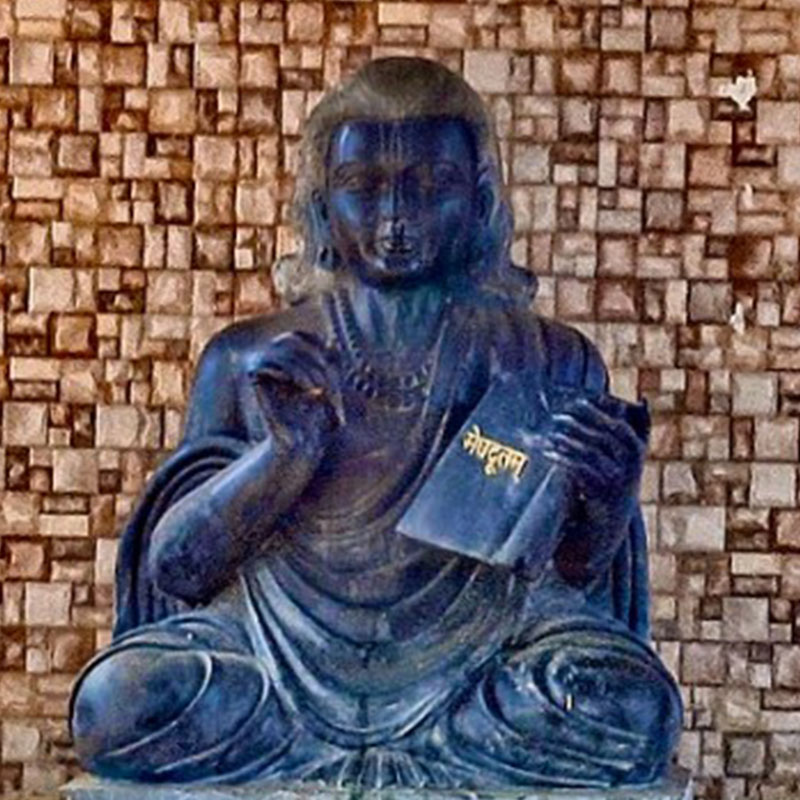
(Unknown. Statue of Kalidasa at Ramgarh Hills. Sculpture. 21st century. Wikimedia Commons. https://commons.wikimedia.org/wiki/File:Kalidasa_site_Ramgarh_Hills_Chattisgarh_011.jpg.)
Born: c. 4th–5th century CE
Died: Unknown; traditionally believed to have lived during the Gupta Empire, possibly in Ujjain
Notable
-
Classical Indian Poet: Created timeless poetic and dramatic works in Sanskrit literature.
-
Abhijnanashakuntalam: Celebrated for its portrayal of love, fate, and redemption.
-
Meghaduta: Innovated lyric poetry through vivid imagery and emotional depth.
-
Literary Legacy: United beauty and philosophy, shaping the Indian literary canon.
4th – 5th century CE
Biography
Kalidasa is widely regarded as one of the greatest poets and dramatists in Sanskrit literature. He is often called the “Shakespeare of India.” While the exact identity of Kalidasa and his time period remain a subject of scholarly debate, many scholars believe that he lived during the 4th or 5th century CE, although others suggest different timelines. Due to the lack of concrete biographical information, much about his life remains unknown except for what we can infer from his poetry and plays. However, his works have left a lasting impact on Indian literature and culture.
Kalidasa’s literary contributions include plays, epic poems, and lyrical works that showcase his mastery of language, imagery, and storytelling. His works often explore themes of love, nature, and human emotions, drawing inspiration from Hindu mythology and ancient Indian traditions. The enduring popularity of Kalidasa’s writings continues to influence generations of readers and writers, both within India and around the world.
Bibliography & Major Works
Kalidasa’s primary works have been preserved through the centuries and remain central to the canon of Sanskrit literature. Some of his most notable surviving works include:
“Abhijñānaśākuntalam”: A play that tells the love story of King Dushyanta and the maiden Shakuntala.
“Meghaduta”: A lyrical poem about a Yaksha (nature spirit) sending a message to his beloved through a cloud messenger.
“Raghuvamsha”: An epic poem tracing the lineage of the Raghu dynasty to the hero Rama.
“Kumarasambhava”: An epic poem that narrates the birth of the war god Kartikeya.
“Ritusamhara”: This is translated as “The Garland of Seasons” and describes the six Indian seasons.
These works showcase Kalidasa’s poetic genius and his ability to create complex narrative stories filled with rich imagery and meaningful philosophical insights.
Influences & Notable For
Kalidasa is best known for his poetic and dramatic works that have become timeless classics in Indian literature. His play Abhijnanashakuntalam is particularly renowned for its depiction of love, fate, and redemption, captivating audiences for centuries with its lyrical language and emotional depth. His other famous work, Meghaduta, remains his most innovative poem, where a separated lover sends a message to his beloved through a monsoon cloud, renowned for its vivid landscapes. Kalidasa’s ability to infuse his works with both beauty and profound philosophical insights has earned him a revered place in the literary canon.
Famous quotes
“Knowledge in a man of bad character is like a gem on a serpent’s hood — dangerous.” – Raghuvamsha, Kalidasa
“Just as the sun does not wait for prayers and incantations to rise, a great man does not wait for applause to do good.” – Raghuvamsha, Kalidasa
“Destiny’s course cannot be altered, like the path of an arrow that has left the bow.” – Vikramorvashiyam, Kalidasa
“Yesterday is but a dream, tomorrow but a vision. But today well lived makes every yesterday a dream of happiness and every tomorrow a vision of hope.” – Abhijnanashakuntalam, Kalidasa
Major Works
Kalidasa’s major works encompass a variety of genres, each showcasing his mastery of language and storytelling. Some of his key works include:
Abhijnanashakuntalam: This is the most famous work of Kalidasa, consisting of a play that explores themes of love, duty, and the consequences of human actions.
Meghaduta: A lyrical poem that celebrates love and longing through the imagery of nature and the seasons.
Raghuvamsha: An epic poem that traces the lineage of the Raghu dynasty and the heroism of its rulers.
Kumarasambhava: An epic poem depicting the divine marriage of Shiva and Parvati and the birth of their son Kartikeya.
These works continue to be studied and appreciated for their literary merit and timeless themes.
Legacy & Modern Significance
Kalidasa’s legacy in the realm of literature and aesthetics is unparalleled, with his works serving as touchstones for generations of poets, playwrights, and scholars. His ability to capture the essence of human emotions and the beauty of the natural world continues to inspire artists and writers worldwide. Kalidasa’s influence goes beyond the boundaries of language and culture, and his ideas still connect to the universal aspects of the human experience.
In the modern era, Kalidasa’s works have been translated into numerous languages and continue to be studied in academic settings around the world. His timeless themes of love, duty, and fate resonate with contemporary audiences and show that his poetry and works exist as important and enduring pieces of literature.
Modern Moments & Impact on the 21st Century
In 2019, a new English translation of Kalidasa’s Shakuntala was published, bringing his timeless tale to a wider audience and sparking renewed interest in his works.
The International Kalidasa Festival, held annually in Ujjain, India, celebrates the poet’s legacy through performances, lectures, and exhibitions, highlighting his enduring influence on Indian culture and literature.
Digital archives and online resources dedicated to Kalidasa’s works have made his writings more accessible to a global audience, fostering cross-cultural dialogue and appreciation for Sanskrit literature in the 21st century.
Influences & Intellectual Context
Kalidasa’s works are deeply rooted in Hindu mythology and the cultural traditions of ancient India, using gods, heroes, and sacred traditions as the foundation of his work. He draws inspiration from texts such as the Mahabharata and the Ramayana, weaving together narratives that resonate with themes of love, honor, and the divine. Kalidasa’s poetic style reflects the classical Sanskrit tradition, characterized by intricate wordplay, metaphorical language, and a deep reverence for nature and the gods.
Kalidasa was influenced by the philosophical ideas of Vedanta and Nyaya. His works explore the complexities of human emotions and the moral dilemmas faced by his characters. His engagement with metaphysical concepts and the cyclical nature of existence adds depth and richness to his writings. These big ideas, mixed with beautiful writing, made his works timeless literary masterpieces.
Suggested Reading & Resources
Kalidasa: The Loom of Time by Chandra Rajan
The Recognition of Shakuntala translated by Kalidasa
The Language of the Gods in the World of Men by Sheldon Pollock
The Great Epic of India by E. Washburn Hopkins
A History of Indian Literature, Volume 3 by J. A. B. van Buitenen
Rajan, Chandra. Kalidasa: The Loom of Time. Penguin Books, 2006.
Kalidasa. The Recognition of Shakuntala. Oxford University Press, 2006.
Pollock, Sheldon. The Language of the Gods in the World of Men. University of California Press, 2006.
Hopkins, E. Washburn. The Great Epic of India. Bharati Press, 1901.
Buitenen, J. A. B. van. History of Indian Literature, Volume 3. Motilal Banarsidass, 1978.
“New Translation of Kalidasa’s ‘Shakuntala’ Released.” The Hindu, https://www.thehindu.com/books/new-translation-of-kalidasas-shakuntala-released/article29642894.ece.
“International Kalidasa Festival.” Ujjain Tourism, http://www.ujjaintourism.in/international-kalidas-festival-ujjain.html.
“Digital Archives of Kalidasa’s Works.” Sanskrit Documents, https://sanskritdocuments.org/. Khanna, Meenakshi. Cultural History of Medieval India. Berghahn Books, 2015.
Gupta, S. P. The Cultural Heritage of India. Ramakrishna Mission Institute of Culture, 2001.
Harsha, Vasudev. Kalidasa in Modern Scholarship. Sahitya Akademi, 2012.
POET OF DIVINE BEAUTY AND WISDOM
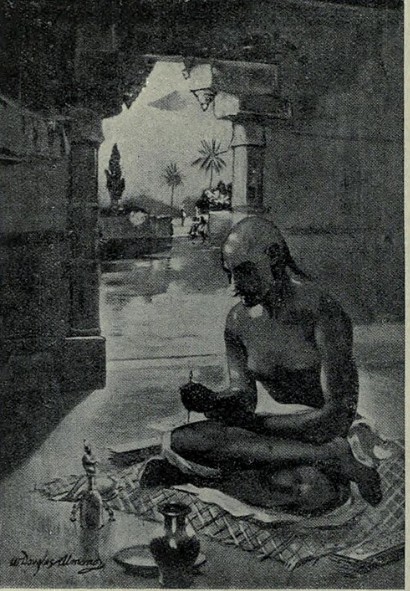
(Unknown. Kalidasa Inditing the Cloud Messenger. Illustration. 19th century. Wikimedia Commons. https://commons.wikimedia.org/wiki/File:Kalidasa_inditing_the_cloud_Messenger,_A.D._375.jpg.)
A 19th-century illustration of Kalidasa composing the Meghaduta (Cloud Messenger), shown seated under an archway with writing tools and an inkpot, evoking his poetic genius in Sanskrit literature.
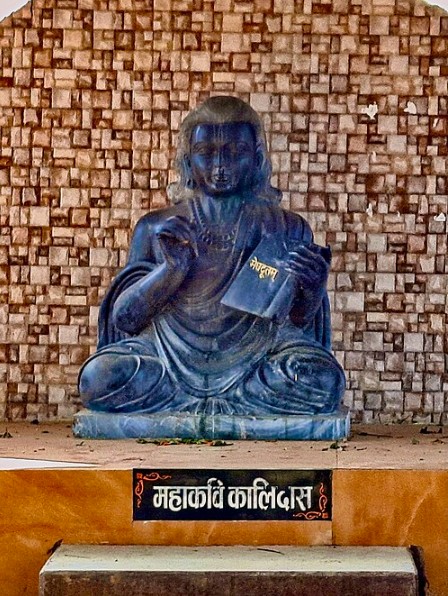
(Unknown. Statue of Kalidasa at Ramgarh Hills. Sculpture. 21st century. Wikimedia Commons. https://commons.wikimedia.org/wiki/File:Kalidasa_site_Ramgarh_Hills_Chattisgarh_011.jpg.)
Modern statue of Kalidasa at Ramgarh Hills, Chhattisgarh, depicting the poet in traditional attire holding a book against a brick wall, commemorating his legendary birthplace and works like Shakuntala.
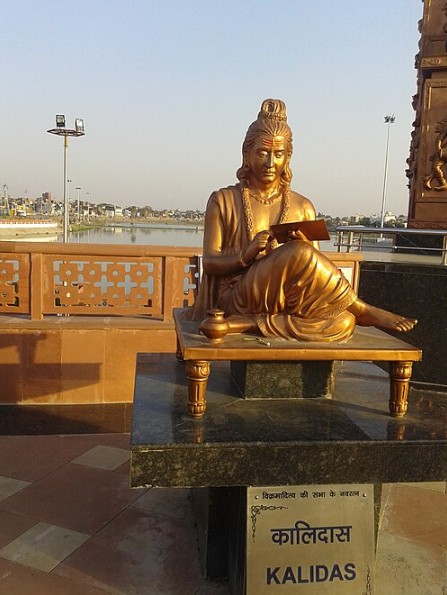
(Unknown. Statue of Kalidasa. Bronze sculpture. 20th century. Wikimedia Commons. https://commons.wikimedia.org/wiki/File:Kalidas.jpg.)
Bronze statue of Kalidasa seated and writing on a low platform, inscribed with his name in Devanagari, capturing the essence of the classical poet’s contemplative creative process.