
LAOTZU
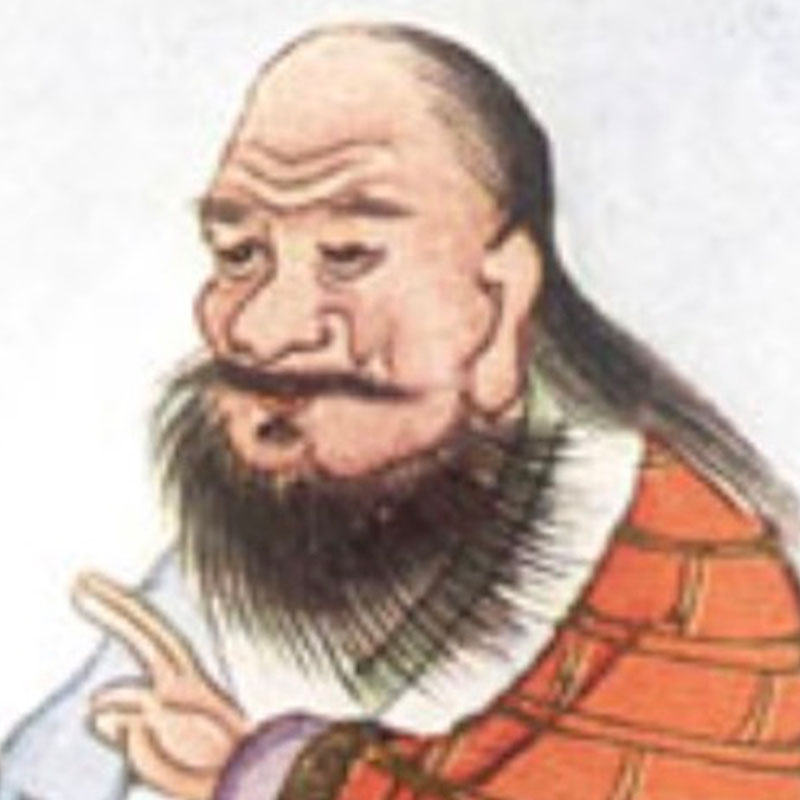
(Unknown. "Lao Tzu." Illustration. Early 20th century. From Project Gutenberg eText 15250. Wikimedia Commons. Accessed October 26, 2025. https://commons.wikimedia.org/wiki/File:Lao_Tzu_-_Project_Gutenberg_eText_15250.jpg.)
What did a young Confucius see in the old master?
Traditionally early sixth century B.C. · China
Lao Tzu is remembered as the first philosopher of Taoism, and is often cited as a contributor to, if not the author of, the Tao-te Ching. His life is shrouded in mystery and legend. One legend says that an aged Lao Tzu upbraided a young and overconfident Confucius, who later compared him to a dragon rising in the sky, riding on the winds and clouds.
“A dragon rising in the sky”
- Known as: The first philosopher of Taoism
- The text: A contributor to, if not the author of, the Tao-te Ching, the basic philosophical discourse on Taoism
- Active: Generally placed in the early sixth century B.C.
- Role: A resident scholar, or shih, at the royal court of the Chou
- Veneration: By the seventh century A.D., worshipped as an imperial ancestor by the T’ang and regarded by commoners as the equivalent of a saint or demigod
Is the best ruler the one nobody notices?
Hover or tap each idea to follow the Way
- The WayTaoism posits an ultimate reality, beyond the description of words, that is the moving force of the universe. It is called the Way, or Tao.
- Against the CurrentCorruption and degradation occur in the perceived world when objects and people move in opposition to this primal force.
- A Life in Harmony with NatureThe Taoist meditates on this ultimate reality to understand its direction and lead a life in conformity with nature. Such a life of serene contemplation and material simplicity stands in marked contrast to the Confucian life of active public service.
- The Unnoticed RulerLao Tzu’s work is primarily an instruction for rulers. If a prince rules in conformity with the way of the universe, his rule should go unnoticed by his subjects. The idea invites comparison with Adam Smith’s “invisible hand,” though the Tao is largely spiritual rather than material in focus.
- Rule LightlyA people ruled lightly in accordance with the Tao will become peaceful and prosperous. Concerns about government and its intrusiveness, the Tao suggests, are common to all peoples and all times.
Before the Cultural Revolution, Taoism was considered, with Confucianism and Buddhism, one of the three primary intellectual forces shaping Chinese thought.
Taoism spread over much of Asia. Even Confucianists, whose ideal of active public service differs so sharply from the Taoist life, regard Lao Tzu as an important philosopher and a contributor to their own tradition.
Where to read more about Lao Tzu and the Tao-te Ching.
- 1963Tao Te ChingLau, D. C., trans. · Penguin Classics
- 1997Lao Tzu: Tao Te Ching: A Book about the Way and the Power of the WayLe Guin, Ursula K., with J. P. Seaton · Shambhala
- 1998Lao-tzu and the Tao-te-chingKohn, Livia, and Michael LaFargue, eds. · State University of New York Press
- 2003Dao De Jing: Making This Life SignificantAmes, Roger T., and David L. Hall, trans. · Ballantine Books
- The Tao Teh King (Tao-te Ching)James Legge’s classic translation, free from Project Gutenberg.gutenberg.org
- Stanford Encyclopedia of Philosophy: LaoziA detailed scholarly entry by Alan Chan on the figure, the text and its ideas.plato.stanford.edu
- Britannica: LaoziA short biography and overview of his philosophy.britannica.com
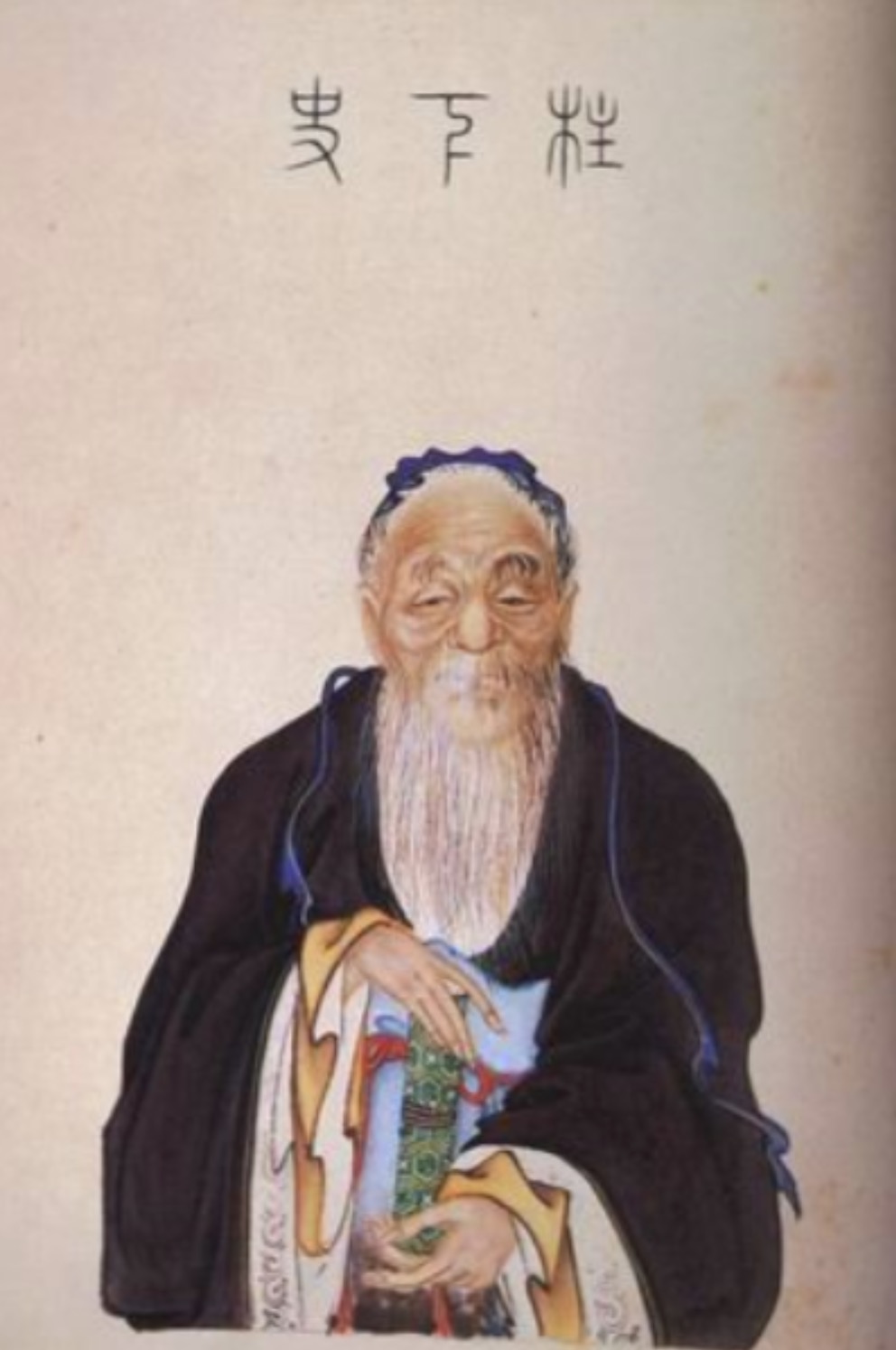
(Unknown. Lao Tzu. Woodblock print. ca. 1850. Wikimedia Commons. https://commons.wikimedia.org/wiki/File:Lao_Tzu.png.)

This 19th-century woodblock print from a Chinese edition of Taoist texts portrays Lao Tzu enthroned with a benevolent expression, holding a fan and scroll, inscribed with his name, illustrating his role as a semi-mythical founder of Taoism.
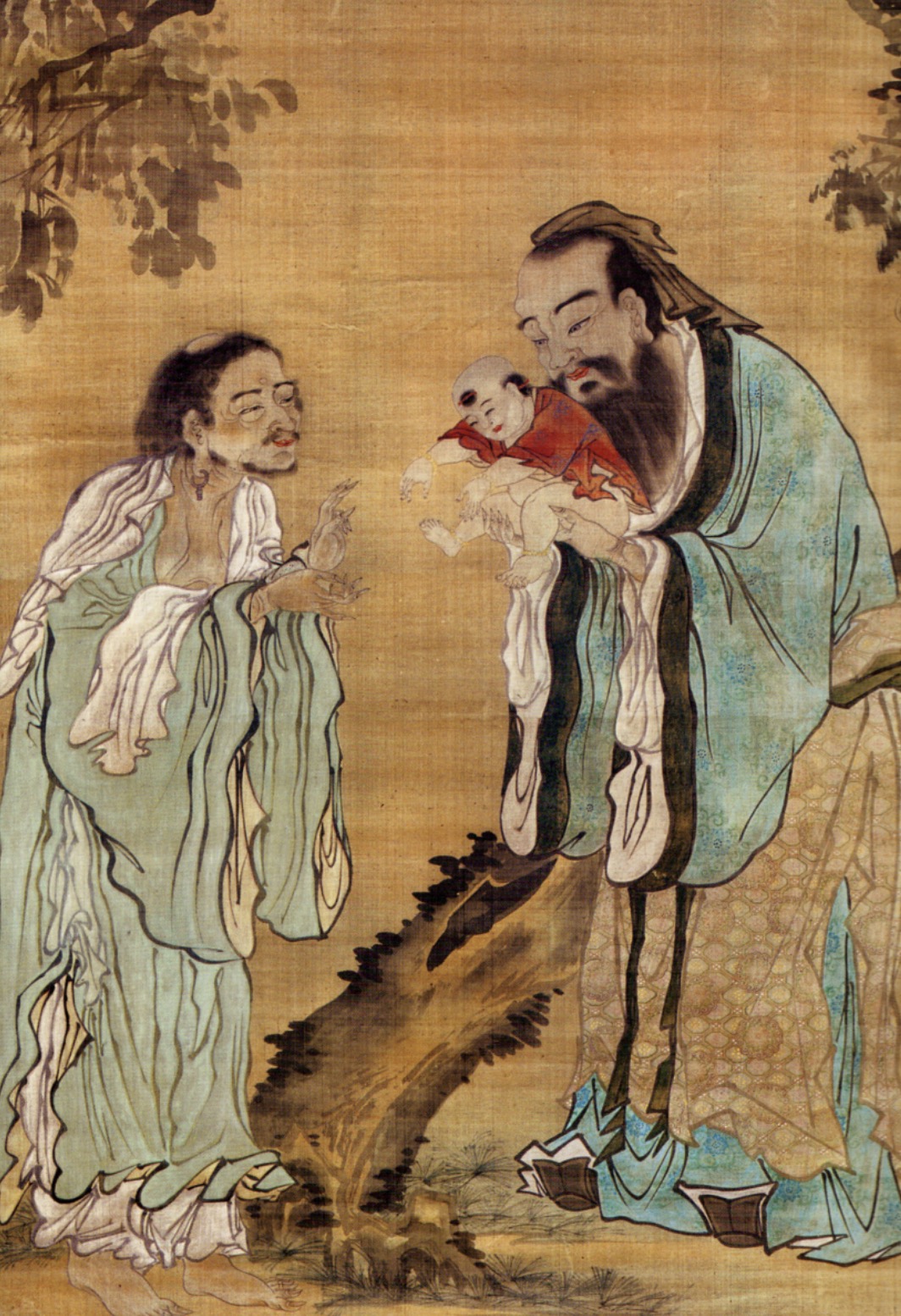
(Anonymous. Confucius Presenting the Young Gautama Buddha to Laozi. Qing Dynasty. Painting. Wikimedia Commons. Accessed October 26, 2025. https://commons.wikimedia.org/wiki/File:Confucius_Laozi_Buddha.jpg.)

A Qing Dynasty artwork imagining a symbolic meeting where Confucius introduces the young Buddha to Lao Tzu, highlighting philosophical exchange.
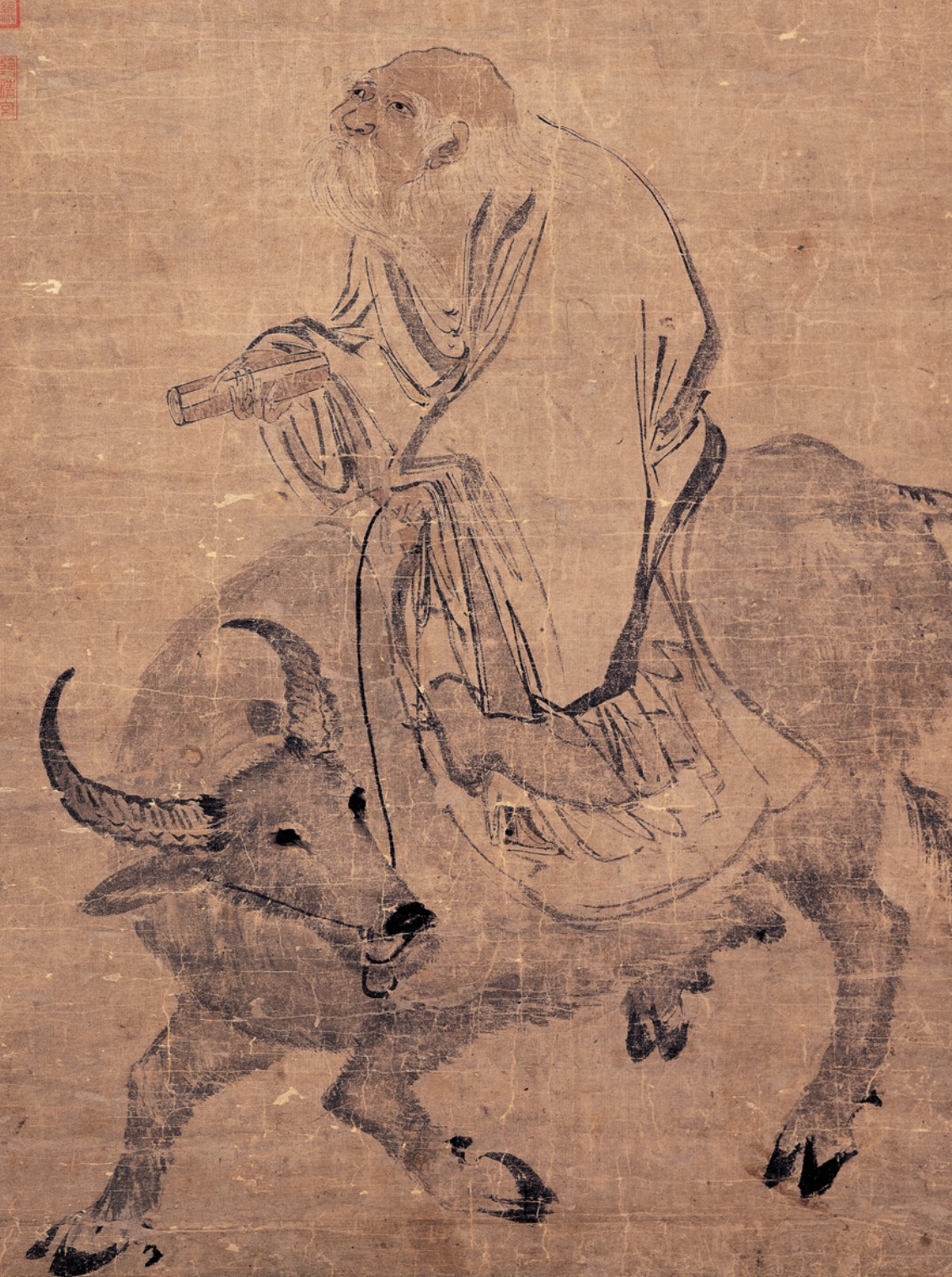
(Zhang Lu. Laozi Riding an Ox. Ming dynasty, 1368–1644. Hanging scroll, light color on paper. National Palace Museum, Taipei. Wikimedia Commons. Accessed October 26, 2025. https://commons.wikimedia.org/wiki/File:Zhang_Lu-Laozi_Riding_an_Ox.jpg.)

Lao Tzu depicted riding an ox, symbolizing his legendary journey westward to impart the Tao Te Ching before departing civilization.