
MELANCHTHON
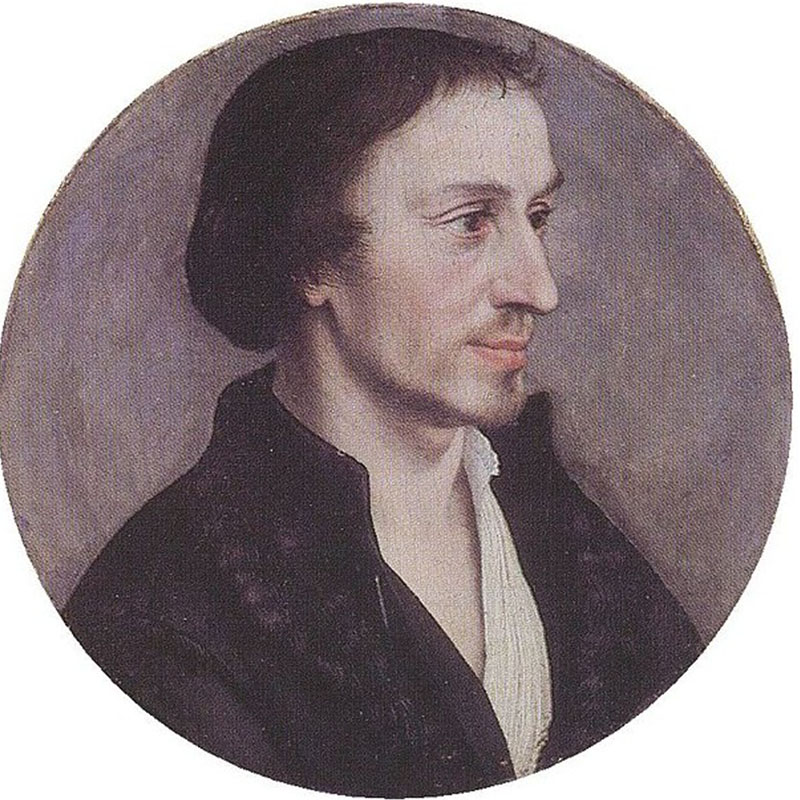
(Holbein the Younger, Hans. Portrait of Philip Melanchthon. Chalk drawing. ca. 1530–1540. Wikimedia Commons. https://commons.wikimedia.org/wiki/File:Portrait_of_Philip_Melanchthon,_by_Hans_Holbein_the_Younger.jpg.)

Born: 1497 CE, Bretten, Germany
Died: 1560 CE, Wittenberg, Germany
Notable
-
Reformation Theologian: Collaborated with Martin Luther and helped shape Lutheran theology.
-
Faith and Scripture: Emphasized justification by faith and the authority of Scripture.
-
Humanist Educator: Integrated classical learning with theology, shaping Protestant education.
-
Enduring Influence: Set lasting standards for theological and scholarly rigor.
1500–1600 AD works
Biography
Biography / Overview
Philipp Melanchthon, born Philipp Schwartzerdt on February 16, 1497, in Bretten, Germany, was a highly influential German reformer, theologian, and scholar during the Protestant Reformation. He is best known for his close collaboration with Martin Luther and his role in the development of Lutheran theology. Melanchthon was a key figure in the establishment of the University of Wittenberg, where he served as a professor of Greek and eventually theology. He was a prolific writer, producing works on theology, education, ethics, and classical literature.
Melanchthon's early education was marked by a strong emphasis on humanist learning, which greatly influenced his later work. He played a significant role in shaping the educational curriculum of his time, advocating for the study of classical languages and literature alongside theology. Melanchthon's commitment to academic rigor and intellectual inquiry earned him a reputation as one of the leading scholars of his day. He died on April 19, 1560, in Wittenberg, leaving behind a lasting legacy in the fields of theology and education.
Influences & Notable For
Philipp Melanchthon is best known for his collaboration with Martin Luther and his significant contributions to the development of Lutheran theology. He played a key role in shaping the theological foundations of the Protestant Reformation, emphasizing the primacy of faith and the authority of Scripture. Melanchthon's works on theology, education, and ethics have had a lasting impact on the fields of religious studies and intellectual history.
Melanchthon's advocacy for the study of classical languages and literature in conjunction with theology helped to establish a humanist approach to education that influenced generations of students and scholars. His commitment to intellectual inquiry and theological rigor set a standard for scholarship in the early modern period and beyond.
Famous quotes
"In essentials, unity; in non-essentials, liberty; in all things, charity."
"There is no man living who knows so much that he can afford to dismiss knowledge."
"The gift of language combined with the gift of song was given to man that he should proclaim the Word of God through music."
"To investigate the earth is to know the laws of heaven."
"The beginning of wisdom is the fear of the Lord."
Legacy & Modern Significance
Philipp Melanchthon's legacy is profound, extending beyond his contributions to theology and education to influence the broader cultural and intellectual history of Europe. His promotion of humanist learning and the integration of classical studies with theology helped to shape the educational curriculum of his time and laid the groundwork for the development of modern academic disciplines.
In the centuries following his death, Melanchthon's works continued to be studied and debated, contributing to ongoing discussions in theology, philosophy, and intellectual history. His emphasis on the importance of reason, faith, and ethical living resonates with contemporary concerns about the intersection of religion, ethics, and society.
Modern Moments & Impact on the 21st Century
In 2017, the University of Wittenberg celebrated the 500th anniversary of the Reformation with a series of events honoring the legacy of Melanchthon and other key figures of the movement. A 2020 academic conference at the University of Heidelberg explored Melanchthon's impact on modern educational theory and practice, highlighting his enduring influence in the field of pedagogy. The digitization of Melanchthon's works by Project Gutenberg and other online repositories has made his writings more accessible to contemporary scholars and researchers.
These events and initiatives underscore the ongoing relevance of Melanchthon's ideas and writings in the 21st century, demonstrating his enduring impact on intellectual and cultural life.
Influences & Intellectual Context
Philipp Melanchthon was deeply influenced by the humanist movement of the Renaissance, which emphasized the study of classical texts and languages. His early education in Greek and Latin laid the foundation for his later work as a theologian and scholar. Melanchthon's collaboration with Martin Luther and other reformers shaped his theological views and contributed to the development of Lutheran doctrine.
In addition to his humanist influences, Melanchthon engaged with a wide range of intellectual currents of his time, including scholastic theology, Renaissance philosophy, and educational theory. His commitment to integrating classical learning with theology reflected a broader trend in European intellectual history toward synthesis and interdisciplinary inquiry.
Suggested Reading & Resources
Oberman, Heiko A. Luther: Man Between God and the Devil. Yale University Press, 2006. https://yalebooks.yale.edu/book/9780300103137/luther
Kolb, Robert, and Dingel, Irene. The Oxford Handbook of Martin Luther's Theology. Oxford University Press, 2014. https://global.oup.com/academic/product/the-oxford-handbook-of-martin-luthers-theology-9780199604708?cc=us&lang=en&
Bagchi, David, and Steinmetz, David C. The Cambridge Companion to Reformation Theology. Cambridge University Press, 2004.
ARCHITECT OF PROTESTANT EDUCATION
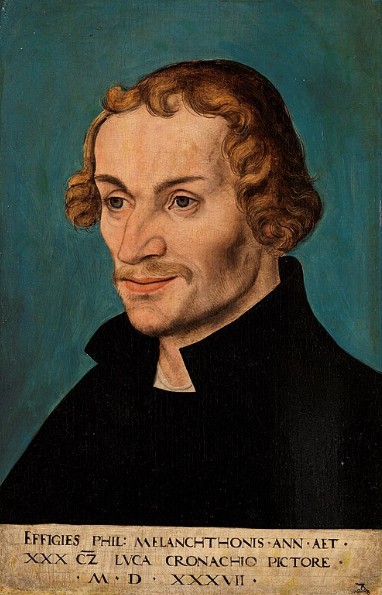
(Cranach the Elder, Lucas. Philipp Melanchthon. Oil on panel. 1537. Wikimedia Commons. https://commons.wikimedia.org/wiki/File:Philipp-Melanchthon-1537.jpg.)

Lucas Cranach the Elder's 1537 oil portrait of Philip Melanchthon, the German Lutheran reformer, in black robes holding a book, reflecting his authorship of the Augsburg Confession and collaboration with Luther on Protestant theology.
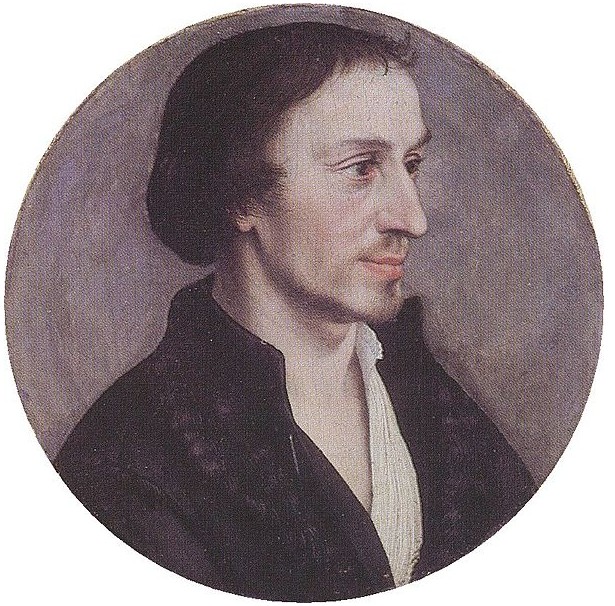
(Holbein the Younger, Hans. Portrait of Philip Melanchthon. Chalk drawing. ca. 1530–1540. Wikimedia Commons. https://commons.wikimedia.org/wiki/File:Portrait_of_Philip_Melanchthon,_by_Hans_Holbein_the_Younger.jpg.)
Hans Holbein the Younger's chalk drawing of Philip Melanchthon, showing the humanist scholar in profile with a cap and thoughtful expression, highlighting his educational reforms and role as "Praeceptor Germaniae" (Teacher of Germany).
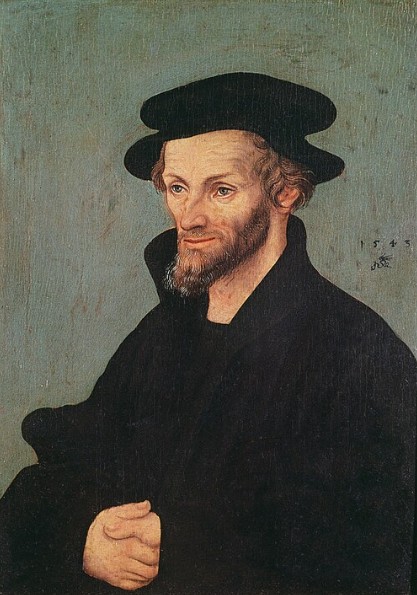
(Unknown. Philipp Melanchthon. Oil on panel. ca. 1550. Wikimedia Commons. https://commons.wikimedia.org/wiki/File:PhilippMelanchthon.jpg.)

A 16th-century anonymous portrait of Philip Melanchthon, depicted in scholarly attire with a Bible, underscoring his contributions to the Loci Communes and his efforts in reconciling Lutheran doctrine with humanism.