
MILTON
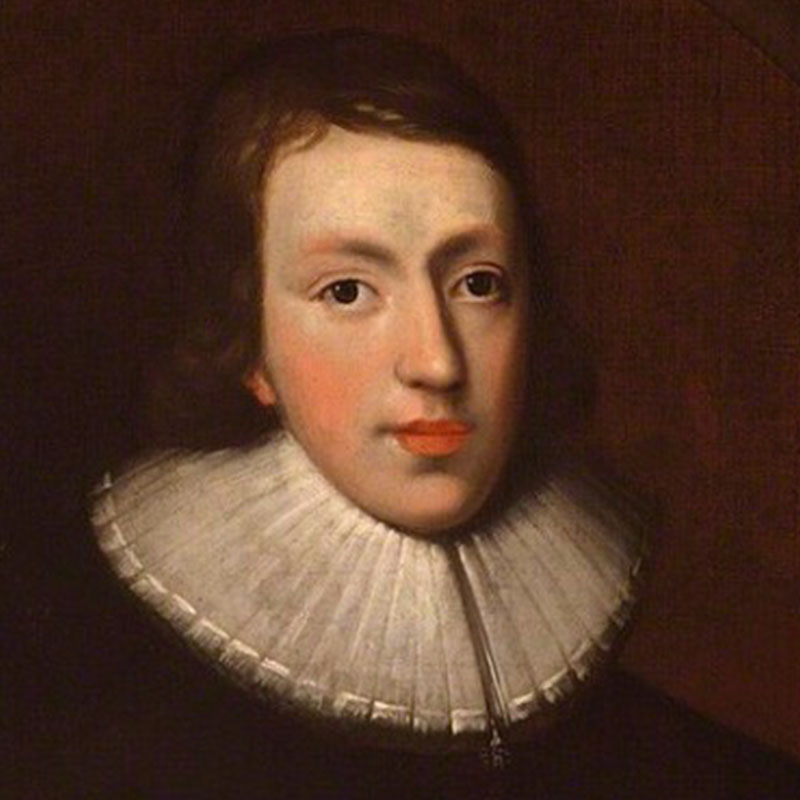
(Unknown. Portrait of John Milton. Oil on canvas. ca. 1650. Wikimedia Commons. https://commons.wikimedia.org/wiki/File:John-milton.jpg.

Born: December 9, 1608, London, England
Died: November 8, 1674, London, England
Notable
-
Epic Poet: Author of Paradise Lost, a cornerstone of English epic poetry.
-
Free Speech Advocate: Wrote Areopagitica, a landmark defense of press freedom.
-
Political Thought: Championed republican government and religious liberty.
-
Literary Legacy: Deeply influenced the English language and later writers.
1600–1700 AD works
Biography
John Milton (London, 9 December 1608 – London, 8 November 1674) was an English poet, polemicist, intellectual, and civil servant. Born into a devout and musically gifted family, he was educated first at St. Paul’s School and then at Christ’s College, Cambridge, where he cultivated his love of languages and literature. Following extensive private study and travel in Europe (notably Italy), Milton became engaged in the major religious, political, and constitutional debates of mid-17th-century England. As a polemicist, he produced influential tracts on education, divorce, and liberty of the press, most notably the Areopagitica. Professionally, he served as Secretary for Foreign Tongues under Oliver Cromwell’s Commonwealth, translating state documents into Latin. Even after losing his sight in 1652, Milton continued dictating both poetry and political prose, culminating in his magnum opus, Paradise Lost—widely regarded as the greatest epic poem in English.
Influences & Notable For
Author of Paradise Lost, the greatest epic poem in English literature
Areopagitica: Classic defense of free speech and press
Major political prose advocating republican government and religious liberty
Profound influence on the English language and on later writers, including the Romantic poets
Famous quotes
“Better to reign in Hell than serve in Heaven.” (Paradise Lost, Book I)
“The mind is its own place, and in itself / Can make a Heaven of Hell, a Hell of Heaven.” (Paradise Lost, Book I)
“They also serve who only stand and wait.” (Sonnet XIX: On His Blindness, c. 1652)
“When complaints are freely heard, deeply considered, and speedily reformed, then is the utmost bound of civil liberty attained that wise men look for.” (Areopagitica, 1644)
“Peace hath her victories / No less renowned than war.” (“To the Lord General Cromwell,” 1652)
Legacy & Modern Significance
Paradise Lost is still central to literary, theological, and philosophical studies, inspiring countless interpretations and allusions.
Areopagitica remains foundational in discussions of freedom of speech.
Regarded as a precursor of Romanticism and a model of engaged intellectual authorship.
Themes of authority, conscience, and liberty have sparked debates in politics, law, and religious studies.
Milton influenced writers such as William Blake, Wordsworth, Shelley, and more recent cultural forms including stage, comic adaptations, and music.
Modern Moments & Impact on the 21st Century
2008: Publication of John Milton: Life, Work and Thought by Gordon Campbell and Thomas Corns in honor of his 400th birthday.
2011: The Royal Shakespeare Company stages a new adaptation of Paradise Lost.
2017: Graphic novel adaptation Paradise Lost by Pablo Guerra and Mauro Cascioli published.
Ongoing: Paradise Lost and Areopagitica remain featured in university syllabi worldwide, as attested by public course listings.
2023: Paradise Lost receives digital facsimile releases via the British Library and Project Gutenberg.
Ongoing: The Milton Society of America continues to hold annual conferences, awards, and essay prizes.
Influences & Intellectual Context
Heavily influenced by classical authors (Homer, Virgil, Ovid), the Bible (especially the King James Version), and Renaissance humanism.
Shaped by the Protestant Reformation and Puritan theological debates.
Engaged with radical republican ideas and individual liberty, intertwining them with his Christian worldview.
Part of an intellectual circle including Andrew Marvell, Samuel Hartlib, and notable continental figures during his travels.
Suggested Reading & Resources
Secondary Literature (Scholarship)
Barbara K. Lewalski, The Life of John Milton: A Critical Biography. Oxford: Blackwell, 2000.
Gordon Campbell & Thomas N. Corns, John Milton: Life, Work and Thought. Oxford: Oxford University Press, 2008.
Neil Forsyth, John Milton: A Biography. Oxford: Oxford University Press, 2008.
Christopher Hill, Milton and the English Revolution. Viking Press, 1977.
Stephen B. Dobranski & John Rumrich, eds. The Cambridge Companion to Milton. Cambridge University Press, 1999.
Archival or Online Sources
“Paradise Lost,” Project Gutenberg (public domain): https://www.gutenberg.org/ebooks/20
“John Milton Archive,” University of Cambridge: https://darknessvisible.christs.cam.ac.uk/
“John Milton at the Poetry Foundation”: https://www.poetryfoundation.org/poets/john-milton
“John Milton, British Library Digitized Manuscripts”: https://www.bl.uk/collection-items/paradise-lost-by-john-milton
FOUNDATION OF VEDIC WISDOM
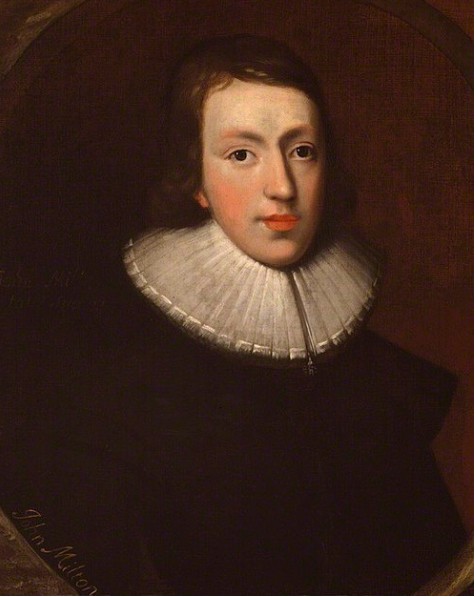
(Unknown. Portrait of John Milton. Oil on canvas. ca. 1650. Wikimedia Commons. https://commons.wikimedia.org/wiki/File:John-milton.jpg.)
A 17th-century oil portrait of John Milton, the English poet and political thinker, depicts him in a lace collar and dark robes, with a contemplative expression that evokes his epic Paradise Lost and fervent advocacy for free speech in Areopagitica, as honored in the Goodrich Seminar Room for his defense of intellectual liberty against censorship.
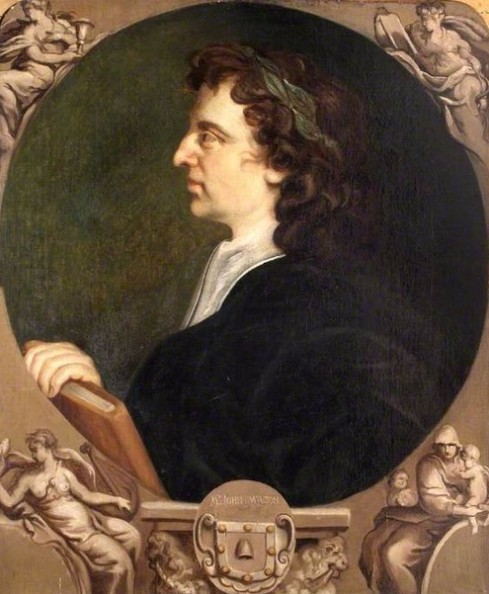
(Unknown. Portrait Painting of John Milton. Engraving. ca. 1750. Wikimedia Commons. https://commons.wikimedia.org/wiki/File:John_Milton_portrait_painting.jpg.)

An 18th-century engraving of John Milton in profile, with flowing hair and a high collar, captures his literary legacy during the Restoration, including his republican writings that influenced modern concepts of freedom and individual conscience.
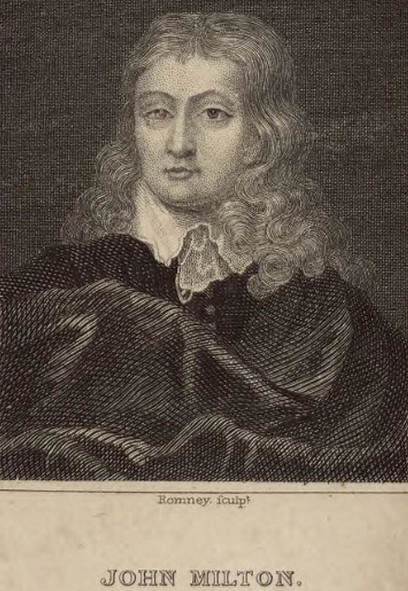
(Unknown. Portrait of John Milton. Lithograph. ca. 1850. Wikimedia Commons. https://en.wikipedia.org/wiki/File:Portrait_of_John_Milton_(4672638).jpg.)
.jpg)
A 19th-century lithograph portrait of John Milton, based on earlier originals, shows him with a laurel wreath and book, symbolizing his poetic exploration of free will in Paradise Lost and his role as a champion of civil liberties.