Plutarch

PLUTARCH

Plutarch
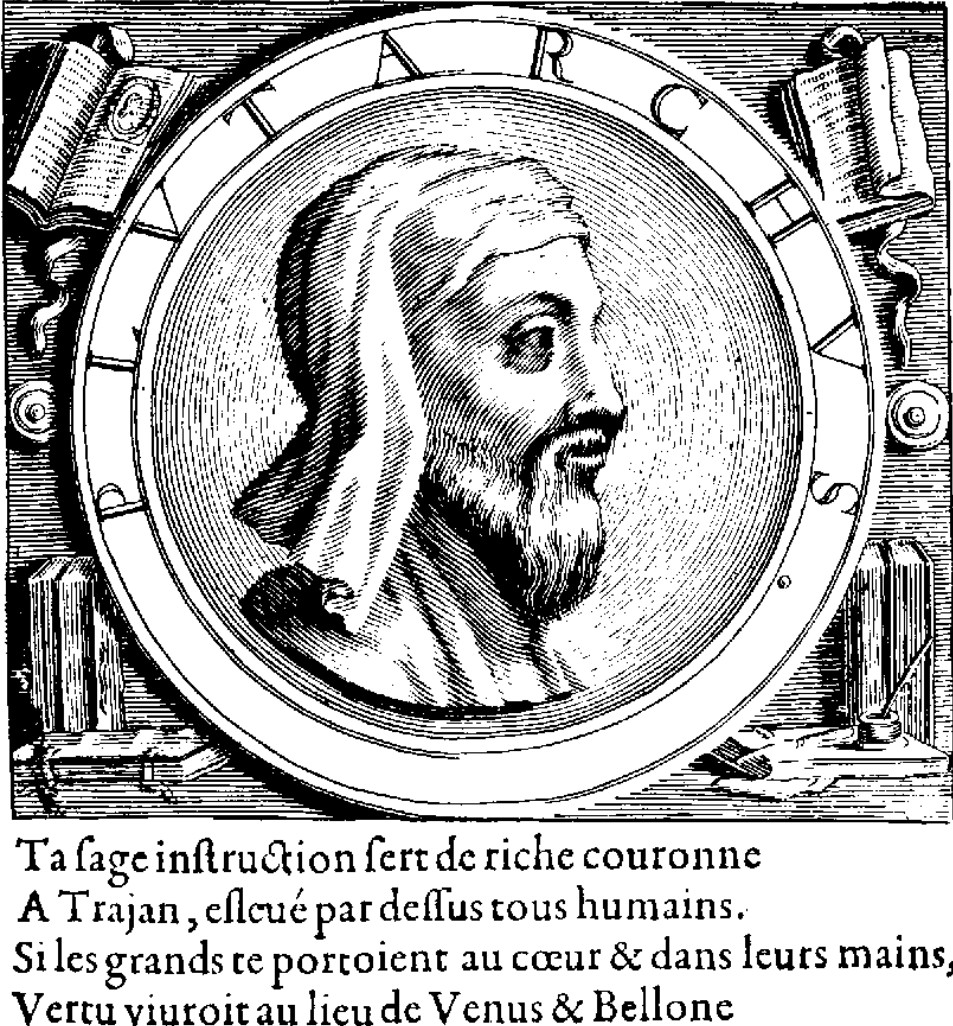
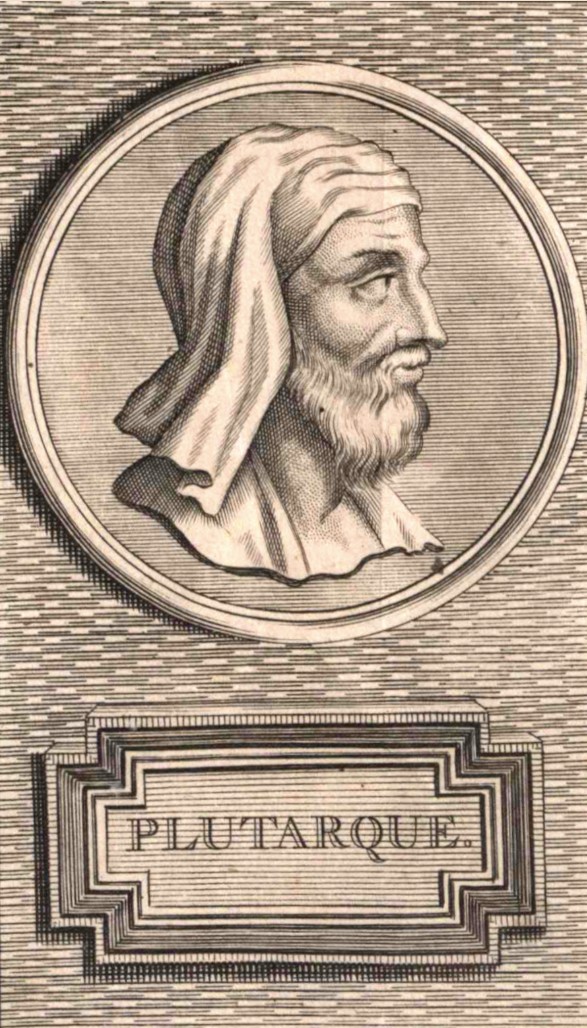
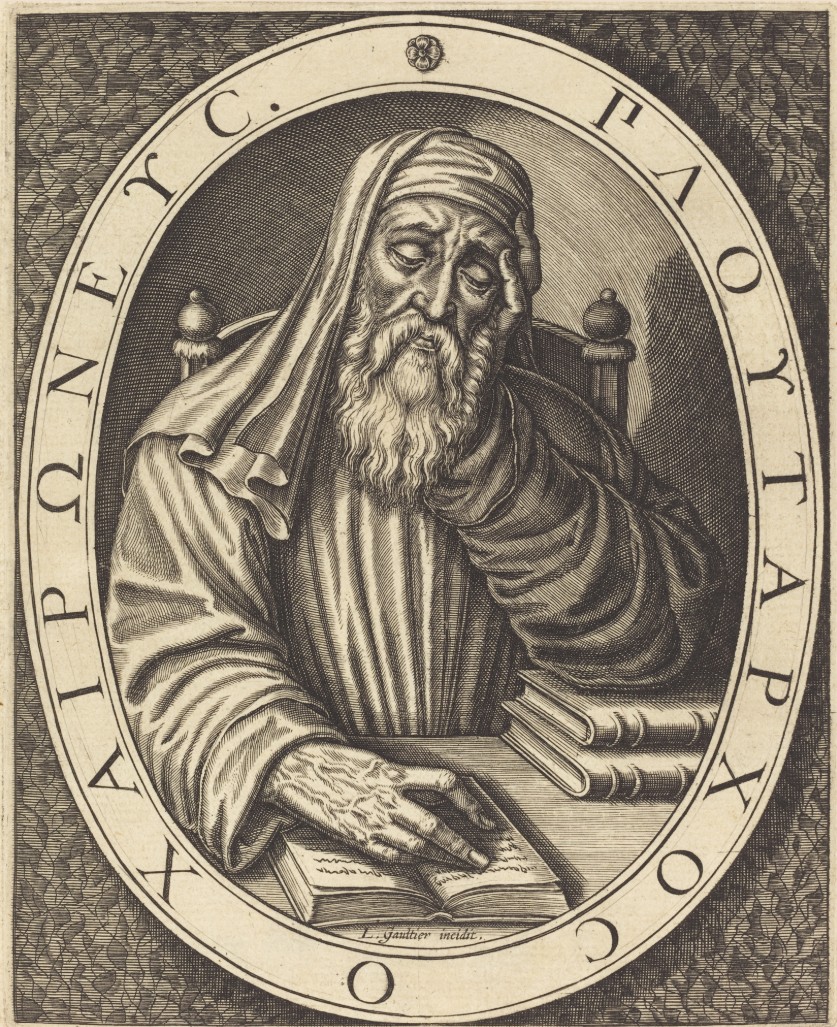
(Unknown. Plutarchus. Illustration. 17th century. Wikimedia Commons. https://commons.wikimedia.org/wiki/File:Plutarchus.jpg.)

Born: ca. 46 CE, Chaeronea, Boeotia, Greece

Died: After 119 CE (most likely between 120–125 CE) 

Notable

  • Author of Parallel Lives, a foundational work of comparative biography.
  • Author of Moralia, a vast collection of philosophical and ethical essays.
  • Bridging Greek and Roman intellectual traditions during the early Roman Empire.
  • Influencing Western literature, philosophy, and historical writing for nearly two millennia. 

46-121 BCE

Biography

Plutarch (Greek: Πλούταρχος, Latin: Plutarchus) was a Greek Middle Platonist philosopher, historian, biographer, essayist, and priest at the Temple of Apollo in Delphi. Born around 46 CE in Chaeronea, Boeotia (central Greece), he came from a prominent local family and received an education, studying philosophy, rhetoric, and ethics in Athens. Plutarch traveled widely, including at least one visit to Rome, where he met officials and scholars, yet remained deeply attached to his Greek heritage and home city, serving as a priest at Delphi for much of his life. His works, especially the Parallel Lives and Moralia, influenced essay, biography, and historical writing in Europe from the Renaissance onward.

    Bibliography & Major Works

    The Gospel of Mark:

    Language: Originally written in Greek

    Date: Circa 65–70 CE

    Audience: Likely written for a Gentile Christian audience in Rome or Syria

    Themes: The identity of Jesus as the suffering Messiah, discipleship, the “Messianic secret”

    References to Mark in Other Sources:

    Acts of the Apostles (Acts 12:12, 13:5, 15:37–39) – Mark accompanies Paul and Barnabas

    Colossians 4:10 – Paul mentions Mark, cousin of Barnabas

    2 Timothy 4:11 – Paul asks for Mark, calling him “helpful in my ministry”

    1 Peter 5:13 – Peter refers to “my son Mark,” indicating a close relationship

    Influences & Notable For

    Author of Parallel Lives, a foundational work of comparative biography.
    Author of Moralia, a vast collection of philosophical and ethical essays.
    Bridging Greek and Roman intellectual traditions during the early Roman Empire.
    Influencing Western literature, philosophy, and historical writing for nearly two millennia. 

    Famous quotes
    Major Works

    Parallel Lives (ca. 100–120 CE)

    Paired biographies of Greek and Roman figures (e.g., Alexander the Great & Julius Caesar, Theseus & Romulus).
    Each pair is followed by a comparison essay.
    Focuses on moral character, decision-making, and the impact of virtue on public life.
    Surviving Lives include Solon, Themistocles, Pericles, Alcibiades, Alexander, Julius Caesar, Cicero, and many more. 2 3

    Moralia (ca. 100–120 CE)

    Over 70 essays and dialogues.
    Topics: ethics, politics, education, religion, superstition, friendship, cosmology, theology.
    Notable essays: On the Delays of the Divine Vengeance, How to Tell a Flatterer from a Friend, On the Face in the Moon, On the Worship of Isis and Osiris.

    Legacy & Modern Significance

    Parallel Lives and Moralia have shaped the genres of biography, historical narrative, and moral philosophy.
    Plutarch’s works were central to Renaissance humanism and influenced major figures such as Shakespeare (who drew on Plutarch for Julius Caesar), Montaigne, and Emerson.
    His approach to character and virtue remains a model for biographers and historians.
    Ongoing debates focus on the reliability of his sources, his blending of fact and moral reflection, and his impact on Western ideas of leadership and virtue.


    Modern Moments & Impact on the 21st Century

    Parallel Lives and Moralia remain widely available in print and digital editions (e.g., Loeb Classical Library, Perseus Digital Library, Project Gutenberg).
    Plutarch’s works are core reading in classical studies, philosophy, and literature courses at universities worldwide (evidence: publicly available syllabi).
    2001–Present: Annual conferences and scholarly societies (e.g., International Plutarch Society) continue to promote research and debate on his legacy.
    2020s: New annotated translations and critical editions published by major academic presses.
    Plutarch’s influence is visible in modern leadership studies, ethics curricula, and popular culture references.


    Influences & Intellectual Context

    Parallel Lives (ca. 100–120 CE)

    Paired biographies of Greek and Roman figures (e.g., Alexander the Great & Julius Caesar, Theseus & Romulus).
    Each pair is followed by a comparison essay.
    Focuses on moral character, decision-making, and the impact of virtue on public life.
    Surviving Lives include Solon, Themistocles, Pericles, Alcibiades, Alexander, Julius Caesar, Cicero, and many more.

    Moralia (ca. 100–120 CE)

    Over 70 essays and dialogues.
    Topics: ethics, politics, education, religion, superstition, friendship, cosmology, theology.
    Notable essays: On the Delays of the Divine Vengeance, How to Tell a Flatterer from a Friend, On the Face in the Moon, On the Worship of Isis and Osiris.

    Suggested Reading & Resources

    Secondary Literature (Scholarship)

    Duff, Timothy E. Plutarch’s Lives: Exploring Virtue and Vice. Oxford University Press, 2002.
    Pelling, Christopher. Plutarch and History: Eighteen Studies. Classical Press of Wales, 2002.
    Stadter, Philip A. Plutarch and the Historical Tradition. Routledge, 1992.
    Nikolaidis, Anastasios G., ed. The Unity of Plutarch’s Work: Moralia, Themes, and Techniques. Walter de Gruyter, 2008.

    Archival or Online Sources

    “Plutarch, Parallel Lives,” Perseus Digital Library (public domain).
    http://www.perseus.tufts.edu/hopper/collection?collection=Perseus:collection:Greco-Roman

    “Plutarch Archive,” University of Oxford, digital collection of manuscripts and correspondence.
    https://www.classics.ox.ac.uk/plutarch

    “Plutarch’s Moralia PDF Edition,” Loeb Classical Library (freely downloadable).
    https://www.loebclassics.com/view/LCL222/1927/volume.xml