
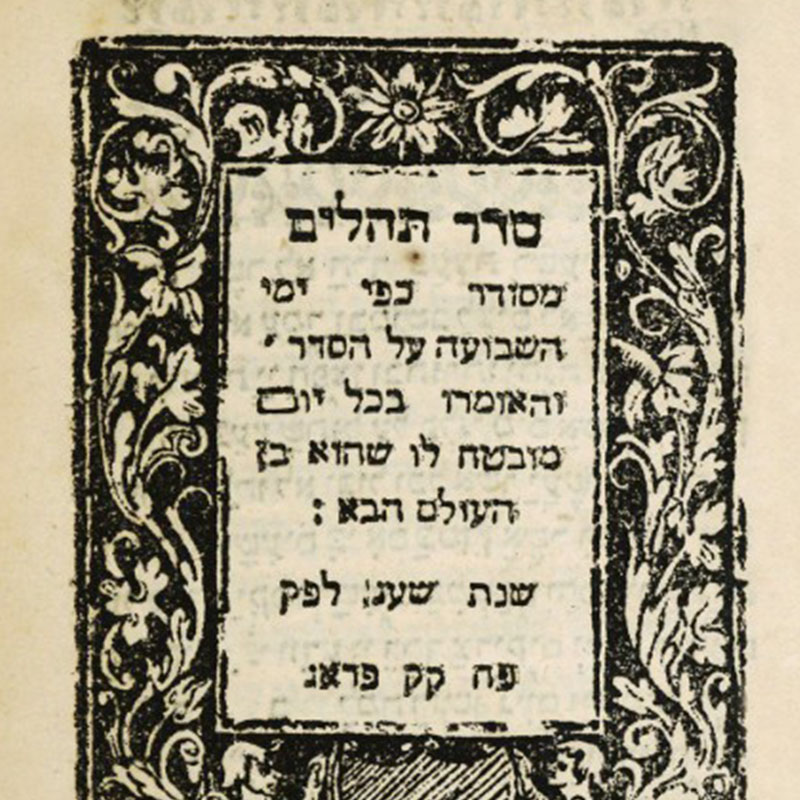
PSALMS
(“https://www.researchgate.net/figure/Tehilim-Prague-1621-Image-courtesy-of-Kestenbaum-and-company_fig2_280325905”)
Composition begins: c. 1000 BCE
Final compilation: c. 400 BCE
Notable
-
Messianic and Canonical Significance: Express themes of justice, kingship, and hope central to Jewish and Christian theology.
-
Human Emotion and Worship: Voice the full range of human experience in personal devotion and communal prayer.
-
Theological Foundations: Affirm God’s sovereignty and moral order, shaping ethical and spiritual outlooks.
-
Liturgical and Cultural Impact: Deeply influenced worship, music, and religious tradition for centuries.
2000–1000 BC works
Biography
The book of Psalms, also known as the Psalter, is the first book of the third section of the Tanakh (Hebrew Bible) called Ketuvim, and a book of the Old Testament. The book is an anthology of Hebrew religious hymns, divided into five sections, each ending with a doxology, a hymn of praise. There are several types of psalms, including hymns or songs of praise, communal laments, royal psalms, imprecation, and individual thanksgivings. While many passages are attributed to the biblical King David and other biblical figures, modern scholars argue that Psalms’ contents were not finalized until the 1st century CE.
The Book of Psalms is one of the most widely familiar and most frequently quoted books of the Hebrew Bible. Psalms has significantly impacted Western literature, theology, funerary practices, music, and more. The unnoted traditions of musical Psalms predate Christianity, extending to early Greco-Roman and Israelite traditions. Sung Psalms, or hymns, are at the core of many Roman Catholic and Protestant traditions, including the Catholic Mass. This musical tradition carried on through Classical musicians, such as Antonín Dvořák and Felix Mendelssohn, and contemporary artists, such as Steve Reich and Prince Far I.
Influences & Notable For
Widely Cited For: The Psalms are widely cited for their messianic hope and prophetic anticipation of a future king who will bring justice and peace, themes that are foundational in both Jewish and Christian theology. Their structure and content also mirror the Torah, reinforcing their canonical authority in the Judeo-Christian tradition.
Expression of Human Emotion and Worship: The Psalms capture the full spectrum of human experience – joy, sorrow, hope, despair, gratitude, and lament – offering a voice for individuals and communities in every situation. The emotional/spiritual breadth has made the Psalms central to both personal devotion and communal worship in Jewish and Christian traditions.
Legal/Philosophical Principles: The Psalms establish theological insights, such as God’s sovereignty, the destiny of the righteous and the wicked, and the call to take refuge in God. These principles are introduced in Psalms 1 and 2 and recur throughout the collection, shaping the moral and spiritual outlook.
Liturgical/Cultural Impact: The Psalms have profoundly influenced worship practices, serving as the hymnbook of ancient Jerusalem and a central element in early Christian liturgy. Their musical and poetic forms – hymns, laments, and songs of giving thanks – have shaped religious rituals, music, and art for centuries.
Famous quotes
“The Lord is my shepherd; I shall not want.” – Psalms, Psalm 23:1 (KJV)
“Create in me a clean heart, O God, and renew a right spirit within me.” – Psalms, Psalm 51:10 (KJV)
“Be still, and know that I am God.” – Psalms, Psalm 46:10 (KJV)
Legacy & Modern Significance
Interpretation and Application
The Psalms have been central to both Jewish and Christian worship, shaping liturgy, music, and personal devotion for millennia. In Judaism, they are recited in daily prayers, Sabbath services, and festivals, fostering spiritual unity and communal identity. In Christianity, the Psalms are frequently quoted in the New Testament and have been used as a model for prayer and song since the earliest churches.
Historically, the Psalms have also been a resource for understanding the beliefs, values, and experiences of ancient Israel, providing scholars with insights into their society, religious practices, and responses to historical events such as the Babylonian Exile. Their poetic and emotional range has made them a unique window into the spiritual and cultural life of the ancient world.
(https://biblelift.com/exploring-the-historical-context-of-the-psalms/ , https://cadamohq.wixsite.com/engagingthetruthteam/post/the-historical-and-cultural-background-of-the-book-of-psalms-part-1)
Ongoing Debates
For centuries, interpreters read the Psalms as a unified book with a messianic message, an approach that dominated until the Enlightenment. The rise of higher criticism in the 18th and 19th centuries led scholars to treat the Psalms as a collection of independent poems, questioning traditional attributions and the unity of the book. This shift sparked debates about authorship, historical context, and canonical structure, with modern scholarship now balancing both literary and historical-critical approaches.
(https://davidschrock.com/2017/08/25/reading-the-psalms-from-the-beginning-how-reading-the-psalms-canonically-is-more-ancient-than-modern/)
In contemporary theology and worship, the Psalms continue to be reinterpreted. Some emphasize their role in honest emotional expression and their relevance to modern struggles, advocating for their use in shaping worship that addresses real-world challenges and emotions. Others highlight their political and ethical vision, noting how the Psalms call for justice, defend the oppressed, and critique the abuse of power.
(https://corechristianity.com/resources/articles/3-ways-the-psalms-should-shape-worship , https://dailytheology.org/2020/08/13/in-you-i-take-refuge-the-political-vision-of-the-psalms-2/)
Modern Moments & Impact on the 21st Century
2004: “Psalms for Singing – A 21st Century Edition” released by the Reformed Presbyterian Church of Ireland.
(https://soundcloud.com/connorq/sets/psalms-for-singing-a-21st-1)
2021: “The Book of Psalms for Worship” published by Crown & Covenant Publications, featuring all 150 psalms in modern language and musical arrangements.
(https://crownandcovenant.com/products/the-book-of-psalms-for-worship)
2023: BibleStudyTools.com provides full digital access to the Book of Psalms, including study resources and commentary, updated as of March 31, 2023.
(https://www.biblestudytools.com/psalms/)
2024: The Critical Edition of the Hebrew Psalter Project launches the first eclectic and digital critical edition of the first 50 Psalms, available online through HBCE Psalms.
Influences & Intellectual Context
Ancient Near Eastern Traditions: The Psalms were shaped by the broader cultural and literary environment of the ancient Near East. They show similarities and contrasts to earlier texts from Ugarit (Canaanite religious poetry) and Babylon. For instance, Psalm 29 shares features with Canaanite hymns, and themes like the leviathan reflect themes found in Babylonian and Canaanite mythology.
Historical and Geographical Context: Most psalms originated in the southern kingdom of Judah and were closely associated with the Temple in Jerusalem, serving as texts for temple worship and ritual life. The Psalms’ development spans the early monarchy, the Babylonian exile, and the post-exilic period, reflecting the changing circumstances and faith of the Israelite community.
Intellectual and Theological Movements: The Psalms reflect a dialogue with surrounding polytheistic cultures but consistently affirm Israel’s covenantal monotheism. They also predate the introduction of metrical Hebrew poetry, representing a unique form of ancient Hebrew poetic and theological expression.
Suggested Reading & Resources
Secondary Literature
Willem A. VanGemeren, “Psalms” in the Expositor’s Bible Commentary (2008)
Comprehensive commentary with introductions, expository comments, and textual notes for each psalm.
Allen P. Ross, Psalms 1–41; Psalms 42–89; Psalms 90–150 (Kregel Exegetical Library, 2012, 2013, 2016)
Three-volume set with in-depth exegesis and theological analysis.
Gerald Wilson, Dennis Tucker, and Jamie Grant, Psalms Volumes 1 & 2 (NIV Application Commentary, 2002, 2018)
Noted for bridging original meaning, historical context, and contemporary significance.
John Goldingay, Baker Commentary on the Old Testament: Wisdom and Psalms (BCOTWP, Baker, 2006–2008)
Lucid introduction and detailed commentary, considering literary, historical, and theological dimension.
Archival or Online Sources
Library of Congress: Psalter of David the Prophet
Digital facsimile of an Arabic manuscript of the 150 psalms, with historical annotations.
Cambridge Digital Library: Western Medieval Manuscripts – Psalter
Digitized medieval Psalters, including the Moore Psalter, with illustrations and scholarly commentary.
Milken Archive: The Book of Psalms and its Musical Interpretations
Articles and resources on the Psalms’ influence in music and liturgy.
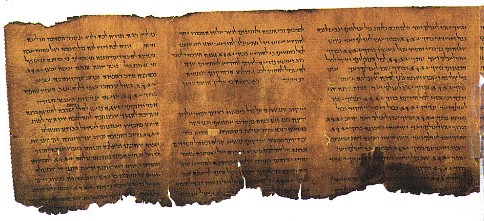
VOICE OF THE HUMAN HEART BEFORE GOD
(“A Lenten Study on the Book of Psalms | The Island Parson.” Photograph, 2010s. https://theislandparson.com/2019/03/13/a-lenten-study-on-the-book-of-psalms/ (accessed October 4, 2025).)
A tattered parchment fragment with Hebrew script in columns, showing signs of aging, burns, and irregular edges.
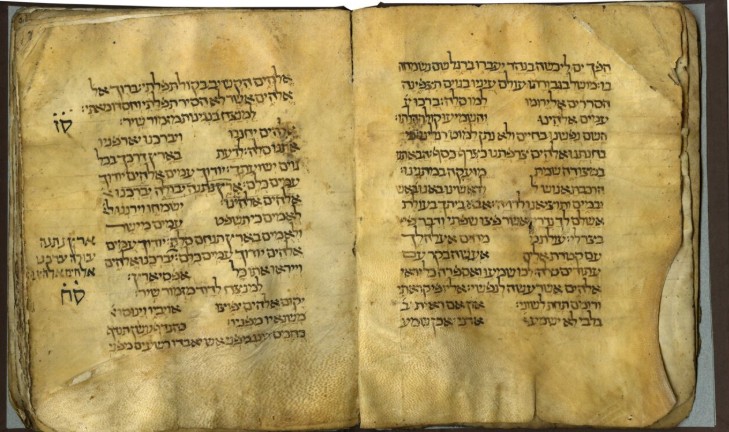
(“Bible Psalms Medieval Text Manuscript : Medieval Text Manuscripts.” Photograph, 2000s. https://www.textmanuscripts.com/medieval/hebrew-bible-psalms-91999 (accessed October 4, 2025).)
An open ancient book with Hebrew text in two columns on yellowish parchment, showing wear and dark ink handwriting.
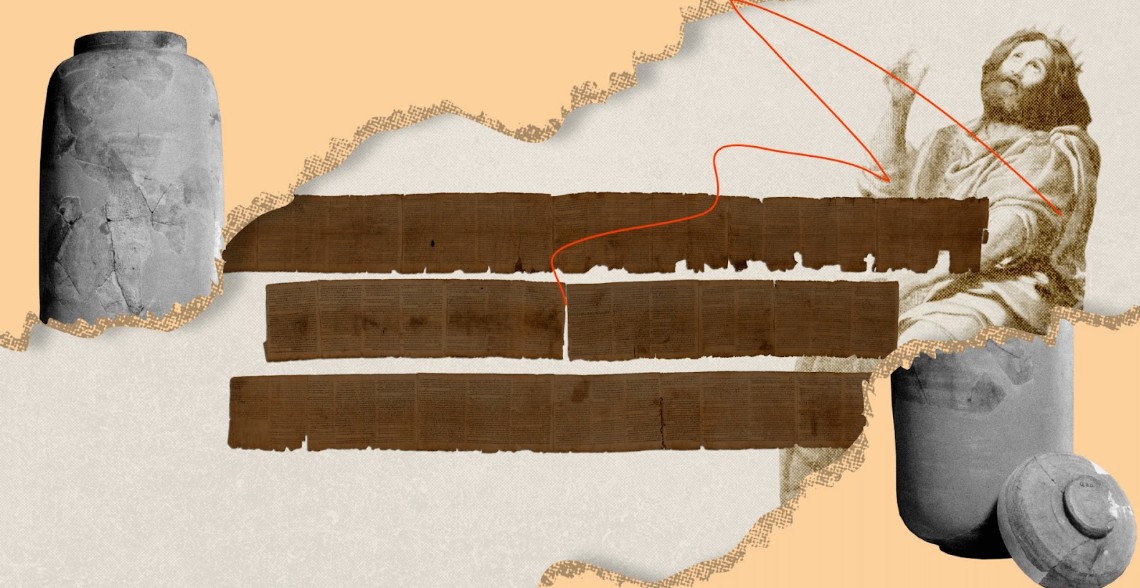
(“How the Dead Sea Scrolls Change Our Translation of the Book of Psalms.” Photograph, 2020s. https://www.logos.com/grow/bsm-how-the-dead-sea-scrolls-change-our-translation-of-the-book-of-psalms/ (accessed October 4, 2025).)
A fragmented ancient scroll with Hebrew inscriptions, likely from the Dead Sea Scrolls, showing textual variations relevant to Psalms translations (inferred from context).