
SAVONAROLA
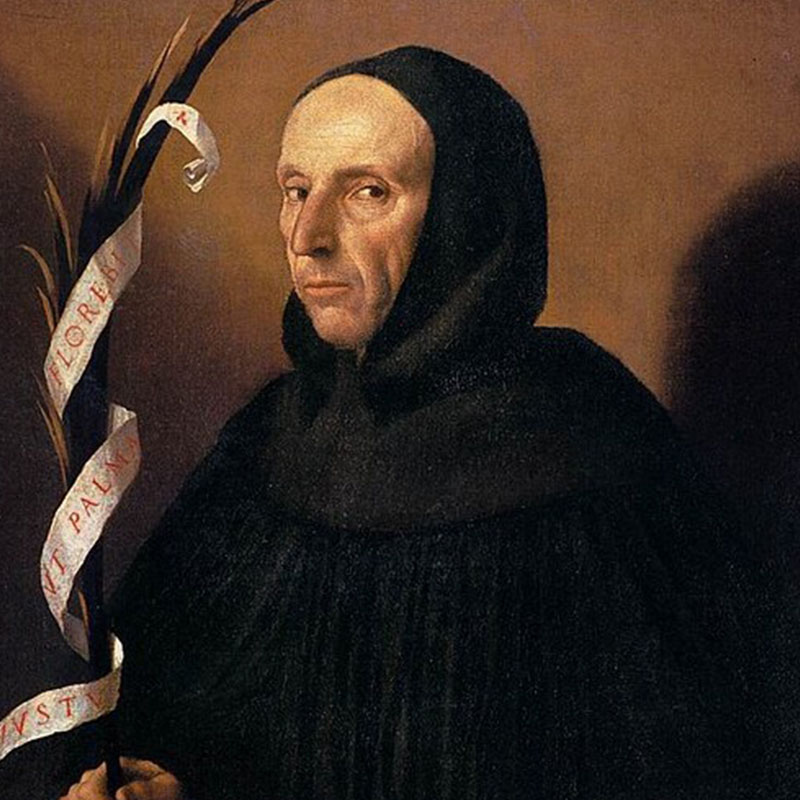
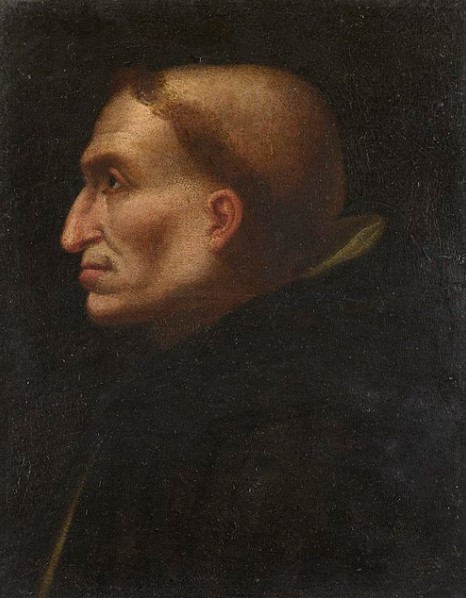
(Moretto da Brescia. "Portrait of a Dominican, Presumed to be Girolamo Savonarola." Oil on canvas. Circa 1520. Pinacoteca Tosio Martinengo, Brescia. Wikimedia Commons. https://commons.wikimedia.org/wiki/File:Moretto_da_Brescia_-_Portrait_of_a_Dominican,_Presumed_to_be_Girolamo_Savonarola_-_WGA16226.jpg.)

Born: September 21, 1452, Ferrara, Duchy of Ferrara (Italy)
Died: May 23, 1498, Florence (Italy)
Notable
- Reforming Florence's Political and Civic Life: Ruler of Florence (1494–1498), introducing a short-lived theocratic republic.
- The “Bonfire of the Vanities”: Led the infamous destruction of secular art, luxury goods, and objects tied to vice (1497).
- Biblical Prophecy and Apocalyptic Sermons: Predicted political and spiritual upheaval, most famously the French invasion of Italy (1494).
- Martyr for Reform: Died as a result of conflict with powerful civic and religious authorities.
Biography
Girolamo Savonarola (born September 21, 1452, Ferrara, Italy—died May 23, 1498, Florence) was a Dominican friar, preacher, and religious reformer of Renaissance Florence. Born to a prosperous merchant family, Savonarola early became disillusioned with the corruption of society and the Church, prompting him to join the Dominican Order in 1475. Excelling in theology and scriptural studies, he soon gained a reputation as an ascetic and captivating preacher upon his return to Florence in 1490. Savonarola’s stern condemnation of moral laxity, despotic rule, and clerical corruption became the hallmark of his sermons. Following the expulsion of the Medici in 1494—a political upheaval he claimed to have predicted—he virtually ruled Florence, establishing a religiously inspired republic. He advocated Christian renewal, civic virtue, and famously instigated the “Bonfire of the Vanities,” urging Florentines to destroy items associated with vanity and immorality. His vehement attacks on the papacy and reluctance to compromise led to excommunication, torture, and his execution by hanging and burning in 1498.
Influences & Notable For
- Reforming Florence's Political and Civic Life: Ruler of Florence (1494–1498), introducing a short-lived theocratic republic.
- The “Bonfire of the Vanities”: Led the infamous destruction of secular art, luxury goods, and objects tied to vice (1497).
- Biblical Prophecy and Apocalyptic Sermons: Predicted political and spiritual upheaval, most famously the French invasion of Italy (1494).
- Martyr for Reform: Died as a result of conflict with powerful civic and religious authorities.
Famous quotes
“Whoever excommunicates me, excommunicates God.”
— From Savonarola’s defense following his excommunication“The Pope may err... anyone who obstinately upholds the excommunication and affirms that I ought not to preach these doctrines is fighting against the kingdom of Christ, and supporting the kingdom of Satan, and is himself a heretic...”
— Epistola contra sententiam excommunicationis (1497)"The reason why I entered into a religious order is this: first, the great misery of the world, the wickedness of men, the rapes, the adulteries, the thefts... when I saw that virtue had been completely cast down and vice raised up."
— Letter cited in biography
Legacy & Modern Significance
Savonarola’s legacy remains complex and debated. Falling victim to both civic and ecclesiastical powers, he has been alternately viewed as prophet, fanatic, martyr, and proto-reformer. Later scholars and theologians, including Martin Luther, recognized him as a forerunner of religious reform, especially regarding his critique of Church corruption and the idea of direct spiritual authority. His attempt to forge a civic-theocratic republic provided a model—albeit controversial—for blending governance and religion. In arts and culture, his stance against secular luxuries instigated lasting debates about the proper role of religion in public life. Discussions about his works and tragic end continue in scholarship, with key moments like the “Bonfire of the Vanities” symbolizing recurring tensions between zealotry and tolerance.
Modern Moments & Impact on the 21st Century
2007–Present: The statue of Savonarola in Ferrara’s Piazza Savonarola remains a celebrated landmark and site of historical reflection.
Ongoing: Digital editions of Savonarola’s sermons and treatises are publicly available through multiple university and research library archives.
1990s–2020s: Academic conferences and lecture series—especially concerning the Renaissance and religious reform—continue to reference Savonarola’s influence on civic and religious life.
2023: Numerous philosophy, religious studies, and history departments worldwide include Savonarola in their syllabi, as seen in university course repositories.
Influences & Intellectual Context
Dominican Scholasticism: Profoundly influenced by the works of St. Thomas Aquinas and other Dominican theologians.
Medieval and Late Medieval Reform Movements: Heir to medieval traditions of prophecy and civic-religious renewal.
Italian Renaissance Politics: Responded directly to the luxury and humanism of Medici Florence, and the moral crises of late 15th-century Italy.
Influencer of Reformation Thought: Cited as an inspiration for later Protestant reformers—including Martin Luther—especially in his critique of papal authority.
Suggested Reading & Resources
Secondary Literature (Scholarship)
Weinstein, Donald. Savonarola and Florence: Prophecy and Patriotism in the Renaissance. Princeton University Press, 1970.
Ridolfi, Roberto. Girolamo Savonarola. Thames & Hudson, 1959.
Borelli, Anne, and Maria Pastore Passaro, eds. Selected Writings of Girolamo Savonarola: Religion and Politics, 1490–1498. Yale University Press, 2007.
Martines, Lauro. Fire in the City: Savonarola and the Struggle for the Soul of Renaissance Florence. Oxford University Press, 2006.
Archival or Online Sources
“Selected Writings of Girolamo Savonarola,” Traditio OP. (public domain). http://traditio-op.org/biblioteca/Savonarola/Selected-Writings-of-Girolamo-Savonarola-Religion-and-Politics-1490%E2%80]1498.pdf
“Girolamo Savonarola Archive,” Princeton University. Digital facsimiles and manuscript resources. https://en.wikipedia.org/wiki/Girolamo_Savonarola
BONFIRE OF THE VANITIES
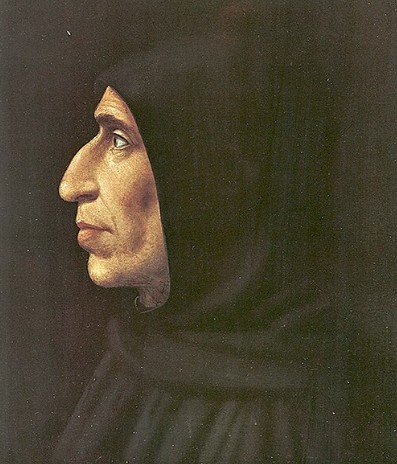
(Bartolomeo, Fra. "Portrait of Girolamo Savonarola." Oil on panel. Circa 1497–1498. Museo di San Marco, Florence. Wikimedia Commons. https://commons.wikimedia.org/wiki/File:Girolamo_Savonarola_by_Fra_Bartolommeo_(1497).jpg.)
.jpg)
A contemporary portrait of Girolamo Savonarola by Fra Bartolomeo, depicting the Dominican friar in black robes with a fiery expression of zeal.
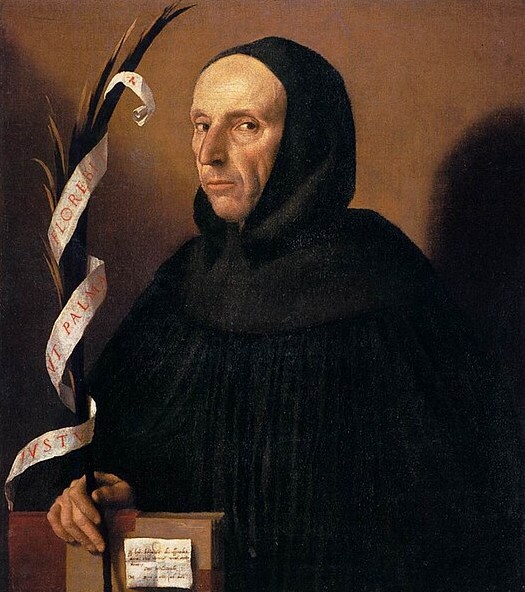
(Moretto da Brescia. "Portrait of a Dominican, Presumed to be Girolamo Savonarola." Oil on canvas. Circa 1520. Pinacoteca Tosio Martinengo, Brescia. Wikimedia Commons. https://commons.wikimedia.org/wiki/File:Moretto_da_Brescia_-_Portrait_of_a_Dominican,_Presumed_to_be_Girolamo_Savonarola_-_WGA16226.jpg.)
A presumed portrait by Moretto da Brescia of Savonarola as a Dominican preacher, emphasizing his austere features and religious habit.
(Unknown Florentine painter. "Portrait of Girolamo Savonarola." Oil on panel. Circa 1520. National Gallery, London. Wikimedia Commons. https://commons.wikimedia.org/wiki/File:Florentine_painter._Portrait_of_Girolamo_Savonarola_ca._1520,_London,_The_National_Gallery.jpg.)

An anonymous Florentine painting from circa 1520 showing Savonarola in profile, capturing his role as a reformer with a halo and book.