
SHAKESPEARE
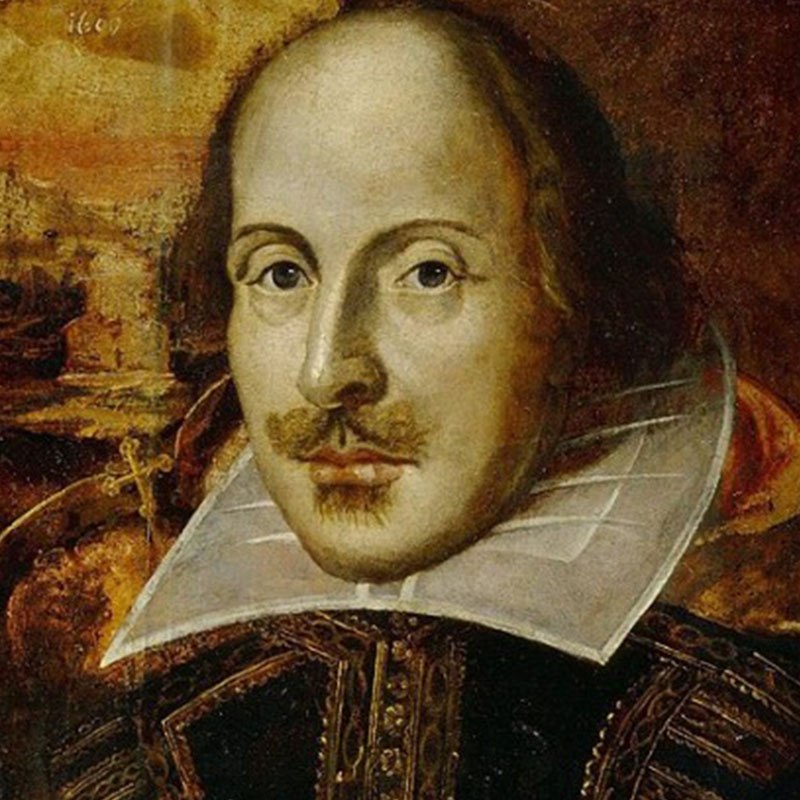
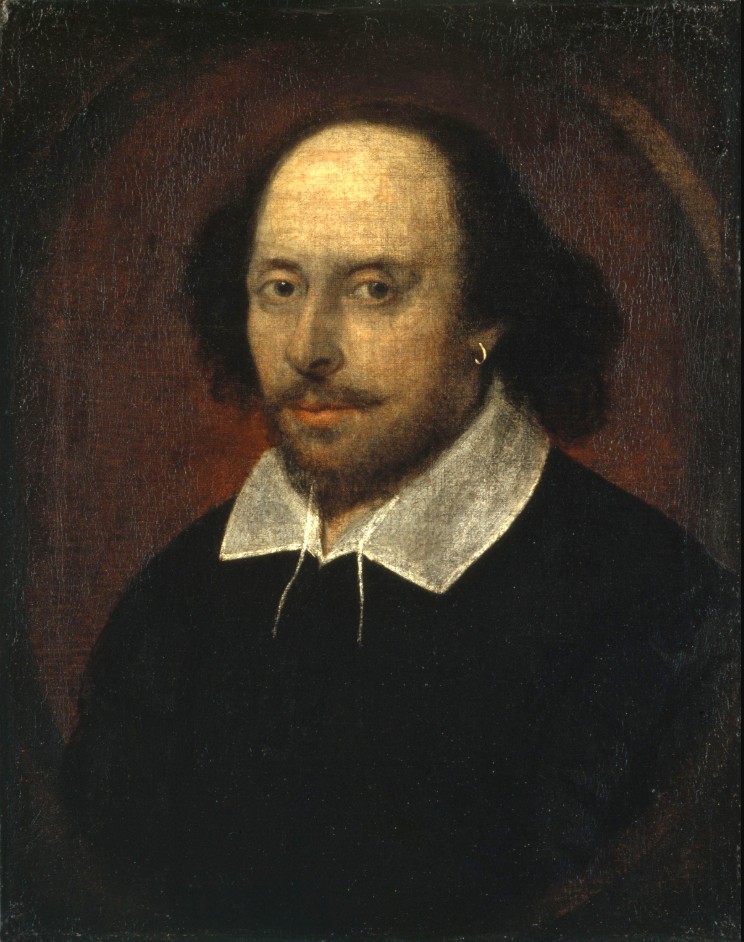
(Taylor, John (attributed). Chandos Portrait of William Shakespeare. Oil on canvas. ca. 1610. National Portrait Gallery, London. Wikimedia Commons. https://commons.wikimedia.org/wiki/File:William_Shakespeare_1609.jpg.)

Born: Baptized April 26, 1564 (likely born April 23), Stratford-upon-Avon, England
Died: April 23, 1616, Stratford-upon-Avon, England
Notable
-
Dramatic Mastery: Excelled across tragedy, comedy, history, and romance.
-
Enduring Characters: Created emotionally rich figures that remain influential.
-
Language & Legacy: Expanded English vocabulary and shaped timeless themes.
-
Global Influence: Inspired generations of writers and creatives worldwide.
1500–1600 AD works
Biography
William Shakespeare (1564–1616) was an English writer, poet, and actor who is often hailed as the greatest playwright of all time—and with good reason. Born in Stratford-upon-Avon, he was educated locally before heading to London, where he made a name for himself in the world of theater.
Whether it is love, ambition, jealousy, or life and death, Shakespeare tackled it all in his plays. His works—Hamlet, Macbeth, Romeo and Juliet, Othello, King Lear (just to name a few)—continue to captivate audiences around the world.
He did not just write plays, though. His 154 sonnets and a couple of long narrative poems helped shape English poetry. With his clever wordplay, unforgettable characters, and deep dive into human emotions, Shakespeare left an unmatched mark on literature.
Influences & Notable For
Mastering multiple dramatic genres—tragedy, comedy, history, romance—you name it.
Creating iconic, emotionally rich characters that still resonate today.
Expanding English vocabulary with phrases and words still in use.
Exploring timeless themes like love, betrayal, ambition, and forgiveness.
Inspiring generations of writers, thinkers, and creatives worldwide.
Famous quotes
“To be, or not to be: that is the question.” — Hamlet
“All the world’s a stage, and all the men and women merely players.” — As You Like It
“The course of true love never did run smooth.” — A Midsummer Night’s Dream
“Some are born great, some achieve greatness, and some have greatness thrust upon them.” — Twelfth Night
Legacy & Modern Significance
Shakespeare’s influence is just about everywhere.
Still considered the greatest playwright in the English-speaking world.
His plays are staged nonstop, from the West End to high school gyms.
He continues to shape film, literature, theater, and even pop culture.
Themes like love, ambition, revenge, and justice still resonate.
Institutions like the Globe Theatre and countless festivals keep his spirit alive.
Modern Moments & Impact on the 21st Century
His works are constantly being reimagined—on stage, on screen, and online.
They are referenced in everything from hip-hop lyrics to political speeches.
They are studied by students all over the world.
Modern takes on race, gender, and power often use Shakespeare as a lens.
Digital archives (like Folger Library) bring his plays to global audiences.
Influences & Intellectual Context
Shakespeare drew from the classics—Ovid, Seneca, Plutarch—and had a strong grasp of the Bible. He was part of the English Renaissance, where ideas about humanity, art, and society were rapidly evolving.
His work speaks to the politics and culture of his day, yet still feels fresh thanks to his insight into universal human experiences. He also showed surprising awareness of law, history, and philosophy for someone without a formal university education.
Suggested Reading & Resources
Secondary Literature
Stephen Greenblatt – Will in the World: How Shakespeare Became Shakespeare
Harold Bloom – Shakespeare: The Invention of the Human
Stanley Wells & Gary Taylor (eds.) – The Oxford Shakespeare: The Complete Works
Archival and Online Resources
Folger Shakespeare Library
Shakespeare Birthplace Trust
POET OF LIFE AND TRAGEDY
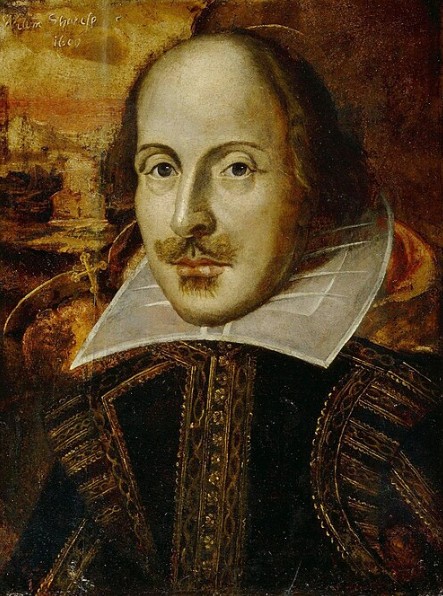
(Taylor, John (attributed). Chandos Portrait of William Shakespeare. Oil on canvas. ca. 1610. National Portrait Gallery, London. Wikimedia Commons. https://commons.wikimedia.org/wiki/File:William_Shakespeare_1609.jpg.)
The Chandos portrait, attributed to John Taylor, depicts William Shakespeare with a gold earring and balding head, in dark doublet and white ruff, an early 17th-century oil painting capturing the Bard's enigmatic likeness and dramatic genius.
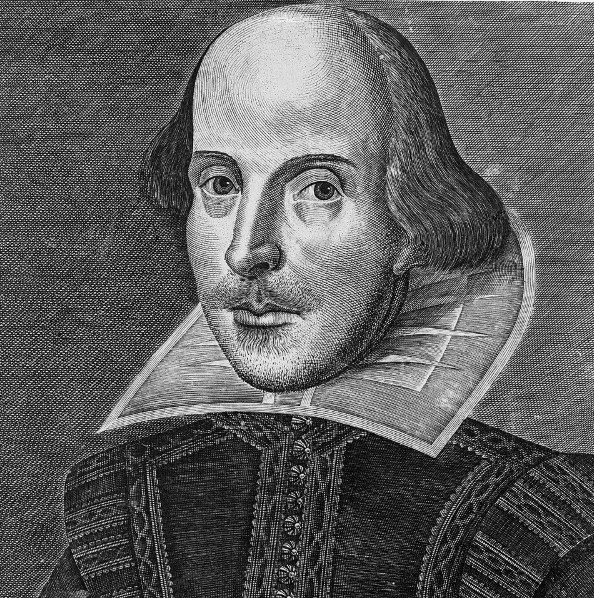
(Droeshout, Martin. William Shakespeare. Engraving. 1623. From Mr. William Shakespeares Comedies, Histories, & Tragedies. Wikimedia Commons. https://commons.wikimedia.org/wiki/File:Shakespeare_Droeshout_1623.jpg.)

Martin Droeshout's 1623 engraving for the First Folio frontispiece shows William Shakespeare in profile with a high forehead and mustache, a iconic image accompanying his collected plays and symbolizing his literary legacy.
(Unknown. Flower Portrait of William Shakespeare. Oil on canvas. ca. 1609. Royal Shakespeare Theatre, Stratford-upon-Avon. Wikimedia Commons.)
A 17th-century oil portrait of William Shakespeare, possibly the Flower Portrait, depicts him with long hair, mustache, and earring in black doublet, reflecting the Elizabethan era's fashion and his exploration of human nature in works like Hamlet.