
THALES
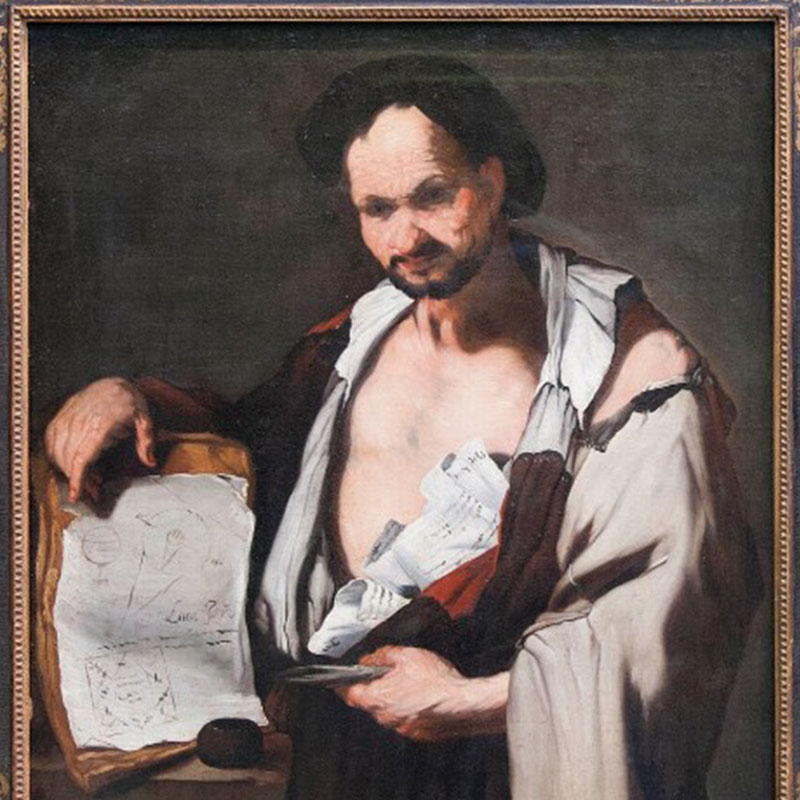
(Giordano, Luca. Thales of Miletus. Oil on canvas. ca. 1660. Private collection. Wikimedia Commons. https://commons.wikimedia.org/wiki/File:Thales_by_Luca_Giordano.jpg.)

How could anyone predict that the sun would go dark?
Born 624 B.C. · Miletus
Little is known about this Greek philosopher except what others reported. The Greeks credited Thales with successfully predicting the eclipse of the sun during an important battle between the Lydian king Alyattes and the Median Cyaxares in 585 B.C.
CyaxaresThe Median king
585 B.C. · The sun goes dark mid-battle
- Born: 624 B.C., in Miletus
- Died: At the age of seventy-eight
- Known through: Reports by others, since little else survives
- The eclipse: Credited by the Greeks with predicting the solar eclipse of 585 B.C.
- Statesman: Credited by Herodotus as a skillful politician and a champion of Ionian federation throughout the Aegean
What is everything made of, and how could we ever know?
Hover or tap each idea to follow Thales’ answer
- WaterThales speculated that water was the fundamental source-element in the formation of matter.
- The Invention of PhilosophyOn the strength of that speculation, Aristotle credited Thales with the invention of philosophy.“Thales, the founder of this type of philosophy, says the principle is water.” (Aristotle, Metaphysics I.3)
- Reason, Not MythMore important than his conclusions was his assertion that answers to such basic questions must be grounded in reason rather than in myth and revelation.
- Predicting the HeavensThe Greeks credited him with predicting the solar eclipse of 585 B.C., which fell during a battle between Lydia and Media.
- Philosopher and StatesmanBeyond his “scientific” theorizing, Herodotus credited Thales with being a skillful politician and a champion of Ionian federation throughout the Aegean.
More important than Thales’ conclusions was his assertion that answers to basic questions must be grounded in reason rather than myth and revelation.
Aristotle credited him with inventing philosophy. His answer, water, did not last, but his way of asking did: he looked for the source of all things in nature itself and reasoned his way toward it.
Where to read more about Thales and the first philosophers.
- 1948Ancilla to the Pre-Socratic PhilosophersFreeman, Kathleen · Harvard University Press
- 1979The Presocratic PhilosophersBarnes, Jonathan · Routledge
- 1983The Presocratic Philosophers: A Critical History with a Selection of Texts (2nd ed.)Kirk, G. S., J. E. Raven and M. Schofield · Cambridge University Press
- 1994Philosophy Before Socrates: An Introduction with Texts and CommentaryMcKirahan, Richard D. · Hackett Publishing
- 2000The First Philosophers: The Presocratics and SophistsWaterfield, Robin · Oxford University Press
- 2001Early Greek Philosophy (rev. ed.)Barnes, Jonathan · Penguin Books
- 2002Thales of Miletus: The Beginnings of Western Science and PhilosophyO’Grady, Patricia F. · Ashgate (reissued by Routledge, 2017)
- 2011A Presocratics Reader (2nd ed.)Curd, Patricia, ed. · Hackett Publishing
- 2022Thales the MeasurerRossetti, Livio · Routledge
- Aristotle, Metaphysics, Book IWhere Aristotle names Thales the founder of philosophy (Part 3). Translated by W. D. Ross.classics.mit.edu
- Diogenes Laertius, Lives of Eminent PhilosophersThe ancient biography of Thales opens Book I. Translated by C. D. Yonge.gutenberg.org
- Plato, TheaetetusIncludes the famous story of Thales falling into a well while watching the stars. Translated by Benjamin Jowett.gutenberg.org
- Internet Encyclopedia of Philosophy: Thales of MiletusA detailed scholarly entry by Patricia O’Grady.iep.utm.edu
- Britannica: Thales of MiletusA short overview of his life and ideas.britannica.com
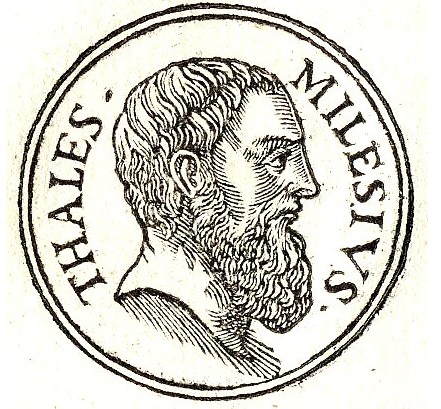
(Unknown. Thales of Miletus. Engraving. 19th century. Wikimedia Commons. https://commons.wikimedia.org/wiki/File:Thales_of_Miletus.jpg.)

A 19th-century engraving portraying Thales of Miletus in profile, based on classical sources, showing the pre-Socratic philosopher with a beard and toga, inscribed with his name and origin, symbolizing his foundational contributions to geometry and natural philosophy.
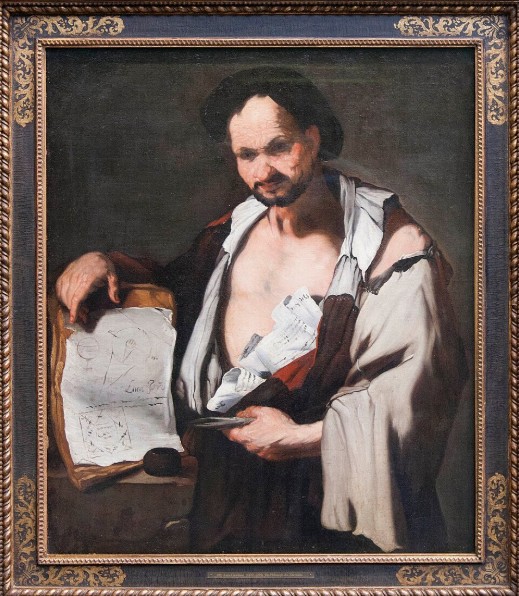
(Giordano, Luca. Thales of Miletus. Oil on canvas. ca. 1660. Private collection. Wikimedia Commons. https://commons.wikimedia.org/wiki/File:Thales_by_Luca_Giordano.jpg.)
Luca Giordano's 17th-century Baroque painting depicts Thales demonstrating geometric principles with a compass and diagrams on a sheet, portrayed as a scholarly figure in draped robes, highlighting his legendary eclipse prediction and mathematical innovations.
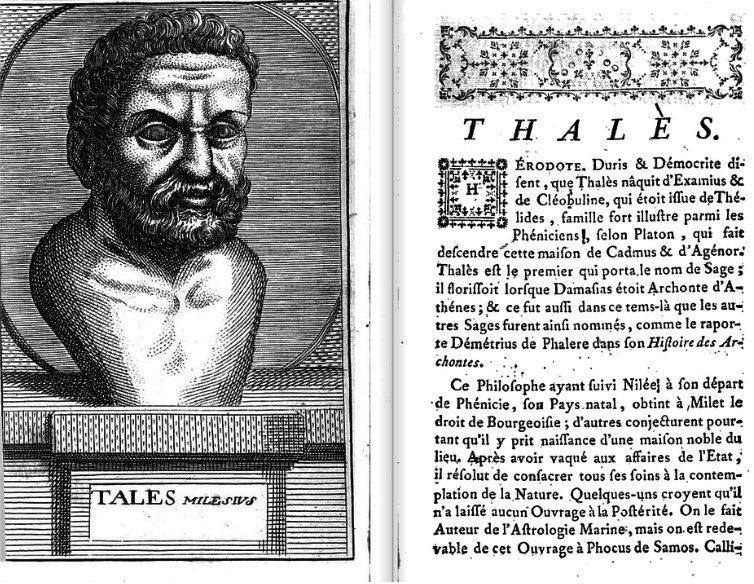
(Unknown. Thales from Lives. Engraving. 1761. From Lives of the Philosophers. Wikimedia Commons. https://commons.wikimedia.org/wiki/File:Thal%C3%A8s_from_Lives_1761.png.)

An 18th-century portrait from Lives of the Philosophers illustrates Thales in contemplative attire with a book, rendered in detailed line work, evoking his status as the first Western philosopher and his inquiries into water as the primordial substance.